









Starting a business can be an exciting journey, and choosing the right structure is a key part of the process. If you've opted for a limited liability company (LLC), you might wonder, "What is an LLC operating agreement?" This document is more than just a formality — it's the cornerstone of your LLC's governance. In this post, we’ll review what a limited liability company operating agreement entails, why it's indispensable for your business, and how it protects your interests.
Table of contents
Table of contents
What is an LLC operating agreement?
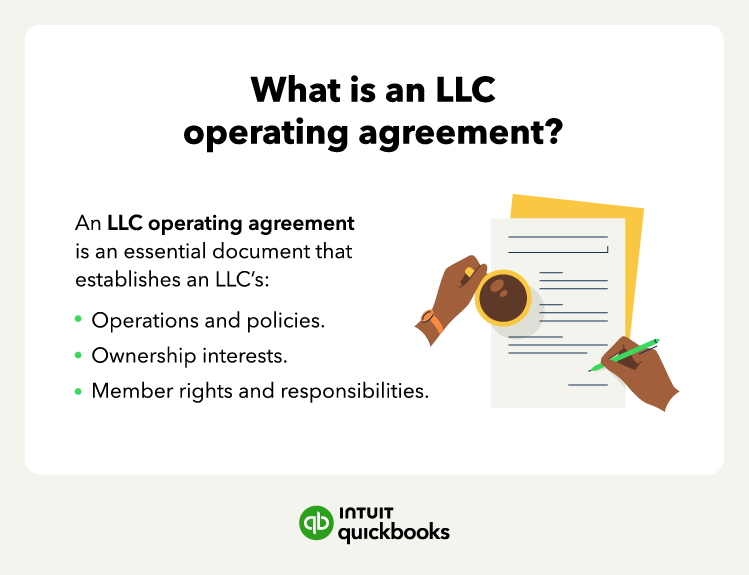
An LLC operating agreement is the legal document that establishes the basic structures, procedures, and member rights and responsibilities of your business. The operating agreement codifies essential facts such as:
- Ownership and management structures
- Capital contributions
- Voting rights and governance
- Procedures for admitting new owners and transferring ownership
- Dispute resolution methods
- Confidentiality rules
- Record-keeping requirements
Depending on the size and complexity of your LLC, the operating agreement might be only a few pages, or it could be 20 pages or more. Many business owners use an attorney to help them draft their operating agreement, but it’s not required. Operating agreements are considered private business documents and are not usually shared with the general public.
Does your business need an LLC operating agreement?
In all but a handful of US states, LLCs are not legally required to have operating agreements, nor are they required to file them with regulatory authorities. So why have one?
According to the US Small Business Administration, an LLC operating agreement is critically important for several reasons:
- To ensure your business maintains the personal liability protection offered by an LLC. Without an operating agreement, it can be challenging to establish that your business has been functioning as an LLC rather than a sole proprietorship or partnership, raising the possibility that LLC owners might be held personally liable in a dispute.
- To reduce stakeholder confusion and conflict by clearly outlining the LLC’s policies. An operating agreement that all parties have read thoroughly and signed helps keep everyone accountable to a common process.
- To avoid having your LLC’s procedures determined by your state’s default LLC rules. LLCs that do not have an operating agreement are governed by the state’s default LLC rules, which may not be a good fit for your business.
Thus, even if it’s not legally required, an LLC operating agreement is a critical first step to creating a stable business and minimizing legal risk. Next, let’s take a closer look at what’s actually in an operating agreement.
Key components of an LLC operating agreement
An operating agreement for an LLC outlines the key components and guidelines for running your business smoothly. Here’s a breakdown of the essential elements you should include:
Ownership structure
Define each member's ownership percentage. You should also specify how ownership can change and what happens if a member wants to leave.
Management structure
Detail how you’ll manage your LLC. Will it be member-managed or manager-managed? Clarify each manager's roles and responsibilities.
Voting rights
Explain how voting rights are allocated. Who can make decisions, and what voting process will you use?
Capital contributions
Outline the contributions each member has made and any future contributions expected. This includes cash, property, or services provided.
Member rights and responsibilities
Specify the rights and duties of each member so everyone knows their role and obligations within the LLC.
Profit and loss distribution
Describe how you will share profits and losses among members. Will it be based on ownership percentages or another method?
Admission of new members
Establish the process for admitting new members and include any qualifications or procedures they must follow to join.
Transfer of ownership
Set guidelines for transferring ownership interests. What conditions can a member sell or transfer their stake under?
Dissolution procedures
Detail the steps for dissolving the LLC. What happens to the assets and liabilities? How will the final decisions be made?
Dispute resolution
Provide methods for resolving disputes among members. This might include mediation or arbitration procedures.
Confidentiality and non-compete clauses
Ensure members agree to confidentiality and non-compete terms to protect the LLC’s interests and trade secrets.
Records and accounting
Explain the recordkeeping and accounting practices the LLC will follow. Who’s responsible for maintaining records and handling financial reporting?
Pros of LLC operating agreements to consider
Earlier, we outlined some of the ways that an LLC operating agreement can offer numerous advantages and benefits your business. Here’s a closer look at why incorporating an operating agreement into your business structure is a smart move:
Clear structure
When you craft an operating agreement, you have a clear framework for your business operations. It defines each member's roles and responsibilities, outlines decision-making processes, and establishes guidelines for day-to-day activities. This clarity helps prevent misunderstandings and ensures everyone knows their duties.
Customization
You can tailor the agreement to reflect your LLC's specific goals, processes, and values so you can create a document that truly represents your business vision.
Protection of personal assets
An operating agreement can help reinforce the separation between your personal and business assets. If your business incurs debt or faces a lawsuit, your personal assets — e.g., home, car, savings, etc. — aren’t at risk.
Control over business operations
You have greater control over how your business is managed with an operating agreement. You can establish specific rules for everything from voting rights to profit distribution, ensuring the business operates according to the members' wishes rather than default state laws.
Avoidance of state-imposed default rules
Without an operating agreement, your LLC is subject to your state’s default rules, which may not be in your best interest. When you draft your own agreement, you avoid these default provisions and create a governing document that aligns with your business objectives.
Enhanced credibility
Having a well-drafted operating agreement shows that your LLC is well-organized and professionally managed, which can attract potential investors, partners, and clients.
Scalability
An operating agreement makes it easier to scale your business. Whether you’re bringing in new members, expanding
Cons of LLC operating agreements to consider
While LLC operating agreements offer several benefits, you should be aware of some potential drawbacks. Here are a few considerations to keep in mind:
Additional time and money
Creating a detailed agreement often means legal fees and a lot of effort to cover all business aspects. However, this upfront investment can save you from costly disputes and complications in the long run.
Potential for disagreements
The drafting process can sometimes lead to disagreements among members. Differences in opinions on roles, responsibilities, and business operations can create friction, so work together and communicate clearly to make sure everyone feels heard and valued. Resolving these disagreements can be painful and laborious, but it’s necessary work in creating a stable business that’s built for the long haul.
How to create an LLC operating agreement
The basic process for drafting an LLC operating agreement works like this:
- Outline the basic information of your LLC. Include the company’s legal name, business address, registered agent, and purpose.
- Define key components of the agreement, such as management structure, ownership, and other key aspects.
- Draft the final agreement and consider having it reviewed by legal counsel. A lawyer will help you spot potential compliance issues and help ensure you get a clean and legally valid document.
- Have all stakeholders sign the final agreement. Once everyone has signed the document, it’s considered legally binding, and all members must obey its terms.
- Keep copies of the agreement easily accessible to relevant parties. At a minimum, you should have a printed copy and two digital backup copies, one stored onsite and one in a secure cloud storage system.
Remember that creating an operating agreement is one part of how to start an LLC, and you’ll also be responsible for steps such as drafting articles of incorporation and designating a registered agent.
Frequently asked questions
Which states require LLC operating agreements?
While not all states require an LLC operating agreement, it’s highly recommended to have one. Some states, like California, Delaware, Maine, Missouri, and New York, mandate an operating agreement for LLCs.
Can an LLC operating agreement be amended after it's signed?
Absolutely! An LLC operating agreement can be amended after it’s signed. The process for making amendments should be outlined in the original agreement. Typically, all members must agree to the changes and sign off on the amendment.
How does an LLC operating agreement differ from other business agreements?
An LLC operating agreement is specific to an LLC's internal operations. It differs from other business agreements like partnership agreements or corporate bylaws, as it focuses on the LLC's unique structure and needs, covering aspects like ownership, management, and profit distribution. It’s also different from an LLC’s articles of organization, which establishes the basic elements of the LLC, including its name, address, and registered agent.
How do I write a simple operating agreement for an LLC?
To write a simple operating agreement, start with the basics: List all members, outline ownership percentages, define management roles, and establish rules for voting, profit sharing, and dispute resolution. Consult a legal professional to ensure your agreement complies with state laws and adequately protects your interests.
Organize your business finances for free
Accept Payments

Product Update
You asked, we listened: What's improved in QuickBooks Online in 2026, with more on the way

Payments
How to send someone to collections: Guide, rules, and how to avoid
Funding & Capital

Funding
How to find small business grants: A guide to free funding

Funding
Funding for women-owned businesses

Funding
Short-term business loans: Types, costs and best uses
Small Business Success

Customer Profile
Why Amborella Organics trusts QuickBooks AI to handle the heavy lifting of a $10M+ vision

Running a Business
At Petal Salon, Amanda Lee Harvey keeps her clients in the pink

Customer Profile
Normal Ice Cream saves 7 hours a week on banking admin thanks to QuickBooks Bill Pay

Customer Profile