QuickBooks Blog
A female business owner sitting at a desk
Wisconsin

Wisconsin small business grants and loans for 2025

Finding the best Wisconsin small business loans and grants can help your company achieve a higher degree of success now and for years to come. These funding options can provide your business with added funds for new acquisitions and expansions, working capital, and many other ongoing operational expenses.

Keep reading to explore funding options that can support your Wisconsin small business, along with grant and loan application tips and essential resources for success.

Jump to:

Grants vs. loans: Understanding your funding options

Every business needs to explore funding options at some point, whether it’s to get off the ground, expand, or cover day-to-day expenses. Grants and loans can help, especially if you don’t have enough savings to fund your plans. While both provide financial support, they work in different ways.

Grants 

Grants are essentially free money that businesses don’t have to repay. However, they typically come with strict requirements and a competitive application process. Many grants are designed to support specific industries, business types, or initiatives, so you’ll need to find one that aligns with your business goals.

Loans

Loans give you access to capital, but you must repay them—usually with interest. The upside is that they usually offer more flexibility in how you use the funds, making them a good option for covering everything from startup costs to long-term growth.

What to consider before applying

If you’re beginning to explore business funding and support in Wisconsin, here’s what to consider before you apply.

How hard is it to get a business loan in Wisconsin?

The rate you will pay and the chance of approval for Wisconsin small business loans depends on your financial situation and credit history. In general, a higher credit score will allow you to enjoy better terms and will open up more avenues for acquiring funding from federal and state lending programs and from banks.

Are there free funding programs for Wisconsin small businesses?

Grant programs are available for small businesses that qualify. Many of these programs, however, are limited to specific industries or intended to help disadvantaged groups entering the business arena.

Does Wisconsin have a debt relief program?

The Wisconsin Chapter 128 Debt Amortization Plan allows borrowers to consolidate their debts to avoid added late fees, the accrual of interest, and potential wage garnishment. This can be useful for small business owners who experience difficulties with excessive debts.

5 Wisconsin small business grants

The state of Wisconsin offers a number of small business grant programs designed to help businesses manage their financial obligations and expansion plans more effectively. These grant programs offer added funding for startups and for established small businesses operating within the state.

You can choose from a variety of Wisconsin grants for small businesses. While not all businesses will qualify for each of these grant programs, finding the best Wisconsin business grants that suit your needs can provide valuable financial flexibility for your small business enterprise. Here are some of the most popular grant programs available to small businesses in Wisconsin.

1. WEDC Collaborative Market Access Grant (CMAG) Program

This Wisconsin small business grant program is available to nonprofits, industry associations, or economic development agencies that support exporters in the state. These organizations distribute the funds to local businesses to help them cover costs like trade show participation, market research, and promotional materials.

2. International Market Access Grants 

The International Market Access Grant program provides reimbursement for export projects related to international business development. It reimburses expenses for export projects, like international trade missions and marketing campaigns. To qualify, businesses must have been operating for at least a year and contribute at least 30% of the total project cost.

3. Wisconsin Center for Technology Commercialization microgrants 

Microgrants from the Wisconsin Center for Technology Commercialization are designed for Wisconsin’s research and tech businesses, covering up to $4,500 in costs for early-stage development. Funds can go toward hiring experts to assist with federal research grant proposals, like SBIR/STTR applications.

4. Entrepreneurship Partner Grants

Entrepreneurship Partner Grants are not issued directly to small businesses. Instead, they’re given to organizations that support small businesses through training, mentorship, and financial assistance.

5. Wisconsin Fast Forward Grants

Wisconsin Fast Forward Grants reimburse employers that invest in job training for their teams. Businesses in industries like manufacturing, healthcare, and IT can use these funds to upskill employees, boost retention, and stay competitive.

Wisconsin also offers a variety of incentives and tax advantages for businesses operating within the state. Many of the most popular incentives can be found on the Wisconsin Department of Revenue website.

A group of people that are sitting in front of a table.

Eligibility requirements for grants in Wisconsin

While the restrictions and requirements for Wisconsin grants for small businesses may vary, most grant applications include the following eligibility requirements.

  • Business location: The business must be based in and operate within Wisconsin.
  • Operational history: Many grants require businesses to have been operating for at least one year.
  • Compliance with laws: Businesses must adhere to state and federal regulations, including accurate accounting practices.
  • Financial standing: Applicants may need to demonstrate financial need or how the grant will support business growth.
  • Industry focus: Some grants are designed for specific industries, such as technology, agriculture, or manufacturing.
  • Community impact: Certain programs prioritize businesses that promote job creation, economic development, or innovation.
  • Matching funds: Some grants require businesses to contribute their own funds as part of the agreement.
  • Ownership status: Women-owned, minority-owned, and veteran-owned businesses may receive priority consideration.
  • Required documentation: Applicants may need to submit business plans, financial statements, tax records, or proof of eligibility.

4 federal small business grants

Federal grants, such as the following, are also available and may be a potential funding source for your business.

1. Small Business Innovation Research (SBIR) and Small Business Technology Transfer (STTR) Programs

The SBIR and STTR programs support small businesses engaged in research and technological innovation. These grants provide funding to help businesses develop and commercialize new technologies in industries such as healthcare, defense, and energy. Eligible businesses must meet federal guidelines and work with government agencies like the National Science Foundation or the Department of Defense.

2. USDA Rural Business Development Grants

The U.S. Department of Agriculture (USDA) provides Rural Business Development Grants (RBDG) to help small businesses in rural communities grow and thrive. These funds support projects such as training, technical assistance, and infrastructure improvements. To qualify, businesses must operate in areas with a population of fewer than 50,000 people.

3. Minority Business Development Agency (MBDA) Grants

The MBDA, a division of the U.S. Department of Commerce, offers grants to support minority-owned businesses. These grants fund programs providing business training, access to capital, and expansion opportunities. MBDA grants are typically awarded to nonprofits and business development centers that assist minority entrepreneurs.

4. Economic Injury Disaster Loans and Grants

During economic downturns and natural disasters, federal grants and low-interest loans become available through agencies like the SBA and the Federal Emergency Management Agency (FEMA). 

Additional grant resources for Wisconsin businesses

Wisconsin business owners can find grants beyond state and federal programs through local governments, private foundations, and corporate initiatives. These additional funding sources may include:

  • Local government grants: Cities and counties across Wisconsin offer grants for business development, downtown revitalization, and infrastructure improvements. For example, the Vibrant Spaces Grant Program allows municipalities to apply for grants between $25,000 and $50,000 to beautify and enhance underused spaces in their downtowns.
  • Private foundation grants: Nonprofit organizations in Wisconsin support businesses that align with their mission, such as sustainability, workforce development, or economic equity. Groups like the Wisconsin Women’s Business Initiative Corporation (WWBIC) offer grant and loan programs for women- and minority-owned businesses.
  • Corporate grants: Large companies and financial institutions sometimes provide grants to entrepreneurs, especially those in underserved communities or emerging industries.

How to get a small business grant in Wisconsin: Application process

Once you know which grant program is right for you, you may be wondering how to apply for a small business grant in Wisconsin. Most agencies that offer small business grants also provide instructions that can help you determine eligibility for these programs and that provide instructions on the application process. Below is a general step-by-step guide to help you navigate the grant application process—whether federal, state-sponsored, private foundation, corporate, or local.

Applying for Wisconsin-sponsored grants 

Follow these steps to apply for a Wisconsin-sponsored grant.

1. Choose the right grant 

Not all Wisconsin business grants will be available to your company. Making sure your business meets the eligibility requirements for your chosen grant can prevent wasted time and effort for you and your company’s staff members.

2. Write a compelling grant proposal

Your grant proposal should include information on how you plan to use the grant, what goals and objectives the funding will support, and the nature of your company and its activities.

3. Draft an executive summary

The executive summary of your grant application is designed to present all your selling points in one simple and easy-to-read synopsis. An effective executive summary can significantly improve your chances of success when applying for a grant in Wisconsin.

4. Create a persuasive cover letter

Your cover letter is typically the first introduction grant providers have to your company. Making a good impression is key to your success.

5. Provide documentation

Most grants require financial information and other documentation to ensure that your application is considered for a Wisconsin small business grant.

6. Apply early for in-demand grants 

Getting your foot in the door early in the process may give you an advantage when applying for popular grants in Wisconsin.

Applying for federal grants

1. Identify federal funding opportunities

Search for available grants on Grants.gov and specific federal agency websites. Review eligibility criteria, funding priorities, and application deadlines.

2. Obtain a Unique Entity Identifier (UEI)

Register in the System for Award Management (SAM.gov) to obtain a UEI, which is required for federal grants. Maintain an active SAM.gov registration to stay eligible.

3. Review the Funding Opportunity Announcement (FOA)

Carefully read the FOA to understand grant objectives, requirements, and evaluation criteria. Note key deadlines and required documents.

4. Prepare the application package

Write a detailed project narrative explaining your goals, impact, and execution plan. Develop a comprehensive budget and justification for requested funding. Be sure to also gather supporting documents, such as letters of support, resumes, and compliance certifications.

5. Submit your application

Use the designated platform to submit your application. For federal grants, this is typically Grants.gov. Ensure all components are properly formatted and submitted before the deadline.

6. Follow up and await feedback

Monitor your application status through the submission portal. Respond promptly to any requests for additional information or clarifications.

Applying for local, private, or corporate grants

1. Find grant opportunities

Check local government websites, private foundations, and corporate grant programs for available funding. Review eligibility and application requirements.

2. Prepare required documents 

Gather business details, financial statements, and a strong proposal outlining your project, goals, and impact.

3. Submit your application 

Follow the specific submission process for each grant, ensuring all required documents are included.

4. Monitor and follow up 

Track your application status and respond to any follow-up requests for additional information.

Are there repayment requirements for small business grants in Wisconsin?

Most Wisconsin small business grants need not be repaid. If the organization that issued the grant determines that you have used the money improperly or have not complied with the terms of the grant, you may be required to repay the funds issued by the small business grant provider.

What industries does Wisconsin offer grants for?

Grants are available for most small businesses in the state of Wisconsin but are most commonly awarded for these industries:

  • Agricultural activities, including farmland preservation and soil and water resource management
  • Food production and distribution
  • Technology and technical education
  • Manufacturing plants

Some grants and loans are available to support women-owned businesses or other groups within the state. Main Street Bounceback Grants, for example, are available to businesses that choose locations in depressed downtown or commercial areas.


4 Wisconsin small business loans

Along with traditional loans from banks and credit unions, the state provides several loan options designed to support economic development. Here are some of the top programs available to small businesses in Wisconsin.

1. Wisconsin Economic Development Corporation (WEDC) loan programs

The WEDC offers various loan programs to help businesses expand, create jobs, and revitalize local communities. These programs provide flexible financing options, including low-interest loans and loan guarantees, making it easier for businesses to secure funding.

2. Wisconsin Housing and Economic Development Authority (WHEDA) loans

If you're struggling to get approved for a traditional loan, the WHEDA can help. WHEDA works with banks and lenders to guarantee loans, reducing their risk and increasing your chances of approval. These loans can be used for things like buying equipment, covering operating costs, or purchasing real estate. WHEDA is especially focused on supporting businesses in underserved areas.

3. Impact Seven business loans

Impact Seven is a nonprofit lender that helps small businesses that may not qualify for bank loans. They offer loans ranging from $10,000 to $5 million, making it a great option whether you need a small boost or major funding. Their focus is on businesses in rural and economically disadvantaged areas, and funds can be used for things like purchasing property, inventory, or equipment.

4. SBA 7(a) Loan Program

In addition to state-sponsored loan programs, the SBA 7(a) Loan Program is a federally backed option that offers Wisconsin small businesses funding for working capital, equipment, real estate, and debt refinancing. Loans are issued through banks, credit unions, and alternative lenders, with the U.S. Small Business Administration guaranteeing a portion of the loan to reduce lender risk. Eligibility typically requires strong credit, sufficient revenue, and a solid business plan.

Wisconsin small business loan eligibility

Depending on the type of loan you choose, your eligibility requirements may differ significantly. SBA small business loans in Wisconsin typically feature the following requirements:

  • The business must operate for profit and must operate within the law.
  • The business must meet the size requirements to be considered a small business by the SBA.
  • The small business must meet minimum credit standards.
  • The business must have exhausted other avenues for obtaining funding on reasonable terms from other sources.

For bank loans and other types of lending arrangements, you’ll be required to demonstrate that you can repay the loan and that you’re a good credit risk. You may need to submit documentation of your small business income and may be subject to a credit check for most varieties of Wisconsin small business loans.

Do you have to pay back loans in Wisconsin as a small business 

If you fail to pay back loans taken out to support your business, you may go into default with the lenders. Paying back your loans as agreed can prevent issues with the SBA, the U.S. Department of the Treasury, and the lenders to whom you owe money. Consult a financial advisor or accountant who can help you choose the best loan for your business and manage repayment effectively.

How to get a business loan in Wisconsin: Application process

If you are wondering how to get a small business loan in Wisconsin, these steps will provide you with the information you typically need to achieve the highest possible degree of success in this process.

1. Decide why you need the loan

The use to which you intend to put your funding will often determine what type of Wisconsin small business loan is right for you.

2. Check eligibility requirements 

SBA loans have strict eligibility requirements that reward borrowers with fixed rates and better terms. Other lenders may have less stringent eligibility requirements.

3. Compare your options 

Comparing the cost of capital for various Wisconsin business loans can provide you with a benchmark for deciding on the right small business loan for you.

4. Collect your documentation 

You will typically need to submit copies of your personal and business tax returns, your Wisconsin Articles of Organization, bank and financial statements, your business plan, and your business licenses as part of your Wisconsin small business loan application.

5. Complete your application 

You will need to provide your name, Social Security number, Employer Identification Number, business name, and annual revenue information as part of your loan application.

6. Wait for a decision 

Your lender will typically provide you with a decision on your application within a few days or weeks.

Wisconsin small business funding resources and support

Whether you need capital, mentorship, or business development resources, several programs are available to help entrepreneurs succeed. 

Wisconsin Economic Development Corporation (WEDC)

The WEDC is the state's primary resource for business funding and economic growth. It provides grants, loans, tax credits, and business support programs to help small businesses expand, create jobs, and strengthen local communities.

Wisconsin Small Business Development Centers (SBDCs)

The Wisconsin SBDC network is a statewide system of offices that offer free business consulting, training, and financial planning assistance. SBDC advisors help small business owners with everything from writing a business plan to securing funding and managing finances. You can find an SBDC location near you to access tailored support for your business.

Wisconsin Women’s Business Initiative Corporation (WWBIC)

WWBIC provides business loans, financial training, and mentorship for women, minorities, veterans, and low-income entrepreneurs across Wisconsin. Their funding programs help businesses access the capital they need, even if they don’t qualify for traditional bank loans. WWBIC also offers business coaching and workshops to help entrepreneurs succeed.

Local chambers of commerce

Your local chamber of commerce is a great resource for networking, mentorship, and business support. Many chambers offer small business grants, loan programs, and access to investor networks. They also provide educational resources and community connections that can help you grow your business. Check with your city’s chamber to learn about funding opportunities in your area.

Other ways to fund your small business in Wisconsin

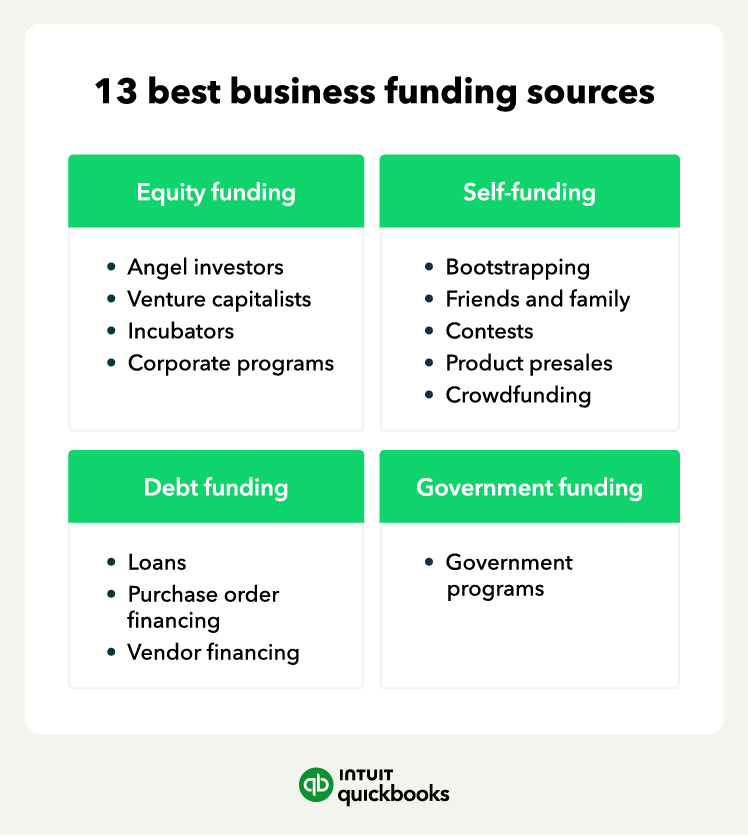
Grants and loans are common funding options for businesses, but they aren’t the only ways to secure financial support. Wisconsin small businesses can explore a variety of alternative funding methods to fuel growth and operations. Here’s a look at some of the most popular options.

Alternative loans

Non-traditional financing options such as online lenders, peer-to-peer lending, or merchant cash advances, often with more flexible requirements than bank loans.

Angel investors

Established entrepreneurs (angel investors) who invest their personal money into startups, often at an early stage, in exchange for equity.

Bootstrapping 

Using personal savings and revenues to fund business operations without external financing.

Contests

Competitions where businesses pitch ideas to win funding or resources.

Corporate programs

Initiatives by large companies offering funding, mentorship, or resources to small businesses.

Crowdfunding 

Raising small amounts of money from a large number of people, typically via online platforms.

Friends and family 

Obtaining funds from personal networks to support business ventures.

Incubators 

Organizations that support startups with resources, mentorship, and sometimes funding.

Microloans

Small, short-term loans from nonprofit lenders, government programs, or alternative lenders, often designed for startups and businesses that may not qualify for traditional bank loans.

Product presales

Selling products before they are produced to generate upfront capital.

Purchase order financing

Obtaining funding based on purchase orders to pay suppliers and fulfill customer orders.

Vendor financing

Suppliers provide goods or services with deferred payment terms to support business cash flow.

Venture capitalists 

Professional firms that invest in startups with high growth potential in exchange for equity.

Disclaimer:

This content is for information purposes only and information provided should not be considered legal, accounting or tax advice or a substitute for obtaining such advice specific to your business. Additional information and exceptions may apply. Applicable laws may vary by state or locality. No assurance is given that the information is comprehensive in its coverage or that it is suitable in dealing with a customer’s particular situation. Intuit Inc. does not have any responsibility for updating or revising any information presented herein. Accordingly, the information provided should not be relied upon as a substitute for independent research. Intuit Inc. cannot warrant that the material contained herein will continue to be accurate, nor that it is completely free of errors when published. Readers should verify statements before relying on them.


Recommended for you

Mail icon
Get the latest to your inbox
No Thanks

Get the latest to your inbox

Relevant resources to help start, run, and grow your business.

By clicking “Submit,” you agree to permit Intuit to contact you regarding QuickBooks and have read and acknowledge our Privacy Statement.

Thanks for subscribing.

Fresh business resources are headed your way!

Looking for something else?

QuickBooks

From big jobs to small tasks, we've got your business covered.

Firm of the Future

Topical articles and news from top pros and Intuit product experts.

QuickBooks Support

Get help with QuickBooks. Find articles, video tutorials, and more.