QuickBooks Blog
Two employees work together on a laptop
California

California small business grants and loans for 2025

California is full of opportunities for entrepreneurs looking to start or grow their businesses. As one of the world’s largest economies, the state offers a variety of small business funding options—ranging from government grants to low-interest loans—that help business owners launch, scale, and innovate.

In this guide, you’ll find a breakdown of California small business loans and grants, application tips, and key funding resources to support your venture in 2025 and beyond.

Jump to:

Grants vs. loans: Understanding your funding options

At some point, every business could use a financial boost—whether you’re launching your first venture or expanding an existing one. That’s where grants and loans come into play. Both can help you fund your next step, but they work in different ways. Understanding the differences between these funding options can help you pick the best choice for your goals.

Grants 

Grants are like free money for your business. You don’t have to pay them back, which makes them a great option—but they can be competitive and typically come with specific requirements, like how you can use the funds or who’s eligible to apply.

Loans

Loans need to be repaid with interest. But they’re often easier to get and offer more flexibility in how you use the money—whether that’s buying inventory, hiring staff, or funding expansion.

What to consider before applying

If you’re beginning to explore business funding and support in California, here’s what to consider before you apply.

How hard is it to get a business loan in California?

To get a small business loan in California, you need to be organized as you gather the information and documentation the lender asks for. It takes time and attention to detail. However, the state offers plenty of funding opportunities to qualified businesses, so it won't be hard to find resources.

Are there free funding programs for California small businesses?

Yes! California offers various small business grants that don’t need to be repaid, making them an excellent option for startups, growing businesses, and organizations in underserved communities. A great place to start is the California Office of the Small Business Advocate (CalOSBA), which lists current grant opportunities and provides tools to help you apply.

Does California have a debt relief program?

While there isn’t a statewide debt relief program, you can access various state-supported and partner programs that help manage or reduce financial burdens, including the California Small Business Loan Guarantee Program and the California Rebuilding Fund.

5 California small business grants

California offers various small business grants to support entrepreneurs across industries. These grants provide capital for growth, innovation, recovery, and community development. Unlike loans, grant funds don’t need to be repaid, making them a valuable resource for business owners. Below are several state-sponsored and regional grant programs available in California:

1. California Small Agricultural Business Drought and Flood Relief Grant Program

This grant provides financial relief to agricultural businesses impacted by severe drought or flooding across California. Eligible businesses can receive support to offset operational costs, crop loss, and other climate-related challenges. Administered by the California Office of the Small Business Advocate (CalOSBA), this grant is part of the state’s climate resilience strategy.

2. EmployABILITY Business Grant

This grant is for businesses that want to make their workplaces more inclusive. If you're hiring or accommodating people with physical disabilities or neurodevelopmental conditions, you could qualify for between $20,000 and $200,000 in funding. The money can help cover needs like accessibility upgrades, training programs, or onboarding support.

3. Healthy Refrigeration Grant Program

The Healthy Refrigeration Grant helps fund energy-efficient fridges and freezers so you can offer healthier food options to your customers. It’s part of California’s push to fight food insecurity and support sustainable practices. To qualify, your business needs to be located in an eligible low-food-access area, and you’ll need to meet a few specific criteria from the California Department of Food and Agriculture.

4. Accelerate California Inclusive Hubs

The Accelerate California Inclusive Hubs program gives funding to organizations that support diverse business owners and underserved communities with mentorship, training, and access to capital. Each selected hub can receive up to $250,000 per year for up to four years, totaling a maximum of $1,000,000 per hub. The program aims to create jobs, boost local economies, and support innovation across California.

5. LA Region Small Business Relief Fund

If your business or nonprofit in the LA area has been hit by a natural disaster—like wildfires or windstorms—this relief fund is here to help. You could receive a grant between $2,000 and $25,000 to cover unexpected costs and keep things running. To qualify, your organization needs to have fewer than 100 employees and make under $6 million in annual revenue.

A group of people that are sitting in front of a table.

Eligibility requirements for grants in California

Grant eligibility in California can vary depending on the program, but most follow a similar set of guidelines. Here are some common factors that determine eligibility:

  • Business size: Most grants are intended for small businesses, which are typically defined by revenue limits or the number of employees (usually fewer than 100).
  • Location: Some grants are only available to businesses operating in certain parts of California, especially in underserved or disaster-affected areas.
  • Industry focus: Specific grants may target industries like agriculture, food access, clean energy, technology, or manufacturing.
  • Financial need or impact: You may need to show financial hardship due to COVID-19, natural disasters, or other economic challenges.
  • Business stage: Some programs are only open to startups, while others may require an established operational history.
  • Ownership and community representation: Women-owned, minority-owned, LGBTQIA+, veteran-owned, and businesses in low-to-moderate income areas may receive preference or be specifically targeted.
  • Matching funds: A few grant programs require you to match part of the grant amount with your own funding.
  • Commitment to impact: Grants often prioritize businesses that support job creation, equity, sustainability, or local economic development.
  • Documentation: Be ready to submit items like a business plan, financial statements, licenses, or proof of training completion.

4 federal small business grants

Federal grants, such as the following, are also available and may be a potential funding source for your business.

1. Small Business Innovation Research (SBIR) and Small Business Technology Transfer (STTR) Programs

The SBIR and STTR programs support small businesses engaged in research and technological innovation. These grants provide funding to help businesses develop and commercialize new technologies in industries such as healthcare, defense, and energy. Eligible businesses must meet federal guidelines and work with government agencies like the National Science Foundation or the Department of Defense.

2. USDA Rural Business Development Grants

The U.S. Department of Agriculture (USDA) provides Rural Business Development Grants (RBDG) to help small businesses in rural communities grow and thrive. These funds support projects such as training, technical assistance, and infrastructure improvements. To qualify, businesses must operate in areas with a population of fewer than 50,000 people.

3. Minority Business Development Agency (MBDA) Grants

The MBDA, a division of the U.S. Department of Commerce, offers grants to support minority-owned businesses. These grants fund programs providing business training, access to capital, and expansion opportunities. MBDA grants are typically awarded to nonprofit organizations and business development centers that assist minority entrepreneurs.

4. Economic Injury Disaster Loans and Grants

During economic downturns and natural disasters, federal grants and low-interest loans become available through agencies like the SBA and the Federal Emergency Management Agency (FEMA). 

Additional grant resources for California businesses

California small business owners aren’t limited to just state or federal grant programs. There are plenty of other funding opportunities out there. Some of these include:

  • Local government grants: Many cities and counties across California offer their own grant programs to support local economic development, storefront improvements, or recovery from disasters like wildfires or floods. Check with your city’s economic development office or local SBDC for current offerings.
  • Private foundation grants: Nonprofits and philanthropic organizations (e.g., James Irvine Foundation and the California Wellness Foundation) often fund businesses that align with their goals—such as supporting minority entrepreneurs, promoting sustainability, or driving innovation in underserved communities.
  • Corporate grants: Big-name companies and banks sometimes run grant programs or pitch competitions to support small business growth, especially for startups, women- and minority-owned businesses, or businesses in emerging industries like green tech or digital services.

How to get a business grant in California: Application process

Applying for a business grant in California takes planning, attention to detail, and a little research—especially since each grant has its own set of rules. Below is a step-by-step guide to help you get started:

Applying for California-sponsored grants

Follow these steps to apply for small business grants in California:

1. Search for grant opportunities

Browse the California Grants Portal. Use filters like "business," "economic development," or your industry to narrow your search.

2. Review eligibility criteria

Click into the grant listing and carefully review who’s eligible. Look for details like business type, revenue limits, location, and any special requirements (e.g., women-owned, located in a low-income area, etc.).

3. Visit the funding provider’s website

The portal provides a summary, but you’ll find the full application details—including how to apply and what documents you’ll need—on the grant provider’s website.

4. Check deadlines and timelines

Make note of the application deadline and any key dates. Many grants are time-sensitive, and late submissions usually won’t be accepted.

5. Gather required documents

Depending on the grant, you may need to prepare a business plan, financial statements, tax documents, proof of eligibility, or a budget breakdown for how you’ll use the funds.

6. Reach out with questions

Each listing includes a “Resources” section with contact info for the funding agency. Don’t hesitate to reach out if anything is unclear, especially before you submit.

7. Use the glossary for clarity

If you’re unfamiliar with grant-related terms, check the California Grants Portal Glossary to better understand the language used in the description or application.

8. Submit early if possible

Don’t wait until the last minute. Submitting early gives you time to fix errors, upload files without stress, and ensure everything is complete.

Applying for federal grants

1. Identify federal funding opportunities

Search for available grants on Grants.gov and specific federal agency websites. Review eligibility criteria, funding priorities, and application deadlines.

2. Obtain a Unique Entity Identifier (UEI)

Register in the System for Award Management (SAM.gov) to obtain a UEI, which is required for federal grants. Maintain an active SAM.gov registration to stay eligible.

3. Review the Funding Opportunity Announcement (FOA)

Carefully read the FOA to understand grant objectives, requirements, and evaluation criteria. Note key deadlines and required documents.

4. Prepare the application package

Write a detailed project narrative explaining your goals, impact, and execution plan. Develop a comprehensive budget and justification for requested funding. Be sure to also gather supporting documents, such as letters of support, resumes, and compliance certifications.

5. Submit your application

Use the designated platform to submit your application. For federal grants, this is typically Grants.gov. Ensure all components are properly formatted and submitted before the deadline.

6. Follow up and await feedback

Monitor your application status through the submission portal. Respond promptly to any requests for additional information or clarification.

Applying for local, private, or corporate grants

1. Find grant opportunities

Check local government websites, private foundations, and corporate grant programs for available funding. Review eligibility and application requirements.

2. Prepare required documents 

Gather business details, financial statements, and a strong proposal outlining your project, goals, and impact.

3. Submit your application 

Follow the specific submission process for each grant, ensuring all required documents are included.

4. Monitor and follow up 

Track your application status and respond to any follow-up requests for additional information.

Are there repayment requirements for small business grants in California?

In most cases, small business grants in California don’t need to be repaid. However, it’s important to use the funds exactly as outlined in the grant agreement. When you’re awarded a grant, you’ll typically sign a legal agreement that includes specific terms and conditions. If you misuse the funds or fail to meet the requirements, you could be asked to return the money.


4 California small business loans

Small business loans in California are another avenue for funding your new or developing small business. From federal resources such as the Small Business Administration to resources originating in the Golden State, loans are a popular source of financing for entrepreneurs. Unlike grants, you do have to pay interest on the amount you borrow and repay your loan according to a specific schedule. Here are some loan programs to consider:

1. IBank’s Small Business Finance Center (SBFC)

Run by California’s IBank, the SBFC works by encouraging lenders to approve small businesses that might not otherwise qualify for funding. The program helps support job creation and growth, especially in low- to moderate-income communities. If your business has between 1 and 750 employees and is legally registered, you could be eligible. IBank guarantees up to 80% of the loan (up to $5 million), which reduces the risk for lenders and makes it easier for you to secure financing.

2. California Capital Access Program (CalCAP)

CalCAP helps businesses get approved for loans by offering lenders portfolio insurance in case of default. Both the borrower and lender contribute 2-3.5% of the loan amount, and CPCFA matches the lender's contribution. You can borrow up to $5 million, with up to $2.5 million enrolled in the program.

3. Recycling Market Development Zone (RMDZ) Loan Program

Run by CalRecycle, this program helps fund businesses that are helping the environment by using materials from the state’s waste stream. You can borrow up to $2 million, which can cover up to 75% of your project costs. That money can go toward buying equipment, covering working capital, or even purchasing or upgrading real estate.

4. SBA 7(a) Loan Program

In addition to state-sponsored loan programs, the SBA 7(a) Loan Program is a federally backed option that offers California small businesses funding for working capital, equipment, real estate, and debt refinancing. Loans are issued through banks, credit unions, and alternative lenders, with the U.S. Small Business Administration guaranteeing a portion of the loan to reduce lender risk. Eligibility typically requires strong credit, sufficient revenue, and a solid business plan.

California small business loan eligibility

To qualify for most small business loan programs in California, your business typically needs to meet the following criteria:

  • Size standard: Have between 1 and 750 employees, depending on the specific loan program. Some programs may have tighter restrictions.
  • Location: Operate within the state of California and be registered as a legal business entity.
  • Good standing: Be current on state filings, licenses, and taxes, and not have any recent bankruptcies, liens, or major legal issues.

Your business must also meet any other requirements specified by the lender. 

Do you have to pay back loans in California as a small business?

Yes, you must repay a loan, including interest. If you have a guaranteed loan from SBA or the California IBank, and you default on payment, the guarantor will repay a portion of your loan, but you are still liable for the original amount plus fees. You may be able to negotiate a more manageable repayment plan going forward. Talk with a financial advisor or accountant who can help you choose the best loan for your business and manage repayment effectively.

How to get a business loan in California: Application process

Whether you're applying through a bank, credit union, community lender, or a California state-backed program, getting a small business loan in California takes preparation. Follow these key steps to increase your chances of approval:

1. Identify your funding needs

Figure out how much you need to borrow, what the money will be used for (e.g., equipment, working capital, inventory), and which loan program or lender is the best fit for your situation.

2. Check your credit and financial readiness

Review both your personal and business credit scores. Lenders will want to see strong credit and reliable financials. Make sure your revenue supports the loan amount you're seeking and that your financial statements are up to date.

3. Create or update your business plan

Many lenders will ask for a business plan, especially for larger loans. This should include your company’s mission, products or services, target market, revenue projections, and how you plan to repay the loan.

4. Research California lenders and programs

Explore loan options through local banks, credit unions, Community Development Financial Institutions (CDFIs), and state-supported programs like IBank or CalCAP. Compare interest rates, repayment terms, and eligibility requirements.

5. Gather required documents

Commonly requested documents include:

  • Personal and business tax returns
  • Bank statements
  • Profit and loss statement or balance sheet
  • Business licenses and permits
  • Articles of incorporation or organization
  • Lease agreements (if applicable)
  • Contracts or agreements with vendors or customers

6. Review the loan terms carefully

Before applying, understand the interest rate, repayment schedule, fees, and whether any collateral is required. If anything’s unclear, reach out to the lender to clarify.

7. Submit your application

Follow the lender’s instructions, whether applying online or in person. Make sure all documents are accurate, complete, and submitted before the deadline.

8. Wait for review and approval

Lenders may reach out with follow-up questions or requests for additional information during the underwriting process. If approved, you'll receive a loan agreement and funding details.

California small business funding resources and support

Whether you’re launching a new venture or looking to grow an existing one, California offers funding and support resources to help small business owners succeed. From capital access to mentorship and training, these programs provide valuable tools for entrepreneurs across the state.

California Office of the Small Business Advocate (CalOSBA)

CalOSBA supports small businesses through policy advocacy, technical assistance centers, and connections to funding. They help entrepreneurs navigate state programs, access capital, and connect with local partners who can provide one-on-one business support, especially for underserved communities.

California Small Business Development Centers (SBDCs)

The California SBDC network offers free and low-cost support to small businesses across the state. Services include business planning, access to funding, marketing strategy, and financial forecasting. Whether you're applying for a grant or trying to qualify for a loan, your local SBDC can help guide you through the process.

Go-Biz (Governor’s Office of Business and Economic Development)

Go-Biz provides various programs and tools for business owners, including permit assistance, site selection, and state incentive programs. Their California Business Portal is a helpful starting point for learning about state-sponsored funding, tax credits, and loan support.

Other ways to fund your small business in California

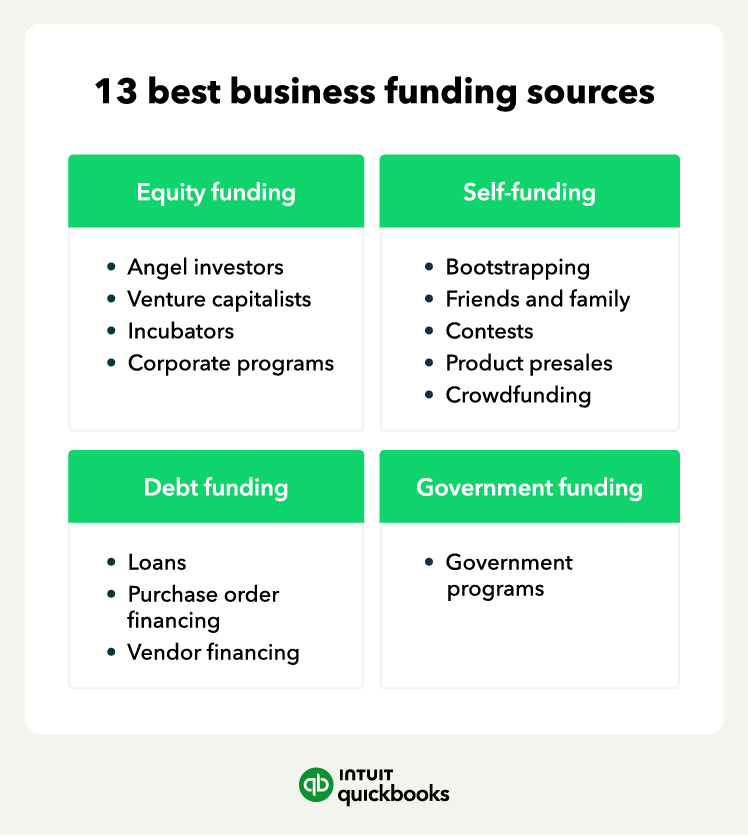
Grants and loans are common funding options for businesses, but they aren’t the only ways to secure financial support. California small businesses can explore a variety of alternative funding methods to fuel growth and operations. Here’s a look at some of the most popular options:

Alternative loans

Non-traditional financing options such as online lenders, peer-to-peer lending, or merchant cash advances, often with more flexible requirements than bank loans.

Angel investors

Established entrepreneurs (angel investors) who invest their personal money into startups, often at an early stage, in exchange for equity.

Bootstrapping 

Using personal savings and revenues to fund business operations without external financing.

Contests

Competitions where businesses pitch ideas to win funding or resources.

Corporate programs

Initiatives by large companies offering funding, mentorship, or resources to small businesses.

Crowdfunding 

Raising small amounts of money from a large number of people, typically via online platforms.

Friends and family 

Obtaining funds from personal networks to support business ventures.

Incubators 

Organizations that support startups with resources, mentorship, and sometimes funding.

Microloans

Small, short-term loans from nonprofit lenders, government programs, or alternative lenders, often designed for startups and businesses that may not qualify for traditional bank loans.

Product presales

Selling products before they are produced to generate upfront capital.

Purchase order financing

Obtaining funding based on purchase orders to pay suppliers and fulfill customer orders.

Vendor financing

Suppliers provide goods or services with deferred payment terms to support business cash flow.

Venture capitalists 

Professional firms that invest in startups with high growth potential in exchange for equity.

Disclaimer:

This content is for information purposes only and information provided should not be considered legal, accounting or tax advice or a substitute for obtaining such advice specific to your business. Additional information and exceptions may apply. Applicable laws may vary by state or locality. No assurance is given that the information is comprehensive in its coverage or that it is suitable in dealing with a customer’s particular situation. Intuit Inc. does not have any responsibility for updating or revising any information presented herein. Accordingly, the information provided should not be relied upon as a substitute for independent research. Intuit Inc. cannot warrant that the material contained herein will continue to be accurate, nor that it is completely free of errors when published. Readers should verify statements before relying on them.


Recommended for you

Mail icon
Get the latest to your inbox
No Thanks

Get the latest to your inbox

Relevant resources to help start, run, and grow your business.

By clicking “Submit,” you agree to permit Intuit to contact you regarding QuickBooks and have read and acknowledge our Privacy Statement.

Thanks for subscribing.

Fresh business resources are headed your way!

Looking for something else?

QuickBooks

From big jobs to small tasks, we've got your business covered.

Firm of the Future

Topical articles and news from top pros and Intuit product experts.

QuickBooks Support

Get help with QuickBooks. Find articles, video tutorials, and more.