QuickBooks Blog
A person smiling and holding a piece of paper.
Massachusetts

Massachusetts payroll taxes: Your 2025 guide to staying compliant

Massachusetts offers fertile ground for business growth, thanks to a diverse economy driven by innovation, education, and global connectivity. The state’s strengths in sectors like biotech, finance, clean energy, and healthcare attract forward-thinking entrepreneurs and support thriving small businesses across the region. According to the U.S. Small Business Administration, more than 750,000 small businesses call Massachusetts home, making up 99.5% of all businesses statewide and employing nearly half of the private workforce.

But whether you're launching a Boston-based consulting firm or managing payroll for a retail shop in Worcester, understanding payroll taxes is essential. This guide walks you through federal and Massachusetts-specific payroll tax requirements for 2025, including how to register, calculate and file taxes, and where to get help.

Jump to:

What are payroll taxes?

Payroll taxes are taxes based on wages, salaries, or other compensation that both employers and employees must pay. While income taxes are also withheld through payroll, payroll taxes specifically fund programs like Social Security, Medicare, and unemployment insurance.

Understanding Massachusetts payroll taxes

When starting a business in Massachusetts, you need to track both federal payroll obligations and state-specific requirements.

Federal payroll taxes

Payroll taxes are mandatory and encompass both federal and state requirements. 

Federal payroll taxes include:

  • Federal income tax: This is withheld from each employee's paycheck based on their W-4 form and the current IRS tax brackets. You'll be responsible for calculating the correct amount, withholding it, and then sending it to the IRS.
  • Social Security and Medicare taxes: Both of these taxes have a portion paid by the employee and a matching portion paid by you, the employer. For Social Security, the combined rate is 12.4% on the first $176,100 of wages in 2025. For Medicare, it's 2.9% on all wages, with an extra 0.9% for higher earners. You'll withhold the employee's portion and match it.
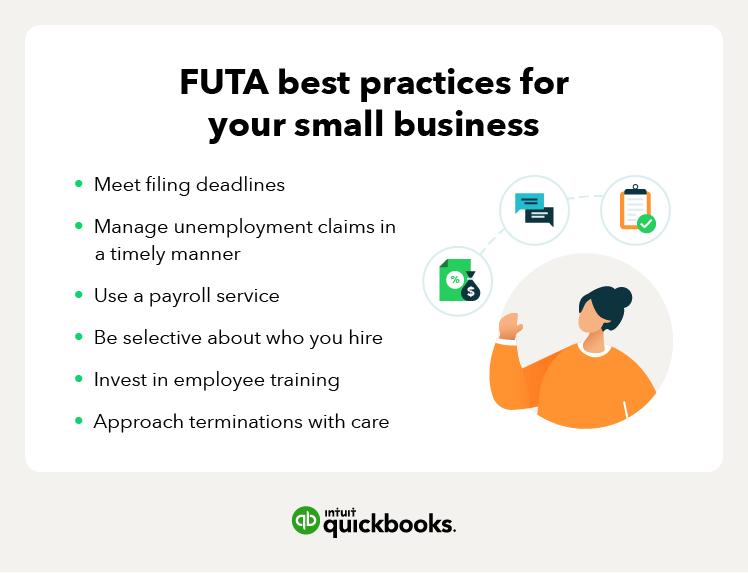
  • Federal Unemployment Tax (FUTA): This is paid solely by you at a rate of 6% on the first $7,000 of each employee's wages. However, most employers get a 5.4% credit, reducing the rate to 0.6%. The graphic below lists some best practices for managing your FUTA obligations.
Image Alt Text

Massachusetts state payroll taxes

In addition to federal payroll taxes, Massachusetts employers must also account for state-specific payroll obligations:

  • Massachusetts state income tax: Massachusetts has a flat 5.00% state income tax on most wages, with an additional 4% surtax on annual income over $1,083,150.
  • Massachusetts state unemployment insurance (SUI): Employers pay SUI tax on each employee’s wages up to the annual wage base of $15,000. Experienced employers are assigned a rate based on their experience rating. New non-construction employers typically begin at a rate of 2.13%, while new construction employers are 5.45%.
  • Massachusetts Paid Family and Medical Leave (PFML): Massachusetts requires contributions to its PFML program, which provides paid leave benefits to workers. In 2025, the total PFML contribution rate is 0.88% of eligible wages. For employers with 25 or more employees, this 0.88% is split into an employee portion (up to 0.46% withheld) and an employer portion (about 0.42%). Smaller employers (<25 employees) are exempt from the employer share and remit a total of 0.46% (employee-paid).
  • Massachusetts Employer Medical Assistance Contribution (EMAC): EMAC is an employer tax used to fund health insurance programs in the Commonwealth. Established employers (those in business over 3 years with 6+ employees) pay a small percentage on the first $15,000 of each employee’s wages. The rate starts at 0.12% in the 4th year of subjectivity and rises to 0.34% by the 6th year and beyond. New employers are generally exempt from EMAC for their first three years. 

Massachusetts local payroll taxes

To ensure you’re compliant with any local payroll taxes:

  1. Check with your local government for any payroll-related fees or special assessments. For example, some municipalities may have local ordinances related to employment, like city-specific minimum wages or paid leave rules.
  2. Consult a tax professional if you need clarification on local payroll tax requirements or assistance with compliance. An accountant specializing in Massachusetts payroll taxes can help verify your responsibilities and keep your business on track.

Other important tax considerations

Multiple locations

If your business has employees working in multiple cities or counties, you may be subject to different local payroll taxes for each location.

Changing rates

Local payroll tax rates can change over time, so it's important to stay informed about any updates that may affect your business.

Employer responsibilities for payroll taxes in Massachusetts

As a Massachusetts employer, you're responsible for managing a complex array of federal and state payroll taxes, which involves careful calculation, timely withholding, and accurate reporting to various government agencies. Here’s an overview of what you should know.

Registering for payroll taxes

To get started with payroll in Massachusetts, you’ll need to complete a few registrations at both the federal and state levels:

  1. Obtain a federal employer identification number (EIN). Before hiring your first employee, apply for an EIN from the IRS. This federal tax ID is used on all payroll tax filings. Sole proprietors may initially use their Social Security number, but an EIN is highly recommended. You can apply online via the IRS EIN application (Form SS-4).
  2. Register with Massachusetts for state payroll tax accounts. You’ll need to register your business with the Massachusetts Department of Revenue (DOR) to obtain a withholding tax account and enroll in the Paid Family and Medical Leave program. This is done through the MassTaxConnect online portal. At the same time, register with the Department of Unemployment Assistance (DUA) to set up a state unemployment insurance (SUI) account, as well as to establish your EMAC reporting. You can register on DUA’s UI Online system.
  3. Secure workers’ compensation insurance. Massachusetts law requires employers to carry workers’ compensation insurance for their employees from day one. While this isn’t a tax registration, it is a critical employer obligation when you start payroll. You’ll need to purchase a workers’ comp policy through a private insurer or insurance agent authorized in Massachusetts.
  4. Register for new hire reporting. Massachusetts mandates that all employers report new hires within 14 days. You can do this through the DOR’s New Hire Reporting portal. Submit each new employee’s name, address, Social Security number, and hire date. This requirement applies even to employers outside Massachusetts with workers in the state.

Calculating payroll taxes

Small business owners often ask, "How much are payroll taxes in Massachusetts?" Each payroll cycle requires accurately calculating federal and state taxes. There are several ways to do this accurately:

  • Check government websites: For Massachusetts state taxes, the DOR publishes updated withholding tables (Circular M) reflecting the 5% income tax and any applicable surtax. The Massachusetts PFML guides calculating PFML contributions, and DUA provides the current SUI rate schedule and wage base
  • Payroll software: Some small business software programs have built-in Massachusetts payroll tax calculators, saving you time and minimizing the chance for errors.
  • Professional services: If you prefer to outsource payroll, a professional payroll service can handle everything for you.

Whichever method you choose, make sure you stay updated on the current tax rates and wage limits, as these can change every year.

Withholding state payroll taxes

After determining the correct tax amounts for each payroll, the next step is to withhold and remit those taxes properly:

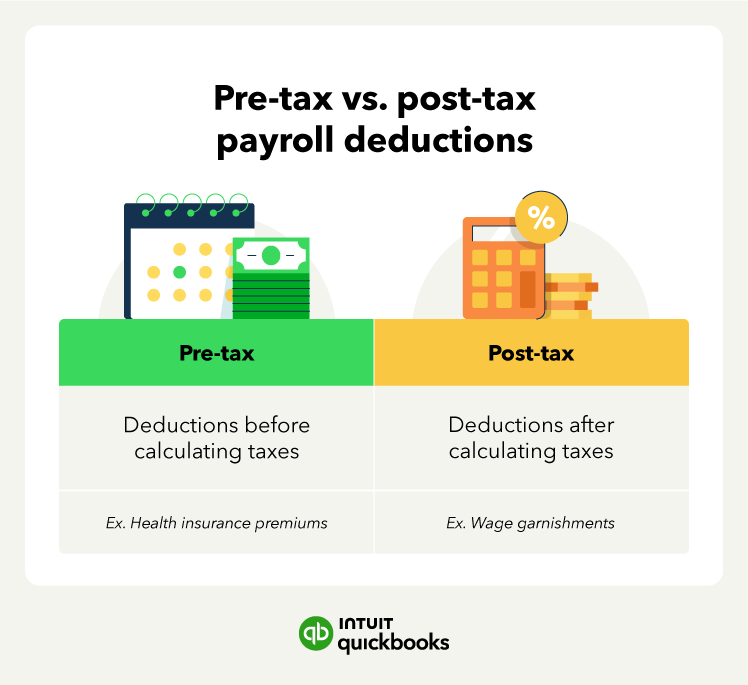
Massachusetts state income tax: Withhold 5% of each employee’s taxable wages, with adjustments for any pre-tax deductions or exemptions, for state income tax. 

  • Example: An employee earns $2,000 in gross wages for a biweekly pay period. You would withhold 5%, or $100, for Massachusetts state income tax. If the employee submitted a completed Massachusetts Form M-4 and claimed additional exemptions or requested extra withholding, you would adjust the withheld amount accordingly.

Massachusetts PFML contributions: For employers with 25+ employees, withhold the employee portion of PFML (up to 0.46%) from each employee’s wages. If you are a small employer, you will withhold the full 0.46% since you have no employer portion.

  • Example: If an employee earns $1,500 in a week, you would withhold $6.90 (0.46% of $1,500) for PFML. Your employer share would be the remaining 0.42%.

Unemployment insurance (SUI): Massachusetts SUI is not withheld from employee pay. It is paid entirely by the employer. However, you still need to calculate the contribution for each employee’s wages.

  • Example: Suppose your assigned rate is 1.0%, and an employee earns $3,000 in a quarter. You would owe $30 (1.0% of $3,000). If the employee continues to earn wages, you’ll continue accruing SUI until they hit the $15,000 wage base for the year.

By applying these calculations to each paycheck, you ensure accurate withholdings and compliance with state requirements.

Remitting state payroll taxes

Once you've calculated and withheld the appropriate taxes, the next step is to remit those payments, along with any required employer contributions, to the Massachusetts Department of Revenue (DOR) and Department of Unemployment Assistance (DUA).


Filing payroll tax returns in Massachusetts

In Massachusetts, employers must comply with both quarterly and annual payroll tax return requirements at the state and federal levels. Here's a breakdown of 2025 obligations: 

Quarterly requirements


Annual requirements

Penalties for late filing or non-compliance and tips for staying organized

Massachusetts imposes penalties for missing deadlines, underpaying taxes, or failing to file payroll tax returns. On the federal level, the IRS can also assess penalties for late payroll tax deposits or missed filings. You can review the full details on federal failure-to-deposit penalties

Here are some tips to stay compliant:

  • Automate reminders: Use digital calendars or payroll software to flag due dates in advance.
  • File electronically: Platforms like MassTaxConnect and UI Online simplify submissions and reduce errors.
  • Use payroll software: Stay compliant and stress-free with smart payroll software that handles tax calculations and deadline alerts, so you never miss a payment or make a misstep.
  • Seek professional help: If you have any questions or concerns about payroll taxes, don't hesitate to consult with a tax professional or accountant. They can provide expert guidance and help you tackle the complexities of payroll tax compliance.
Image Alt Text

Payroll tax credits and incentives

Despite the many obligations, employers can also take advantage of tax credits and incentives related to payroll. These programs can reduce your tax burden and even return cash to your business in some cases.

Work Opportunity Tax Credit (WOTC)

WOTC is a federal tax credit for employers who hire individuals from certain target groups (such as veterans, recipients of public assistance, ex-felons, and long-term unemployed). If you hire a qualifying employee and they are certified through the state’s workforce agency, you can claim a credit up to $2,400 (or more for certain veterans) against your federal income taxes. 

Massachusetts Disability Employment Tax Credit (DETC)

Massachusetts offers a state tax credit to incentivize hiring individuals with disabilities. Employers who hire a Massachusetts resident with a disability and employ them for at least 12 consecutive months can claim a credit of $5,000 or 30% of first-year wages (whichever is less) for that employee. For each subsequent year the employee remains employed, the employer can claim $2,000 or 30% of that year’s wages (whichever is less). 

Apprenticeship Tax Credit

Massachusetts has a tax credit for hiring registered apprentices in certain industries. If your business hires and trains apprentices in occupations related to healthcare, manufacturing, or technology, you may be eligible for a credit of up to $4,800 per apprentice (or 50% of wages paid, whichever is less) for the first year of the apprenticeship. Employers can claim up to $100,000 in apprenticeship credits per year under the Registered Apprentice Tax Credit program. This credit is claimed against Massachusetts income tax/corporate excise. It’s a great incentive for companies in need of skilled workers to invest in on-the-job training.

Industries frequently benefiting from Massachusetts business tax credits

  • Technology and life sciences. Massachusetts is known for its biotech, pharmaceutical, and tech sectors. The state offers targeted incentives for these industries, such as the Life Sciences Tax Incentive Program, which provides tax credits to life sciences companies that create jobs in Massachusetts. R&D-focused companies can also take advantage of the federal Research & Development Tax Credit and its state counterpart, the Massachusetts Research Tax Credit (applied against MA corporate excise). These credits encourage innovation by offsetting some of the costs of research activities.
  • Manufacturing and skilled trades. Manufacturing firms and trades employers (electricians, plumbers, HVAC, etc.) often benefit from the Apprenticeship Tax Credit mentioned above. By sponsoring apprentices, these companies build their workforce pipeline and reduce their tax liability. Additionally, manufacturers can utilize investment tax credits for equipment (MA has an Investment Tax Credit for certain corporations) and may qualify for workforce training grants funded by the Workforce Training Fund (since all MA employers contribute to this fund via payroll).
  • Healthcare and care services. Healthcare providers and companies hiring in-home care or nursing staff may tap into WOTC if they hire veterans or long-term unemployed individuals. Also, the Disability Employment Tax Credit can directly benefit hospitals, clinics, or care facilities that proactively employ people with disabilities. There are also federal credits for offering certain employee benefits (for instance, small businesses that provide health insurance might qualify for the Small Business Health Care Tax Credit).
  • Hospitality and retail. Businesses in hospitality and retail often have higher turnover and frequently hire from demographic groups covered by the WOTC (such as SNAP recipients or summer youth hires). These industries can leverage the WOTC credit when hiring eligible employees. Additionally, they might qualify for local economic development incentives if located in certain designated economic opportunity areas. 

Consult with a tax professional to understand what tax credits and incentives you could potentially apply to your business. 

Common payroll tax mistakes in Massachusetts (and how to avoid them)

Even well-intentioned businesses can make mistakes when handling payroll taxes. Here are some common pitfalls for Massachusetts employers and tips on how to avoid them.

Misclassifying workers

Massachusetts has one of the strictest laws in the country for defining independent contractors, using a three-part “ABC” test. Misclassifying an employee as a contractor can lead to serious consequences: you may owe back taxes for Social Security, Medicare, state withholding, unemployment, plus fines. To avoid this mistake, carefully review the Massachusetts criteria: the worker must be free from control, perform work outside your usual business, and engage in an independent trade of the same nature to be a true contractor. 

Neglecting Massachusetts-specific requirements

Out-of-state or new employers sometimes overlook unique Massachusetts payroll obligations. A common mistake is failing to register for and remit PFML contributions. Since PFML is relatively new (effective 2019), it can be forgotten, but Massachusetts will hold you liable for missed contributions, and employees could lose out on benefits if you don’t comply. Ensure you’ve set up your MassTaxConnect account to include PFML and that the correct amounts are withheld. 

Missing deposit deadlines or filing late

Timing is critical in payroll tax compliance. Many small businesses have been hit with unnecessary penalties because they forgot to make a deposit or assumed they could pay taxes quarterly when they were required to pay monthly. Likewise, not filing the quarterly unemployment report by the deadline can trigger a penalty and interest on the balance due. To avoid this, use automation and reminders. 

Tip: QuickBooks Payroll can help you avoid these common mistakes by automating calculations, tracking deadlines, and keeping accurate records.

How to manage your small business payroll obligations 

Understanding the nuances of Massachusetts's payroll taxes and regulations can take some time. Follow our small business tax preparation checklist and these steps to help you manage your payroll taxes.

Step 1. Partner with a tax professional

Consult a tax professional familiar with Massachusetts’s payroll taxes and regulations. They can guide you through compliance requirements, local tax nuances, and potential tax benefits for your business.

Step 2. Explore payroll software

Consider using payroll software to streamline your payroll processes. Tools like QuickBooks automate tax calculations, minimize errors, and ensure compliance with Massachusetts laws.

Step 3. Proactively plan for compliance

Stay informed about Massachusetts’s payroll tax deadlines and updates. Payroll software combined with expert guidance can help ensure you meet state and local requirements.

Step 4. Optimize your tax strategy

Work with your tax professional to uncover deductions, credits, or other incentives that could benefit your business. Leverage software reports to better understand your payroll data and identify opportunities for savings.

Step 5. Build a financially strong foundation

By combining expert guidance with the right tools, you can efficiently manage payroll taxes and focus on growing your business in The Bay State.

What are the payroll taxes in Massachusetts?

Here’s a quick reference table of major payroll-related taxes for Massachusetts employers in 2025:

Calculating payroll taxes in Massachusetts

Payroll tax calculations depend on several factors, including:

  • Employee’s wages and taxable income
  • Employer’s unemployment insurance (UI) rate
  • Employer size (affects PFML contribution responsibilities)
  • Federal and state withholding requirements

For employees, the main payroll taxes are:

  • Massachusetts state income tax
  • Paid Family and Medical Leave (PFML)
  • Federal income tax
  • FICA (Social Security and Medicare taxes)

For employers, the main payroll taxes are:

  • Massachusetts unemployment insurance (UI)
  • Employer PFML contribution (if applicable)
  • Federal Unemployment Tax (FUTA)

To accurately calculate your Massachusetts payroll tax rate, you can use IRS Publication 15 (Circular E), the Massachusetts DOR’s Circular M withholding tables, or payroll software configured with Massachusetts-specific data. You can also consult a tax professional to ensure compliance and accuracy.

It’s essential to stay updated on the current rates and regulations, as they can change annually.

Leverage payroll software for compliance in Massachusetts

Managing payroll in Massachusetts requires accuracy due to complex regulations. Errors can lead to penalties and legal risks, but QuickBooks streamlines payroll management to ensure compliance. It automatically calculates, files, and pays federal and state payroll taxes—with a 100% accuracy guarantee.** You'll stay current with Massachusetts tax law changes, easily generate reports for filings, and get up to $25,000 in penalty coverage if issues arise.**


Disclaimer: 

**Accuracy Guaranteed: Available with QuickBooks Online Payroll Core, Premium, and Elite. We assume responsibility for federal and state payroll filings and payments directly from your account(s) based on the data you supply. As long as the information you provide us is correct and on time, and you have sufficient funds in your account, we’ll file your tax forms and payments accurately and on time or we’ll pay the resulting payroll tax penalties. Guarantee terms and conditions are subject to change at any time without notice.

Tax penalty protection: If you receive a tax notice and send it to us within 15 days of the tax notice we will cover the payroll tax penalty, up to $25,000. Additional conditions and restrictions apply. Only QuickBooks Online Payroll Elite users are eligible to receive tax penalty protection.

This content is for information purposes only and information provided should not be considered legal, accounting or tax advice or a substitute for obtaining such advice specific to your business. Additional information and exceptions may apply. Applicable laws may vary by state or locality. No assurance is given that the information is comprehensive in its coverage or that it is suitable in dealing with a customer’s particular situation. Intuit Inc. does not have any responsibility for updating or revising any information presented herein. Accordingly, the information provided should not be relied upon as a substitute for independent research. Intuit Inc. cannot warrant that the material contained herein will continue to be accurate, nor that it is completely free of errors when published. Readers should verify statements before relying on them.


Recommended for you

Mail icon
Get the latest to your inbox
No Thanks

Get the latest to your inbox

Relevant resources to help start, run, and grow your business.

By clicking “Submit,” you agree to permit Intuit to contact you regarding QuickBooks and have read and acknowledge our Privacy Statement.

Thanks for subscribing.

Fresh business resources are headed your way!

Looking for something else?

QuickBooks

From big jobs to small tasks, we've got your business covered.

Firm of the Future

Topical articles and news from top pros and Intuit product experts.

QuickBooks Support

Get help with QuickBooks. Find articles, video tutorials, and more.