QuickBooks Blog
A small business owner works at her desk
Ohio

Ohio small business grants and loans for 2025

Funding for your small business is the key to its overall ability to start strong, operate smoothly, and grow over the years. On a federal level, you can have access to funding through the government's SBA 7(a) loans, SBA 504 loans, and SBA Express loans. On the state level, there are various Ohio small business grants and Ohio small business loans that your business may be eligible for. 

We're going to discuss these options below to help you discover more funding sources for your small business. First, let’s understand a key concept: the difference between grants and loans.

Jump to:

Grants vs. loans: Understanding your funding options

Many small businesses use grants and/or loans as the main funding options to get their operations up and running, or to expand and grow. Here’s the difference between the two:

Grants

Grants are funding that is “free” in that it’s not required to be repaid and accumulates no interest. However, they’re often restricted to certain types of eligible businesses, and the application process can be competitive.

Loans

Loans are funding that must be repaid, usually with interest. The upside is that they frequently offer more flexibility than grants in how the funds are used.

What to know before you apply

Before you start applying for funding for your Ohio small business, here are some questions to keep in mind: 

How hard is it to get a business loan in Ohio?

The type of business loan you're trying to get will play a big role in how hard it is to obtain. While obtaining loans from traditional lending institutions can be challenging for unseasoned businesses, Ohio does offer many great grant and small business loan programs that make attaining funding fairly manageable for all types of small businesses.

Are there free funding programs for Ohio small businesses?

Being able to obtain funding without having to repay it can do wonders for your small business. Fortunately, the Buckeye State offers a wide variety of grant programs that don't require repayment.

Do you have to pay back loans in Ohio as a small business?

Typically, Ohio small business loans do require a fixed repayment. However, Ohio small business grant programs usually don't require any repayment from the business, although matching funds may be required in some cases.

3 Ohio small business grants

Ohio offers many different types of grants for businesses throughout the state. From grants for startup companies to grants for companies looking to enhance their physical location, let’s look at what small business grants are available in Ohio.

1. International Market Access Grant for Exporters (IMAGE)

This small business grant is aimed at assisting companies in boosting their exports and gaining knowledge about exporting. An IMAGE grant will pay 50% of your business’s eligible export expenses up to a maximum of $10,000 per year.

2. JobsOhio Small Business Grant

A JobsOhio business grant provides funding for projects in communities that the State of Ohio deems to be underserved. Each business applicant must have a 51% owner who is a member of the outlined eligible demographic, and the project must take place in an area deemed to be distressed.

3. Disaster Recovery Grants

These relief grants are offered by the Department of Housing and Urban Development to businesses that are deemed to be in areas that have been disaster-stricken. There are a variety of specific grants offered through this economic recovery and emergency relief package, so check your business’s eligibility if you have been recently affected by a natural disaster.

A group of people that are sitting in front of a table.

Eligibility requirements for grants in Ohio

Eligibility for small business grants in Ohio will vary widely according to the grant, but some common requirements include:

  • Business size: As defined under Ohio law, a small business has under 500 full-time employees or gross annual sales of less than $6 million. 
  • Location: Your business also must have operations located in Ohio.
  • Financial need: Applicants for a grant may have to demonstrate financial need.
  • Industry focus: Some grants are only available to businesses in certain industries, especially critical industries like agriculture and technology.
  • Operational history: Many grants require a business to have at least a year or more of continuous operation.
  • Commitment to initiatives: In some cases, grants prioritize businesses that align with a mission, such as sustainable development or minority empowerment.
  • Matching funds: Certain grants require the businesses receiving them to contribute a share of matching funds.
  • Ownership status: Your business must be independently owned, and for certain grants, it must be owned by people who identify as members of a certain group.
  • Required documentation: Grant applications will often need to submit business plans, income statements, and other key financial documents.

4 federal small business grants

1. Small Business Innovation Research (SBIR) and Small Business Technology Transfer (STTR) Programs

Businesses engaged in research and innovation should consider applying for SBIR and STTR grant programs. These grants provide federal funding to help businesses develop and productize new technologies in critical industries like healthcare, energy, and defense. Businesses must meet federal guidelines and may be required to work with a federal agency, like the Department of Defense or Department or National Science Foundation.

2. USDA Rural Business Development Grants

If your business is located in a rural community of 50,000 or fewer people, you might be eligible for a Rural Business Development Grants (RBDG) from the US Department of Agriculture. These funds support small businesses with needs like training and technical assistance.

3. Minority Business Development Agency (MBDA) Grants

Nonprofit organizations and business development centers that assist minority entrepreneurs can apply for grants through the MBDA, a division of the U.S. Department of Commerce. MBDA grants can help fund programs that provide business training, access to capital, and expansion opportunities. 

4. Economic Injury Disaster Loans and Grants

Economic downturns and natural disasters can be times of significant hardship for businesses. During such times, agencies like the SBA and the Federal Emergency Management Agency (FEMA) often make federal grants and low-interest loans available to business owners.

Additional grant resources for Ohio businesses

Other resources for finding Ohio business grants include:

  • Local governments: Many cities and counties offer grant funding for infrastructure and business development projects.
  • Private foundations: Nonprofits often issue grants to support businesses that align with their mission and community development goals.
  • Corporations: Larger companies sometimes help provide entrepreneurs with funding, particularly in underserved communities and fast-growing industries.

How to get a small business grant in Ohio: Application process

Applying for any type of grant requires diligent preparation and careful attention to the application process. While the process can look different for every grant, we’ll show you the basics of how it usually works.

Applying for Ohio small business grants

These are the typical steps for applying for a grant funded by the State of Ohio.

1. Explore Ohio grants for small businesses

Search online for Ohio small business grants. Jobs. Ohio is a great place to start looking for the latest grants.

2. Assemble the necessary documentation

Grant applications typically require financial statements including business plans, income statements, and balance sheets. Prepare this ahead of time so they’ll be ready when the grant window opens.

3. Review the Notice of Funding Opportunity (NOFO) and be sure you meet the pre-qualification requirements

Most grants are announced via a NOFO. Read the statement carefully and verify that your business meets all of the required eligibility conditions.

4. Prepare and submit your application

To ensure your business meets the grant requirements, follow the application instructions closely and submit before the deadline.

5. Attend grant trainings if available

Find out if the grant you’re applying for has any training sessions available. Many grants have workshops available that either help applicants improve their applications or assist grant recipients with compliance and effective spending.

Applying for federal grants

1. Identify federal funding opportunities

Check grants.gov for the latest small business grant opportunities from the federal government, as well as the websites of relevant federal agencies. 

2. Obtain a Unique Entity Identifier (UEI)

Register with the federal System for Award Management and get your UEI number. To be eligible for federal grants, you must maintain an active SAM registration.

3. Review the Funding Opportunity Announcement (FOA)

The FOA will give you key information like eligibility criteria, deadlines, and application instructions. Note key deadlines and required documents.

4. Prepare your application package

Follow the FOA instructions closely and prepare your application package. You’ll usually need to create a proposal that includes how you’ll use the funds and the purpose of your work. Get key supporting documents together, including certifications and letters of recommendation.

5. Submit your application

Use the required platform to submit your application — typically grants.gov for federal grants. Make sure your application is properly formatted and submitted before the deadline.

6. Follow up and await feedback

Monitor your application status in the submission portal. Make sure to respond promptly to any requests for additional information.

Applying for local, private, or corporate grants

1. Find grant opportunities

Grants are often available through the websites of local governments and nonprofits. Your local Chamber of Commerce is a great jumping-off point for finding NOFOs.

2. Prepare required documents

Get required documents like business plans and financial statements together, then create an application 

3. Submit your application

Being sure to follow all instructions exactly, submit your application through the specified platform.

4. Monitor and follow up

Check your application status regularly and respond promptly to requests for additional information.

Are there repayment requirements for small business grants in Ohio?

Part of the purpose of a grant is that it does not have to be repaid. However, if your business uses grant funds in a way that deviates from the grant agreement, you could be required to pay some of the money back. 

7 Ohio small business loan programs

Buckeye State entrepreneurs have access to a wide variety of Ohio small business loans to help them access capital and expand their operations. Let’s look at some of the most important options for getting a small business loan in Ohio, including both state and federal government-backed loans.

1.The Ohio Capital Access Program

The Ohio Capital Access Program works to help small businesses receive loans from approved lending institutions that receive a reserve contribution from the Ohio Department of Development to help cover costs in the event of default.

2. The Collateral Enhancement Program 2.0

The Collateral Enhancement Program is specifically for businesses that lack the appropriate collateral to receive traditional financing. It uses contributions from community development financial institutions throughout the state to cover the lack of collateral so these small businesses can get approved for the funding they need.

3. The Loan Loss Reserve Program

The Loan Loss Reserve Program (LLRP) is designed to offer credit enhancement up to 50% of the total amount for a qualified energy efficiency project on existing business infrastructure. The project must decrease energy usage by at least 15%.

4. The Regional 166 Direct Loan Program

The Regional 166 Direct Loan Program is specifically formulated to provide low-interest loans to promote business expansion, job creation, job retention, and economic development for small businesses that would otherwise not have access to the funding they need.

5. Women’s Business Enterprise Loan Program

The Women's Business Enterprise Loan Program is designed to provide women-owned businesses with funding over $45,000 at or below current market interest rates.

6. Ohio Micro-Loan Program

The Ohio Micro-Loan Program is specifically crafted to fund new and small businesses with micro-loans offered at a 0% interest rate. Authorized amounts range from $10,000 up to $45,000.

7. SBA 7(a) Loan Program

The SBA 7(a) Loan Program is a federally backed loan program that helps Ohio businesses access working capital, equipment, real estate, and debt refinancing. Like normal loans, 7(a) loans are usually issued through banks and credit unions, but the U.S. Small Business Administration guarantees a portion of the loan to reduce the lender’s risk.

Ohio small business loan eligibility

Review the eligibility requirements carefully before you apply for any Ohio small business loan. As we mentioned earlier, you’ll have to meet the Ohio definition of a small business to access many of these loans, which is:

  • Location: You must operate your business within the state of Ohio.
  • Independently owned: In most cases, your business can’t be part of a larger business.
  • Employees/revenue: Your business must have under 500 employees or under $6 million in annual gross receipts.

In addition, your loan may include restrictions on what you can use it for. You usually can’t use a small business loan for speculative ventures like stock trading, for example.

How to get a small business loan in Ohio: Application process

Assess your financing needs

Identify the amount of funding you need, how you plan to use it, and which types of loans might be suitable.

Check your credit and financials

Pull your personal and business credit reports. Use your preferred small business accounting software to create key reports like income statements and balance sheets, and make sure your income supports repayment.

Prepare a business plan

Most lenders will ask to see a detailed business plan that shows offerings, strategy, and other key aspects. Free business plan templates can make this process easier.

Research lenders

Look at loan options available from banks, credit unions, and online lenders. Compare factors like interest rates and repayment terms.

Gather required documents

Make sure you have all documents the loan application requires, including financial statements, your business plan, and legal business documents such as LLC agreements. 

Submit your application

Submit your loan application, either online or in person, following the lender’s application process exactly. 

Await approval and funding

The lender’s underwriters will review your application and may sometimes request additional details.

Ohio small business funding resources and support

There are various organizations that are specifically crafted to help connect Ohio small business owners with funding resources. Some of these organizations are mentioned below.

Ohio Economic Development Association

This community business association is on a mission to enhance economic development throughout the state to boost overall prosperity, economic growth, and more opportunities for residents.

Ohio State Small Business Credit Initiative (SSBCI)

The SSBCI provides various funding programs for Ohio small businesses. These include the Ohio Venture Fund, the Community Development Financial Institutions (CDFI) Loan Participation Program, and the Ohio Early Stage Focus Fund.

Ohio Small Business Development Centers (SBDC)

These centers provide necessary counseling and assistance for new and existing businesses.

Minority Business Assistance Centers

These organizations provide minority-owned businesses with access to capital, professional and technical assistance, surety bonding, and other opportunities.

Ways to fund your small business in Ohio

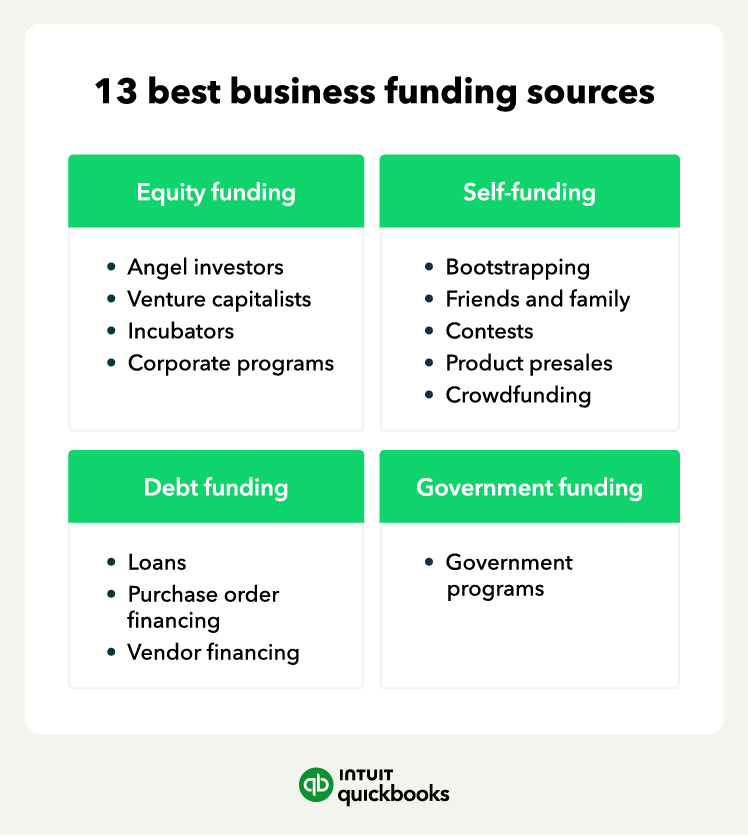
There are many other avenues you can pursue to obtain funding for your small business. Some of the other small business funding options that entrepreneurs may want to consider pursuing include:

Alternative loans

Many options for non-traditional financing are now available to entrepreneurs, including online term loans, merchant cash advances, and peer-to-peer lending. 

Angel investors

Angel investors are established entrepreneurs who invest in startups, usually in return for an equity stake and input on operations.

Bootstrapping 

Bootstrapping refers to using only a business owner’s personal income and savings to start a business. It can be challenging, but it allows the business owner to maintain maximum control.

Contests

Some entrepreneurs enter business pitch contests, which come with funding if they win. The process is often stressful, but the rewards can be great.

Corporate programs

Find out if any larger businesses in your area offer business assistance programs that can help small enterprises get a leg up.

Crowdfunding 

If you’re good at selling an idea, you might try crowdfunding your business: raising money from small-dollar donors via online platforms.

Friends and family 

Entrepreneurs with strong social networks might consider borrowing money from friends and family, although it’s important that you still use a contract and treat it as a business transaction.

Incubators and accelerators

These organizations support new businesses with mentorship and funds, sometimes in exchange for equity stakes or other concessions.

Microloans

Consider getting a microloan: a small, short-term loan that’s usually under $50,000. Microloans can be a great option for the smallest businesses that don’t qualify for traditional financing.

Product presales

Some businesses are able to raise funds for launch or expansion by selling pre-orders for planned products.

Vendor financing

You may be able to get delayed payment terms from suppliers, which can help you stabilize your cash flow early on.

Venture capitalists 

These professional firms seek out startups with high growth potential and invest in them, in exchange for equity stakes.

Disclaimer:

This content is for information purposes only and information provided should not be considered legal, accounting or tax advice or a substitute for obtaining such advice specific to your business. Additional information and exceptions may apply. Applicable laws may vary by state or locality. No assurance is given that the information is comprehensive in its coverage or that it is suitable in dealing with a customer’s particular situation. Intuit Inc. does not have any responsibility for updating or revising any information presented herein. Accordingly, the information provided should not be relied upon as a substitute for independent research. Intuit Inc. cannot warrant that the material contained herein will continue to be accurate, nor that it is completely free of errors when published. Readers should verify statements before relying on them.


Recommended for you

Mail icon
Get the latest to your inbox
No Thanks

Get the latest to your inbox

Relevant resources to help start, run, and grow your business.

By clicking “Submit,” you agree to permit Intuit to contact you regarding QuickBooks and have read and acknowledge our Privacy Statement.

Thanks for subscribing.

Fresh business resources are headed your way!

Looking for something else?

QuickBooks

From big jobs to small tasks, we've got your business covered.

Firm of the Future

Topical articles and news from top pros and Intuit product experts.

QuickBooks Support

Get help with QuickBooks. Find articles, video tutorials, and more.