BLACK FRIDAY SALE  
70% OFF 
QuickBooks
for 3 months  Ends 11/30
QuickBooks Blog
Image Alt Text
Ohio

Ohio small business taxes: Types, rates, deadlines, and how to file in 2025

If you’re launching or expanding a business in Ohio, you’ll find a supportive tax structure. In fact, recent improvements make the state even more small-business friendly. With a variety of industries thriving in the state, including healthcare, manufacturing, and technology, there's ample possibilities for businesses of all types to succeed. Understanding Ohio’s tax structure can help you remain compliant and potentially reduce costs.

This guide covers important tax topics such as handling payroll taxes and taking advantage of exemptions, credits, and incentives. Whether you’re starting a new business or optimizing your tax strategies, this resource is designed to help Ohio small businesses gain insight into their tax responsibilities and manage taxes efficiently.

Refer to the table of contents below to quickly find the information that matters most to you:

Taxes in Ohio overview

  • Graduated personal state income tax rates from 2.75% to 3.688%
  • A business gross receipts tax (the Commercial Activity Tax or CAT) takes the place of a corporate income tax or franchise tax
  • No CAT tax on businesses with taxable gross receipts under $6 million 
  • 5.75% state sales and use tax; additional local taxes levied by counties and regional transit authorities 
  • Other business taxes may include unemployment taxes, excise taxes, and property taxes

Key Ohio business tax adjustments for 2025

Staying informed about the latest tax changes is essential for businesses to maintain compliance, optimize their tax strategies, and plan ahead. Here are some important adjustments and updates for 2025 that could impact your business:

Commercial Activity Tax (CAT) change

  • Starting January 1, 2025, the first $6 million of a business's gross receipts will be exempt from the Commercial Activity Tax (CAT), the state’s tax on gross receipts. This is an increase from the previous exclusion of $3 million.

Sales tax increase for certain counties

  • The Central Ohio Transit Authority (COTA) approved a permanent 0.5% sales tax increase for Franklin County and parts of Fairfield, Union, Licking, and Delaware Counties within the COTA district.

Ohio state income tax

Ohio has a state income tax with three tax brackets.

What is the state income tax rate in Ohio?

For an individual filer, recent rules give the state three tax brackets. Employees who earn $26,050 or less are not subject to Ohio state income tax. The marginal rate is 2.75% for income between $26,051 and $100,000 and 3.5% for all income over $100,000.

Image Alt Text

Types of business taxes in Ohio 

There are many types of business taxes that you may be responsible for managing in Ohio. From federal to state to payroll to local, it’s important to understand the different programs and how they could affect your bottom line. 

Federal taxes

You'll be responsible for federal taxes in whatever state you open a business in. Unfortunately, there are dozens of federal tax forms with unique due dates and requirements. Using an accountant or small business accounting software can be helpful in avoiding mistakes that can lead to overpayment or penalties. 

As a business owner, you have both personal and business tax filing obligations. Here’s what you need to know:

Personal tax filing

Federal income tax returns:

Every individual is required to file and pay federal personal income tax. This forms the foundation of your overall tax responsibility.

Business tax filing

Business owners have additional filing requirements, depending on the business structure:

  • Sole proprietorship: Income and expenses are reported on your personal tax return using Schedule C (Form 1040).
  • Partnership: A partnership must file an information return (Form 1065) to report income, deductions, and other relevant details, while each partner reports their share of income on their personal return.
  • Corporation: A corporation files a corporate tax return (Form 1120), paying taxes on its profits.
  • S Corporation: An S corporation files an informational return (Form 1120S). Its income, losses, and deductions pass through to shareholders, who report them on their personal returns.
  • Limited Liability Companies (LLCs): LLCs are not classified separately for federal tax purposes and are taxed based on their ownership structure. Single-member LLCs default to sole proprietorship taxation or may elect corporate taxation, while multi-member LLCs default to partnership taxation or may elect corporate taxation.

Self-employment tax

If you work for yourself and earn more than $400 a year, you pay toward Social Security and Medicare programs through a self-employment tax. The Social Security system provides retirement benefits, disability benefits, survivor benefits, and hospital insurance (Medicare) benefits.

Employment taxes

As an employer, you are responsible for withholding and depositing federal income tax and the employee contribution to Social Security and Medicare taxes. You must also pay the employer portion of Medicare and Social Security and pay federal unemployment tax (FUTA). 

State taxes 

Ohio has a variety of state taxes. It’s important to know which kinds of taxes your business may be liable for, based on your structure and business activities. 

Commercial Activity Tax (CAT)

While Ohio does not have a corporate income tax, it does have a gross receipts tax called the Commercial Activity Tax (CAT). This tax applies to businesses with gross receipts exceeding $6 million. 

What is the Commercial Activity Tax rate?

The CAT rate is 0.26% on gross receipts above the $6 million threshold. Pass-through entities are also subject to the CAT but may benefit from the business income deduction when filing individual returns.

How is the Commercial Activity Tax calculated in Ohio?

The CAT is a gross receipts tax applied to businesses exceeding $6 million in annual revenue, calculated at a rate of 0.26% on receipts above this threshold.

For example: 

If a business has taxable gross receipts of $8 million in a given year:

Determine Taxable Amount: $8 million (total gross receipts) - $6 million (exclusion threshold) = $2 million (taxable gross receipts).

Calculate CAT Liability: $2 million × 0.26% = $5,200.

The CAT owed would be $5,200.

Who is liable for the Commercial Activity Tax?

The Commercial Activity Tax applies to any business with taxable gross receipts exceeding $6 million per calendar year. A business is liable for the CAT if it has substantial nexus with Ohio. Nexus refers to the level of connection between a business and the state that justifies the state's taxation authority over the business. According to the Ohio Department of Taxation, a business has substantial nexus in Ohio if it:

Owns or uses part or all of its capital or property in Ohio

Holds a certificate of compliance authorizing it to do business in Ohio

Has "bright-line presence" in Ohio, defined as:

Having at least $50,000 of property in Ohio

Having at least $50,000 of payroll in Ohio

Having at least $500,000 of taxable gross receipts sourced to Ohio

Having at least 25% of total property, payroll, or gross receipts within Ohio;

Doing business in Ohio through 1,000 or more separate transactions.

Otherwise has nexus with Ohio to the extent that the business can be required to remit the CAT under the U.S. Constitution.

Taxpayers must file and pay any liability due not later than 30 days from the point that person has more than $6 million in taxable gross receipts in the calendar year.

Visit the Ohio Department of Taxation website for more information.

Business income treatment

Because Ohio's Commercial Activity Tax (CAT) applies to various types of businesses, including pass-through entities like sole proprietorships, partnerships, and LLCs, there is a potential for double taxation of some business income. However, Ohio provides a 100% deduction on the first $250,000 of business income for taxpayers filing as "Single" or "Married Filing Jointly" ($125,000 for those filing "Married Filing Separately"). Any remaining business income above these thresholds is taxed at a flat rate of 3%. This deduction is specifically designed to alleviate double taxation on business earnings..

Financial Institutions Tax

The Financial Institutions Tax or FIT is a business privilege tax imposed on financial institutions organized for profit and doing business in Ohio, including banks, bank holding companies, and nonbank lenders. 

The FIT tax rate ranges from .8% to .25% and is based on the total equity capital in proportion to the financial business’ gross receipts attributable to Ohio, with a minimum tax of $1,000.

Franchise taxes in Ohio

Franchise (or privilege) taxes are imposed on certain companies based on their privilege to operate within a specific state. Ohio does not have a franchise tax, but it does have the Commercial Activity Tax (CAT) and the Financial Institutions Tax.

Excise taxes

Excise taxes are special taxes imposed on specific goods or services. In Ohio, these taxes apply to a wide range of products and activities, including:

  • Gasoline: Excise rate is 38.5 cents per gallon.
  • Cigarettes: Cigarettes are taxed $1.60 per pack of 20.
  • Alcohol: Beer is taxed 18 cents per gallon, hard liquor at $3.38 per gallon.

Counties, such as Cuyahoga County, may have additional excise taxes on top of applicable federal and state excise taxes. 

Employment taxes

If your business has employees, you will need to pay employment or payroll taxes. While some are federal, others are payable to the state of Ohio. Contributions may be employee-only, employer-only, or shared. 

Most employers that do business in Ohio are responsible for withholding Ohio individual income tax from their employees' pay. The current withholding rates range from 0.5% to 3.8% depending on the income level as of 2024, with the highest rate being 3.8% for income over $100,000.

Ohio employers also have the responsibility to withhold school district income tax from the pay of employees who reside in a school district that levies such a tax. Rates vary from district to district within the state, ranging from .50% to 2.00%.

Unemployment tax

As in all states, employers must pay federal unemployment insurance (UI) taxes. In Ohio, employers also fully fund state unemployment insurance. State UI tax is paid on each employee's wages up to a maximum annual amount. That amount is known as the "taxable wage base" or "taxable wage limit." 

For 2025, the taxable wage limit for Ohio UI tax is $9,000. Rates range from .4% to 10.1% based on a business’s rating.

Local taxes

Most cities, counties, and other jurisdictions in Ohio levy additional local taxes to fund essential services and infrastructure such as schools, roads, and public safety.

Sales and use taxes 

Most local jurisdictions charge their own additional sales tax, ranging from 0% to 2.25%, making the total sales tax range in Ohio 5.75% to 8%. You can locate your local rate on the state’s list of effective sales and use tax rates for 2025.

Remote seller tax considerations

In Ohio, remote sellers—businesses located outside the state that sell to Ohio customers via the internet, mail, phone, or other remote means—are required to collect and remit Ohio sales tax if they meet certain economic thresholds. Effective August 1, 2019, a remote seller establishes substantial nexus with Ohio if, in the current or previous calendar year, they have either:

  • Over $100,000 in gross receipts from sales into Ohio, or
  • At least 200 separate transactions delivering goods or services into Ohio.

Once these thresholds are met, the remote seller must register for an Ohio seller's use tax account, collect the appropriate sales tax on taxable sales to Ohio customers, file returns, and remit the collected tax. Registration can be completed through the Ohio Business Gateway or the Streamlined Sales Tax Registration System.

For comprehensive information on Ohio's sales tax obligations for remote sellers, please refer to the Ohio Department of Taxation's resources on out-of-state sellers.

Property taxes

The real property tax is Ohio’s oldest tax, on the books since 1825. The Ohio property tax rate is determined by each county assessor and varies widely depending on the location of the property and its use. The average property tax rate in the state is 1.56%, which is lower than the national average. 

Ohio business tax deductions, credits, and exemptions

Obtaining a tax exemption or tax credit can significantly reduce your tax burden. Each tax credit program has specific eligibility requirements and application procedures. The Ohio Department of Development provides information on all tax credits, other programs that support Ohio small businesses, and their eligibility requirements.

This is an overview of some of the available programs.

  • Ohio New Markets Tax Credit: The Ohio New Markets Tax Credit program incentivizes investment in underserved, low-income communities by offering a 39% tax credit over seven years. Investors fund Community Development Entities (CDEs), which channel capital into local projects, fostering business growth and economic development.
  • Ohio Enterprise Zone Program: The Ohio Enterprise Zone Program offers property tax exemptions to businesses investing in designated zones, encouraging job creation and expansion. Incentives apply to new real and, in some cases, personal property investments but exclude existing land and buildings.
  • Qualified Energy Project Tax Exemption: This program exempts renewable energy projects from public utility tangible personal property tax. Owners or lessees must apply before the tax year begins. Large projects (over 20 MW) need county approval and agreements for local infrastructure and safety, while small projects (under 250 kW) are automatically exempt. Certified projects must meet deadlines, job requirements, and ongoing reporting obligations.

Credits and exemptions from the Commercial Activity Tax (CAT)

For purposes of the Commercial Activity Tax, the law provides different credits qualified taxpayers may apply against their tax liability. The following are a couple of examples:

  • Jobs Creation and Retention Credits: The Jobs Creation and Retention Tax Credit (JCTC) is a refundable credit that can be applied against the CAT. It requires a certificate issued by the Department of Development. 
  • Credit for Qualified Research Expenses: The Qualified Research Expense (QRE) credit is a nonrefundable credit with a 7-year carryforward period. It is calculated as 7% of the difference between the current year's expenses and the average of the prior three tax periods, considering only Ohio expenses. This credit must be claimed in the 4th quarter of the year the research expenses were incurred.

Credits and exemptions for Ohio sales tax

In Ohio, certain businesses and activities qualify for sales tax exemptions or credits, offering significant savings on purchases directly tied to their operations.

Data center tax exemption

The Data Center Tax Exemption offers partial or full sales tax relief on eligible equipment purchases. To qualify, projects must meet investment and payroll requirements, with final approval granted by the Ohio Tax Credit Authority.

Manufacturing sales tax exemption

Ohio provides a sales tax exemption for manufacturers on purchases of machinery, equipment, and materials used primarily in the production of tangible personal property for sale. This exemption encompasses items directly involved in the manufacturing process, including those used in packaging and quality control.

Research and development sales tax exemption

Ohio offers a sales tax exemption for tangible personal property used directly in qualified research activities aimed at new or improved products or processes. To qualify, businesses must engage in eligible research as defined by state law.

Nonprofit organizations

Nonprofit organizations that are 501(c)(3) tax-exempt or operate exclusively for charitable purposes are exempt from sales tax on purchases of tangible personal property and services. However, when these organizations sell goods or services, they are generally required to collect and remit sales tax unless specific exemptions apply.


Types of Ohio taxes for different business entity types

The types and amount of Ohio taxes you and your business may have to pay depends on your business structure to some extent. Although the CAT applies to all entities, regardless of type, there may still be differences in taxes owed. 

Ohio sales taxes

Ohio has a state sales/use tax rate of 5.75%. Many counties and localities also add additional sales tax on goods and taxable services. 

Services that are subject to sales tax in Ohio include: 

  • Hotel stays under 30 days (5+ rooms)
  • Personal care services (excluding haircuts)
  • Fitness, recreation, and sports clubs
  • Janitorial, building maintenance ($5,000+ sales)
  • Landscaping, snow removal ($5,000+ sales)
  • Laundry, dry cleaning (excluding coin-operated)
  • Motor vehicle services (washing, towing, repair)
  • Storage of tangible personal property
  • Installation, repair of taxable property
  • Private investigation, security services
  • Telecommunications, satellite broadcasting
  • Data processing, computer services
  • Custom production with customer materials
  • 900-number telephone services
  • Passenger transport (excluding public transit, airlines)

Do you need a sales tax permit?

Any business located in Ohio that is making taxable retail sales of tangible personal property or taxable services must register for sales tax by obtaining a vendor’s license. Prospective retailers may obtain a vendor’s license through the Ohio Business Gateway  or through their County Auditor.

Out-of-state sellers who do substantial business in Ohio must also register for a license through the Ohio Business Gateway or through the Streamlined Sales Tax Registration System.

While sales taxes are collected by vendors, use taxes are designated in Ohio as an amount equal to the sales tax that is owed by a purchaser In a transaction where sales tax was due but not collected by the vendor or seller.

How to file business taxes in Ohio

A note is placed on a paper on top of a table.

To file business taxes in Ohio, first determine your business structure and complete the appropriate federal tax forms. You will need a tax identification number which is either an EIN or a Social Security Number depending on your structure. At the state level, if you collect sales tax, you must register for an Ohio Taxpayer Identification Number and the necessary tax accounts, such as Sales and Use Tax and Employer Withholding Tax, through the Ohio Business Gateway. 

If your business's taxable gross receipts exceed $6 million per calendar year, you must register for the Commercial Activity Tax (CAT). Ensure you understand your tax obligations and filing requirements to remain compliant with Ohio state laws.

When are business taxes due in Ohio?

Due dates vary based on the type of tax. 

Sales and Use Tax due dates:

  • Monthly filers. Returns are due on the 23rd of the month following the reporting period.
  • Quarterly filers. Returns are due on the 23rd of the month following the end of each quarter.
  • Semi-annual filers: Returns are due on July 23 and January 23 for the respective semi-annual periods.

If a due date falls on a weekend or holiday, the deadline is extended to the next business day.

Commercial Activity Tax (CAT)

  • Annual filers: For businesses with taxable gross receipts between $150,000 and $6 million, the annual return and payment are due by May 10 each year.
  • Quarterly filers: For businesses with taxable gross receipts exceeding $6 million, quarterly returns are due as follows:
  • First quarter (Jan-Mar): May 10
  • Second quarter (Apr-Jun): August 10
  • Third quarter (Jul-Sep): November 10
  • Fourth quarter (Oct-Dec): February 10 of the following year

The Ohio Department of Taxation has additional details about the CAT tax and payment requirements. For complete information on the CAT, including how to determine if your business is subject to the tax, how to register, and how to file returns, visit the CAT webpage.

Employer withholding taxes

  • Monthly filers. Payments are due by the 15th of the following month.
  • Quarterly filers: Payments are due by the 15th of the month following the end of the quarter.
  • Partial-weekly filers: Payments are due within three banking days after the end of the partial-weekly period.

Employers must also submit W-2 and 1099 forms to the Ohio Department of Taxation by January 31 each year.

Estimated taxes:

Businesses and individuals with an expected Ohio tax liability exceeding $500 after withholding and credits are required to make 2025 quarterly estimated tax payments by the following dates:

  • First quarter: Due April 15
  • Second quarter: Due June 16
  • Third quarter: Due September 15
  • Fourth quarter: Due January 15 of the following year

As with other taxes, if a due date falls on a weekend or holiday, the deadline moves to the next business day. 

See a more complete list of tax due dates at the Department of Taxation website.

Year-end business tax checklist

Stress less during tax season. Use this small business tax checklist to ensure you have everything you need to stay organized throughout the year and file your taxes accurately and on time:

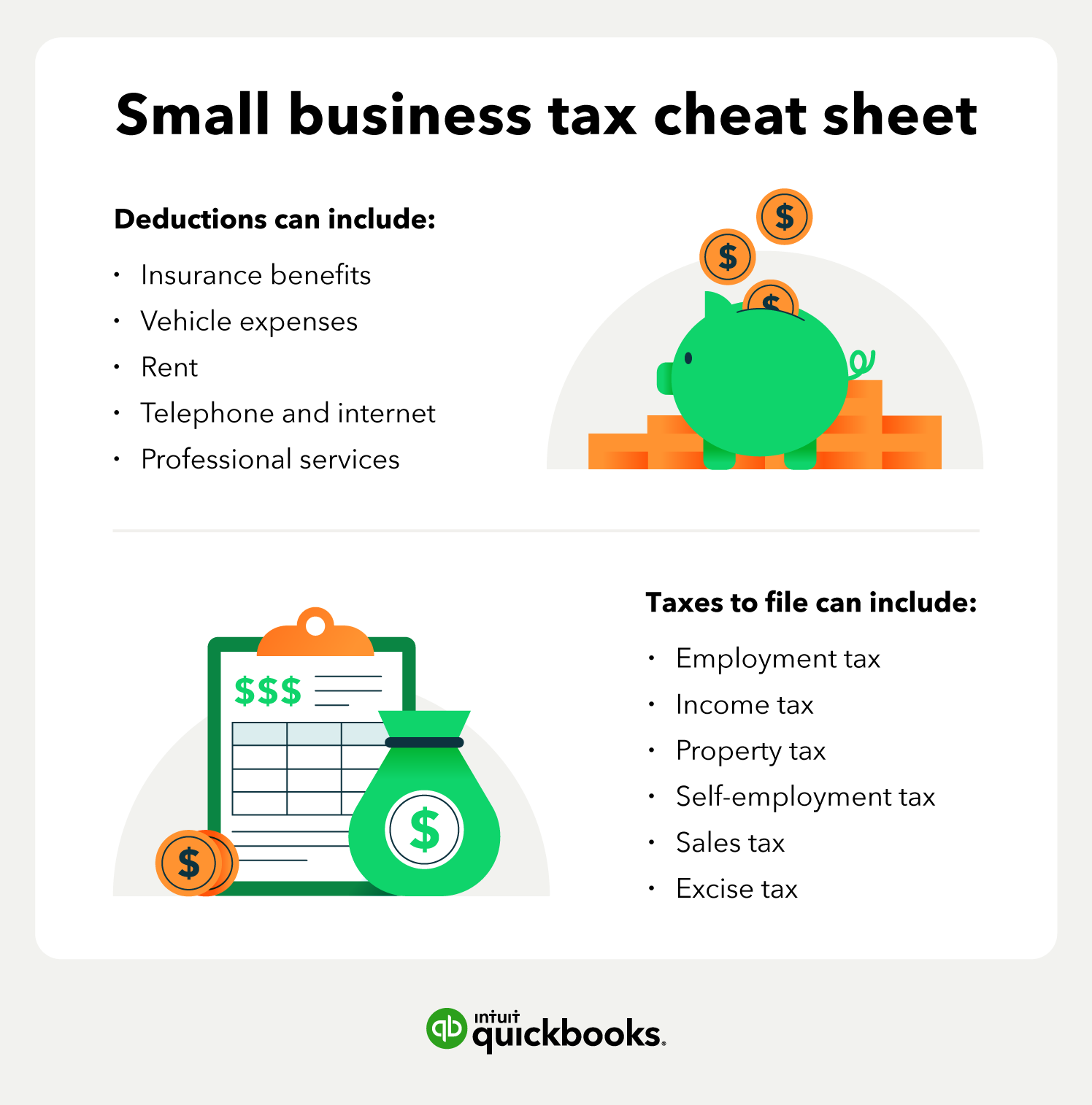
Year-round business tax preparation

  • Maintain accurate records: Keep detailed records of all income and expenses throughout the year.
  • Categorize expenses: Organize your expenses into relevant categories for easier tax preparation.
  • Reconcile bank accounts: Regularly reconcile your bank accounts to ensure accuracy and identify any discrepancies.
  • Track mileage: If you use your vehicle for business purposes, keep a detailed mileage log.
  • Stay informed: Keep up-to-date on federal and state tax laws and regulations that might affect your business.

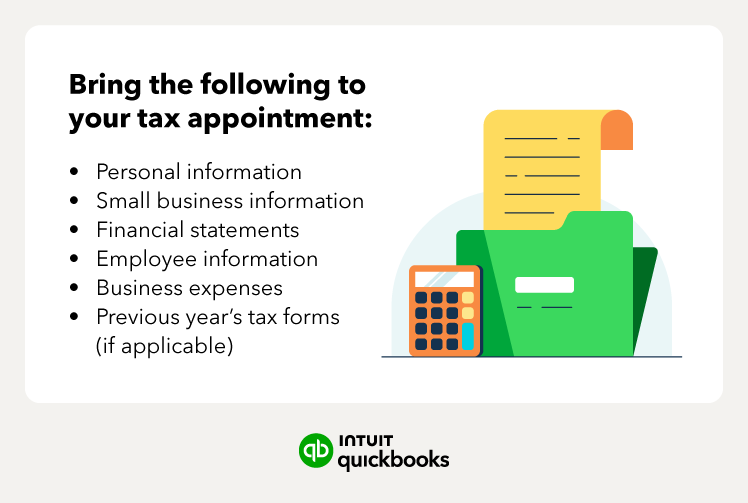
Pre-filing checklist

  • Gather necessary forms and documents:
  • Previous year's tax returns (up to three years prior for both state and federal)
  • Accounting journals and ledgers
  • Balance sheet and income statement
  • Transactional supporting documents (bank deposit slips, bank statements, invoices, checkbook, credit card statements)
  • Vehicle and mileage logs
  • Expense receipts
  • Employee tax forms (W-9, I-9, W-2, 1099)
  • Non-employee tax forms (1099-MISC)
  • State tax forms
  • List of home office deductions (if applicable)
  • Understand which tax forms to file: Determine the specific tax forms required for your business structure and tax obligations.
  • Review and verify information: Double-check all information for accuracy before filing.
  • Consider estimated taxes: If required, calculate and pay estimated taxes throughout the year.

Filing and beyond

  • File your tax returns: Submit your tax returns electronically or by mail before the deadline.
  • Request filing extensions (if needed): If you need more time to file, request an extension before the deadline.
  • Keep copies of your tax returns: Store copies of your filed tax returns for future reference.
  • Plan for next year: Start organizing your records and planning for the next tax season.

Commonly missed tax deductions and credits

Take advantage of valuable tax breaks. Many small businesses overlook possible deductions and credits that could significantly reduce their tax liability. Be sure you claim all the deductions and credits you qualify for.

Common business tax deductions

  • Advertising
  • Depreciation of assets
  • Employee salaries and benefits
  • General business expenses
  • Home office expenses
  • Insurance
  • Business loan interest
  • Internet and phone services
  • Legal services
  • Licenses
  • Meals and entertainment (for business purposes)
  • Business-related travel and mileage expenses
  • Commercial property rent 
  • Training and education
  • Cost of goods sold (COGS)
  • Business banking fees

Proper documentation and recordkeeping are essential to justify deductions in case of an audit. Consulting a tax professional can help ensure compliance with tax laws and maximize your eligible deductions.

Small business tax credits

Take time to familiarize yourself with the variety of business tax credits that may be available to you. Here are some common ones: 

For a complete list of federal tax credits and detailed eligibility requirements, visit the IRS website.

In addition to the federal tax incentives, consider if you could qualify for ones specifically for Ohio businesses, such as:

  • InvestOhio: This is a tool to infuse capital into Ohio's small businesses. It provides a non-refundable personal income tax credit to investors that provide new equity (cash) into Ohio small businesses to acquire an ownership interest in the company.
  • Ohio Motion Picture Tax Credit (OMPTC): This credit offers a 30% refundable tax credit on in-state production wages and expenses to boost Ohio’s film industry. With a $50 million annual allocation, $5 million is reserved for Broadway/theatrical productions. Awards are granted in two rounds each year, in July and January. Eligible expenses include production, post-production, and promotion costs incurred in Ohio.
  • Ohio Community Reinvestment Area program: The Ohio Community Reinvestment Area (CRA) Program offers real property tax exemptions for owners renovating or constructing buildings in designated areas. Administered by local governments, it encourages investment in underdeveloped areas. CRAs are categorized as pre-1994 or post-1994, based on legislative changes.
  • Local incentives. Many Ohio localities offer their own tax credits and incentive programs to attract businesses.

Where do I send my Ohio tax reports and payments? 

Businesses can file tax reports and make payments electronically through the OH|TAX eServices platform. For those preferring to mail their filings, the Ohio Department of Taxation provides specific mailing addresses based on the tax type and form. 

Should I file and pay by paper or electronically? 

Electronic filing and payment are strongly encouraged for most taxes, and in certain cases, they are mandatory. Employers are required to electronically file withholding tax returns and remit payments, as well as W-2 and 1099 forms through the OH|TAX eServices platform.

Common mistakes to avoid when filing business taxes in Ohio

Managing business taxes may seem complicated, but with some preparation, you can stay on track and avoid mistakes. Here are some common pitfalls to watch out for:

Misclassifying workers

Make sure you're correctly classifying your workers as employees or independent contractors. Misclassification can lead to hefty penalties and back taxes.

Missing deductions

Don't leave money on the table. Explore all eligible deductions, such as those for home office expenses, business travel, and equipment purchases.

Forgetting about the Commercial Activity Tax

Remember that Ohio has a Commercial Activity Tax (CAT), which is an annual tax imposed on the privilege of doing business in the state, measured by gross receipts. As of January 1, 2025, businesses with taxable gross receipts exceeding $6 million per calendar year are subject to the CAT. Make sure you understand the filing requirements and deadlines.

Overlooking sales tax

If your business sells taxable goods or services, ensure you're collecting and remitting sales tax correctly. Ohio has varying local rates, so stay informed.

Failing to pay estimated taxes

If you expect to owe a significant amount in taxes, make sure you're paying estimated taxes throughout the year to avoid penalties.

By staying organized, understanding the tax laws, and seeking professional advice when needed, you can manage your Ohio tax responsibilities with confidence and keep your business on the path to success.

Find an accountant to help prepare your Ohio business taxes

You’re an expert in your business, but when it comes to taxes, a tax professional can provide valuable guidance. Because of the importance of correct filing to avoid overpayments or fines, consider hiring an experienced accountant or bookkeeper who’s knowledgeable about tax issues and Ohio tax laws and codes. 

In Ohio, there are no state-specific licensing requirements for tax preparers. However, you should ensure your chosen professional: 

  • Meets IRS requirements
  • Has a Preparer Tax Identification Number (PTIN) and an Electronic Filing Identification Number (EFIN) for filing e-file returns
  • Completed the Annual Filing Season Program (AFSP), which covers topics such as new tax laws, filing requirements, ethics, and professional conduct
  • The Ohio Attorney General office also shares tips on how to choose the right tax preparer.

Find an accountant in Ohio here, and consider using the right small business accounting software to streamline your finances and ensure you're prepared for tax season with accurate reporting.

Frequently asked questions

Disclaimer: 

This content is for information purposes only and information provided should not be considered legal, accounting or tax advice or a substitute for obtaining such advice specific to your business. Additional information and exceptions may apply. Applicable laws may vary by state or locality. No assurance is given that the information is comprehensive in its coverage or that it is suitable in dealing with a customer’s particular situation. Intuit Inc. does not have any responsibility for updating or revising any information presented herein. Accordingly, the information provided should not be relied upon as a substitute for independent research. Intuit Inc. cannot warrant that the material contained herein will continue to be accurate, nor that it is completely free of errors when published. Readers should verify statements before relying on them.


Recommended for you

Mail icon
Get the latest to your inbox
No Thanks

Get the latest to your inbox

Relevant resources to help start, run, and grow your business.

By clicking “Submit,” you agree to permit Intuit to contact you regarding QuickBooks and have read and acknowledge our Privacy Statement.

Thanks for subscribing.

Fresh business resources are headed your way!

Looking for something else?

QuickBooks

From big jobs to small tasks, we've got your business covered.

Firm of the Future

Topical articles and news from top pros and Intuit product experts.

QuickBooks Support

Get help with QuickBooks. Find articles, video tutorials, and more.