BLACK FRIDAY SALE  
70% OFF 
QuickBooks
for 3 months  Ends 11/30
QuickBooks Blog
A woman works at a desk with a laptop and calculator
Colorado

Colorado small business grants and loans for 2025

Colorado offers many funding opportunities to help entrepreneurs start, grow, or stabilize their businesses. From state-backed grants to flexible small business loans through organizations like the Colorado Enterprise Fund and the Colorado Small Business Development Center Network, the Centennial State continues to invest in small business success.

Our guide breaks down the top Colorado small business funding options, how to apply, and tips to increase your chances of approval in 2025.

Jump to:

Grants vs. loans: Understanding your funding options

Whether you’re launching something new, expanding, or just need help staying afloat, every small business hits a point where you need funding. That’s where grants and loans come in. They’re two of the most common ways to fund your business, but they work differently. Let’s break down these funding options so you can figure out which one fits your goals best.

Grants 

Grants are basically free money that you don’t have to pay back. However, many grants are highly competitive, require a detailed application, and are designed for specific business types or goals (e.g., job creation or innovation).

Loans

Loans need to be repaid over time (with interest). The upside is that you can usually use the money however you need, whether that’s buying equipment, hiring staff, or covering everyday expenses.

What to consider before applying

How hard is it to get a business loan in Colorado?

You must meet the loan eligibility requirements, including qualifying credit scores, business income, collateral, and credit history. These factors apply to private lenders and the SBA. If you don’t meet these qualifications, you may need alternative funding options, and you should review the loan terms and interest rates before accepting.

Are there free funding programs for Colorado small businesses?

Colorado offers many grants to fund a small business, and you don’t have to repay these grants. For example, the Denver Economic Development & Opportunity’s (DEDO) Business Impact Opportunity Fund supports businesses affected by construction, economic hardship, or public health issues. However, most grants require you to complete an application and include a business plan and statements on how you intend to use the funds.

Does Colorado have a debt relief program?

While Colorado doesn't have a specific state-wide debt relief program for small businesses, it does offer several financial assistance programs that can help alleviate debt and provide relief. For example, the Colorado SBDC Network provides free, personalized consulting on managing debt, cash flow, and negotiating with creditors. The Colorado Enterprise Fund also offers refinancing and restructuring loans to help pay off high-interest debt or consolidate obligations.

Colorado small business grants

Small business grants in Colorado are available through state or government-funded programs offering financial help for startups that could improve the local economy. The entrepreneur doesn’t repay the grant, and sometimes, grants are considered less risky choices over borrowing funding through a traditional loan. Here are some state-sponsored programs available to small businesses:

1. State Trade Expansion Program (STEP) Grant

Colorado’s State Trade Expansion Program (STEP) Grant provides funding for international expansion for small business owners. You can receive up to $10,000 to cover the cost of activities, including trade shows, international business meetings, marketing costs, compliance testing, and market research.

2. Community Food Access Program

Offered by the Colorado Department of Agriculture, the Community Food Access Program supports small food retailers and small family farms in low-income areas. Businesses can receive up to $50,000 for equipment purchases or general operating expenses.

3. Advanced Industries Export Grant 

The Advanced Industries Export Grant is designed to support Colorado-based tech companies ready to grow globally. If you’re a small or mid-size business in an advanced industry and looking to start or expand your exports, this grant can help cover your international marketing and business development costs. Eligible businesses can receive up to $15,000, with reimbursement covering up to 50% of eligible expenses.

4. Skill Advance Colorado Job Training Grant

This grant is a joint effort between the Colorado Community College System and the Office of Economic Development and International Trade. It’s designed to help Colorado businesses—whether already established or new to the state—hire and train employees. The amount of funding you can receive depends on how many workers you plan to train.

5. Advanced Industries Early-Stage Capital and Retention Grant

This grant supports startups with products manufactured in Colorado and exported globally. Eligible industries include aerospace, advanced manufacturing, bioscience, electronics, energy, infrastructure engineering, and technology. Grants can be up to $250,000, but companies must provide matching funds.

6. Tourism Marketing Grant

The Tourism Marketing Grant helps Colorado tourism-focused businesses and organizations fund marketing campaigns that drive visitor interest and support local economies. You can request between $2,500 and $50,000, but you'll need to provide matching funds.

A group of people that are sitting in front of a table.

Eligibility requirements for grants in Colorado

Eligibility for small business grants in Colorado depends on the specific program, but there are some common factors many funding opportunities take into account:

  • Business size: Most grants are designed for small businesses, often defined by employee count or annual revenue.
  • Location: Some grants focus on certain regions in Colorado, particularly rural areas or communities facing economic challenges.
  • Industry focus: Programs may target businesses in key sectors like technology, advanced manufacturing, agriculture, and energy.
  • Business purpose: Applicants often need to show how the funds will be used—for example, job creation, community development, or innovation.
  • Operational history: Some grants require your business to be operating for a minimum amount of time before applying.
  • Ownership status: Grants may prioritize businesses that are minority-owned, women-owned, veteran-owned, or located in underserved communities.
  • Matching funds: Several programs require you to contribute a portion of the funding yourself, especially for marketing or expansion-related grants.
  • Job creation or economic impact: Some grants require businesses to create jobs—for example, one job per $20,000 borrowed or awarded.
  • Documentation: Expect to provide a business plan, financial statements, tax returns, and possibly details on how the grant will be used.

Because each program has unique requirements, it’s important to read the eligibility criteria carefully and prepare a strong, tailored application.

4 federal small business grants

Federal grants, such as the following, are also available and may be a potential funding source for your business.

1. Small Business Innovation Research (SBIR) and Small Business Technology Transfer (STTR) Programs

The SBIR and STTR programs support small businesses engaged in research and technological innovation. These grants provide funding to help businesses develop and commercialize new technologies in industries such as healthcare, defense, and energy. Eligible businesses must meet federal guidelines and work with government agencies like the National Science Foundation or the Department of Defense.

2. USDA Rural Business Development Grants

The U.S. Department of Agriculture (USDA) provides Rural Business Development Grants (RBDG) to help small businesses in rural communities grow and thrive. These funds support projects such as training, technical assistance, and infrastructure improvements. To qualify, businesses must operate in areas with a population of fewer than 50,000 people.

3. Minority Business Development Agency (MBDA) Grants

The MBDA, a division of the U.S. Department of Commerce, offers grants to support minority-owned businesses. These grants fund programs providing business training, access to capital, and expansion opportunities. MBDA grants are typically awarded to nonprofit organizations and business development centers that assist minority entrepreneurs.

4. Economic Injury Disaster Loans and Grants

During economic downturns and natural disasters, federal grants and low-interest loans become available through agencies like the SBA and the Federal Emergency Management Agency (FEMA). 

Additional grant resources for Colorado businesses

Outside of state-run programs, Colorado business owners can tap into a variety of alternative grant sources. These include funding from local governments, nonprofits, and private companies that support small business growth and community development:

  • Local government grants: Cities and counties like Denver, Colorado Springs, and Pueblo may offer grants to support neighborhood revitalization, local business recovery, or economic development.
  • Private foundation grants: Organizations like The Denver Foundation or First Southwest Community Fund offer grants to businesses that align with their values, such as promoting equity, supporting rural entrepreneurs, or driving environmental change.
  • Corporate grants: Large companies with ties to Colorado sometimes offer grants for small businesses, especially those owned by women, veterans, or underrepresented founders.

How to get a business grant in Colorado: Application process 

Applying for a business grant in Colorado takes preparation, attention to detail, and a solid understanding of what each program requires. Whether you’re applying through a state agency, local program, or nonprofit partner, following a clear process can help boost your chances of success.

Applying for Colorado-sponsored grants

Follow these steps to apply for grants offered by the Colorado Office of Economic Development and International Trade (OEDIT) and other state-level programs.

1. Explore grant opportunities

Start by visiting OEDIT’s Programs and Funding page to see current grant offerings for small businesses. Each program will list eligibility requirements, funding amounts, and application timelines.

2. Check eligibility requirements

Each grant has its own criteria, which may include business size, industry type, location, ownership status, or commitment to job creation and innovation. Make sure you meet the specific requirements before applying.

3. Register your business and ensure good standing

Your business must be registered with the Colorado Secretary of State and in good standing. You can check or update your status on the Colorado Business Database.

4. Gather required documents

Most applications will ask for a business plan, financial statements, tax returns, and a clear explanation of how you’ll use the grant funds. Be specific about your project goals and impact.

5. Understand match requirements (if applicable)

Some Colorado grants, like the Tourism Marketing Grant, require matching funds. Review each program’s funding structure to know how much you need to contribute.

6. Submit your application

Use the online platform or submission method outlined in the grant instructions. Double-check that you’ve included all required documents and followed formatting guidelines.

7. Track your application and follow up

Keep an eye on your application status and be ready to respond to any additional requests or clarification. Some programs may also offer updates or feedback.

Applying for federal grants

1. Identify federal funding opportunities

Search for available grants on Grants.gov and specific federal agency websites. Review eligibility criteria, funding priorities, and application deadlines.

2. Obtain a Unique Entity Identifier (UEI)

Register in the System for Award Management (SAM.gov) to obtain a UEI, which is required for federal grants. Maintain an active SAM.gov registration to stay eligible.

3. Review the Funding Opportunity Announcement (FOA)

Carefully read the FOA to understand grant objectives, requirements, and evaluation criteria. Note key deadlines and required documents.

4. Prepare the application package

Write a detailed project narrative explaining your goals, impact, and execution plan. Develop a comprehensive budget and justification for requested funding. Be sure to also gather supporting documents, such as letters of support, resumes, and compliance certifications.

5. Submit your application

Use the designated platform to submit your application. For federal grants, this is typically Grants.gov. Ensure all components are properly formatted and submitted before the deadline.

6. Follow up and await feedback

Monitor your application status through the submission portal. Respond promptly to any requests for additional information or clarification.

Applying for local, private, or corporate grants

1. Find grant opportunities

Check local government websites, private foundations, and corporate grant programs for available funding. Review eligibility and application requirements.

2. Prepare required documents 

Gather business details, financial statements, and a strong proposal outlining your project, goals, and impact.

3. Submit your application 

Follow the specific submission process for each grant, ensuring all required documents are included.

4. Monitor and follow up 

Track your application status and respond to any follow-up requests for additional information.

Are there repayment requirements for small business grants in Colorado?

State-level small business grants in Colorado do not require repayment. However, if you take out a business loan, you must repay the loan according to the repayment terms. You can use QuickBooks accounting software to track your grant money or your loan repayment schedule.


4 Colorado small business loans

Colorado offers many business loans for small business owners, including SBA loans to get started. Banks and lenders provide equipment financing, term loans, commercial business loans, owner-occupied real estate loans, lines of credit, and working capital. Each loan option has varying eligibility requirements depending on who provides the business-related funding. Below are some notable state-sponsored loan programs.

1. Colorado Business Loan Fund

This state-supported program is a great option for small businesses that might not qualify for a regular bank loan. It’s offered through regional partners across Colorado and can help cover costs like equipment, inventory, and day-to-day expenses. One unique requirement: businesses must create at least one job for every $20,000 borrowed.

2. Colorado Enterprise Fund

The Colorado Enterprise Fund (CEF) is a nonprofit lender that supports small business owners, especially those who may not qualify elsewhere. They offer flexible loans ranging from $1,000 to $500,000, which can be used for working capital, buying equipment, improving your space, or even purchasing an existing business.

3. Climber Loan Fund

The CLIMBER (Colorado Loans to Increase Mainstreet Business Economic Resiliency) Loan Fund is designed to help small businesses bounce back from economic setbacks. It offers working capital loans between $10,000 and $500,000, featuring low interest rates and the option to defer payments for up to a year.

4. SBA 7(a) Loan Program

In addition to state-sponsored loan programs, the SBA 7(a) Loan Program is a federally backed option that offers Colorado small businesses funding for working capital, equipment, real estate, and debt refinancing. Loans are issued through banks, credit unions, and alternative lenders, with the U.S. Small Business Administration guaranteeing a portion of the loan to reduce lender risk. Eligibility typically requires strong credit, sufficient revenue, and a solid business plan.

Colorado small business loan eligibility

To qualify for Colorado small business loan programs, a business generally must meet the following criteria

  • Size standard: Have fewer than 750 employees, though some programs set the limit at 500 or fewer.
  • Location: Your business must operate within the state of Colorado
  • Good standing: Your business should be registered with the Colorado Secretary of State and free of major legal or financial issues.

Your business must also meet any other requirements specified by the lender. 

Do you have to pay back loans in Colorado as a small business?

Yes, you must repay all loans according to the repayment terms. These terms can vary widely depending on the lender and loan type, so it’s important to review the details before signing. This includes interest rates, the length of the loan, any fees, and whether there are penalties for early or late payments. Work with a financial advisor or accountant who can help you understand your loan terms and stay on top of repayment.

How to get a business loan in Colorado: Application process

Small business loans in Colorado are available through banks, credit unions, online lenders, and nonprofit or state-backed programs. To give yourself the best shot at approval, follow these steps:

1. Assess your financing needs

Figure out how much you need to borrow, what the funds will be used for, and which type of loan—term loan, SBA loan, equipment financing, etc.—is the best fit for your goals.

2. Review your credit and financials

Check both your personal and business credit scores, and gather recent tax returns, profit and loss statements, and bank records. Lenders will look closely at your financial health to assess risk.

3. Write a business plan

Most lenders want to see a clear business plan that explains how your company operates, what your revenue projections look like, and how you plan to repay the loan.

4. Compare lenders

Research options from traditional banks, nonprofit lenders like Colorado Enterprise Fund or Colorado Lending Source, and state-supported programs like the CLIMBER Loan Fund. Each has different requirements and terms.

5. Gather required documents

Be prepared to provide your business license, articles of incorporation, personal ID, financial statements, and a list of any collateral you’re offering.

6. Submit your application

Follow the lender’s instructions—some accept online applications, while others may require in-person meetings. Double-check that all your documents are complete and up to date.

7. Await approval and funding

Once your application is submitted, lenders will review your information, possibly request more details, and complete underwriting. If approved, you’ll get your loan terms and funding timeline.

Colorado small business funding resources and support

Colorado offers a variety of funding programs and support services to help small businesses succeed. Here are some key resources worth exploring.

Colorado Small Business Development Center (SBDC) Network

The Colorado SBDC Network offers free, one-on-one consulting and low-cost training to small business owners across the state. Whether you need help writing a business plan, finding funding, or improving your marketing strategy, your local SBDC is a great place to start.

Office of Economic Development and International Trade (OEDIT)

OEDIT administers multiple programs to support Colorado's entrepreneurs, including grants and funding opportunities. Some notable programs include the Advanced Industries Export Grant, State Trade Expansion Program (STEP) Grant, and the Community Business Preservation Program.

CEDS Finance (Colorado Enterprise Development Services)

Based in the Denver metro area, CEDS Finance supports immigrants, refugees, and underserved entrepreneurs by offering microloans, startup funding, and free business advising. Its mission is to help individuals achieve financial independence and build wealth through small business ownership.

Other ways to fund your small business in Colorado

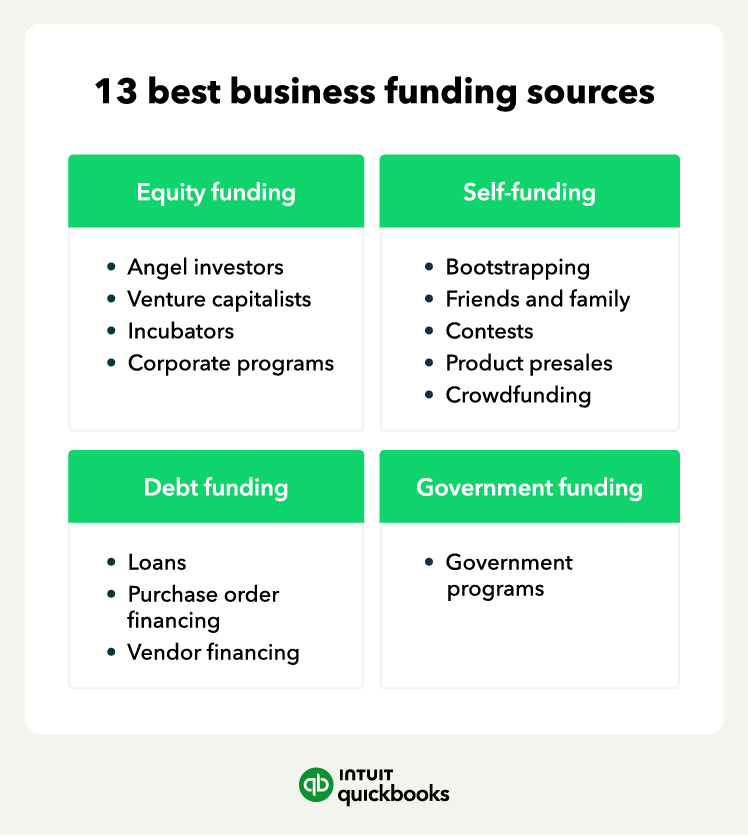
Grants and loans are common funding options for businesses, but they aren’t the only ways to secure financial support. Colorado small businesses can explore a variety of alternative funding methods to fuel growth and operations. Here’s a look at some of the most popular options:

Alternative loans

Non-traditional financing options such as online lenders, peer-to-peer lending, or merchant cash advances, often with more flexible requirements than bank loans.

Angel investors

Established entrepreneurs (angel investors) who invest their personal money into startups, often at an early stage, in exchange for equity.

Bootstrapping 

Using personal savings and revenues to fund business operations without external financing.

Contests

Competitions where businesses pitch ideas to win funding or resources.

Corporate programs

Initiatives by large companies offering funding, mentorship, or resources to small businesses.

Crowdfunding 

Raising small amounts of money from a large number of people, typically via online platforms.

Friends and family 

Obtaining funds from personal networks to support business ventures.

Incubators 

Organizations that support startups with resources, mentorship, and sometimes funding.

Microloans

Small, short-term loans from nonprofit lenders, government programs, or alternative lenders, often designed for startups and businesses that may not qualify for traditional bank loans.

Product presales

Selling products before they are produced to generate upfront capital.

Purchase order financing

Obtaining funding based on purchase orders to pay suppliers and fulfill customer orders.

Vendor financing

Suppliers provide goods or services with deferred payment terms to support business cash flow.

Venture capitalists 

Professional firms that invest in startups with high growth potential in exchange for equity.

Disclaimer:

This content is for information purposes only and information provided should not be considered legal, accounting or tax advice or a substitute for obtaining such advice specific to your business. Additional information and exceptions may apply. Applicable laws may vary by state or locality. No assurance is given that the information is comprehensive in its coverage or that it is suitable in dealing with a customer’s particular situation. Intuit Inc. does not have any responsibility for updating or revising any information presented herein. Accordingly, the information provided should not be relied upon as a substitute for independent research. Intuit Inc. cannot warrant that the material contained herein will continue to be accurate, nor that it is completely free of errors when published. Readers should verify statements before relying on them.


Recommended for you

Mail icon
Get the latest to your inbox
No Thanks

Get the latest to your inbox

Relevant resources to help start, run, and grow your business.

By clicking “Submit,” you agree to permit Intuit to contact you regarding QuickBooks and have read and acknowledge our Privacy Statement.

Thanks for subscribing.

Fresh business resources are headed your way!

Looking for something else?

QuickBooks

From big jobs to small tasks, we've got your business covered.

Firm of the Future

Topical articles and news from top pros and Intuit product experts.

QuickBooks Support

Get help with QuickBooks. Find articles, video tutorials, and more.