BLACK FRIDAY SALE  
70% OFF 
QuickBooks
for 3 months  Ends 11/30
QuickBooks Blog
A man standing in front of a counter
Illinois

How to start an LLC in Illinois: Your 2025 step-by-step guide

Why choose an LLC in Illinois?

A limited liability company, commonly called an LLC, is a business structure that combines the liability protection of a corporation with the tax benefits and flexibility of a partnership. In an LLC, owners—known as members—are shielded from personal liability for the company's debts and obligations. This means that personal assets are generally protected if the business incurs debt or is sued. LLCs also often benefit from pass-through taxation, where profits and losses are reported on the members' personal tax returns. 

Whether you're a solo entrepreneur in Chicago or building a team in Springfield, an LLC offers the protection and ease to help your business thrive. Learn more about how to start an LLC in Illinois with this guide. It covers the fees and forms involved, tax considerations, how accounting software could help, and other important information to set yourself up for a solid launch. 

New business data in Illinois in 2025

Illinois is positioning itself as a national leader in business growth and innovation through a strategic five-year economic plan that prioritizes six key industries: life sciences, quantum computing and AI, clean energy manufacturing, advanced manufacturing, next-generation agriculture and food processing, and transportation, distribution, and logistics (TDL). This commitment is exemplified by the $500 million Illinois Quantum and Microelectronics Park (IQMP), expected to make Illinois a powerhouse in quantum technology.

The state attracted over $12.5 billion in private investment in 2024, doubling the previous year’s figure, while adding nearly 13,000 new jobs. Illinois continues to strengthen its workforce and is recognized as #1 in the Midwest for development by Site Selection magazine. Competitive incentives, such as expanded R&D tax credits and semiconductor tax benefits, further drive business expansion. 

Illinois is also investing $10 million in small businesses through the Office of Economic Equity and Empowerment (OE3) Small Business Capital and Infrastructure Grant Program. The program aims to help businesses upgrade equipment, acquire property, and strengthen local economies.

With its blend of traditional strengths in agriculture and manufacturing and cutting-edge advancements in technology and clean energy, the Prairie State is creating a dynamic business ecosystem set for continued growth in 2025 and beyond.

5 steps for creating an LLC in Illinois 

Establishing your business as an LLC is a big step. The process requires important decisions, such as choosing a unique name, filing necessary documents, and securing an EIN. The next sections explain each step to make setting up your Illinois LLC simple and straightforward.

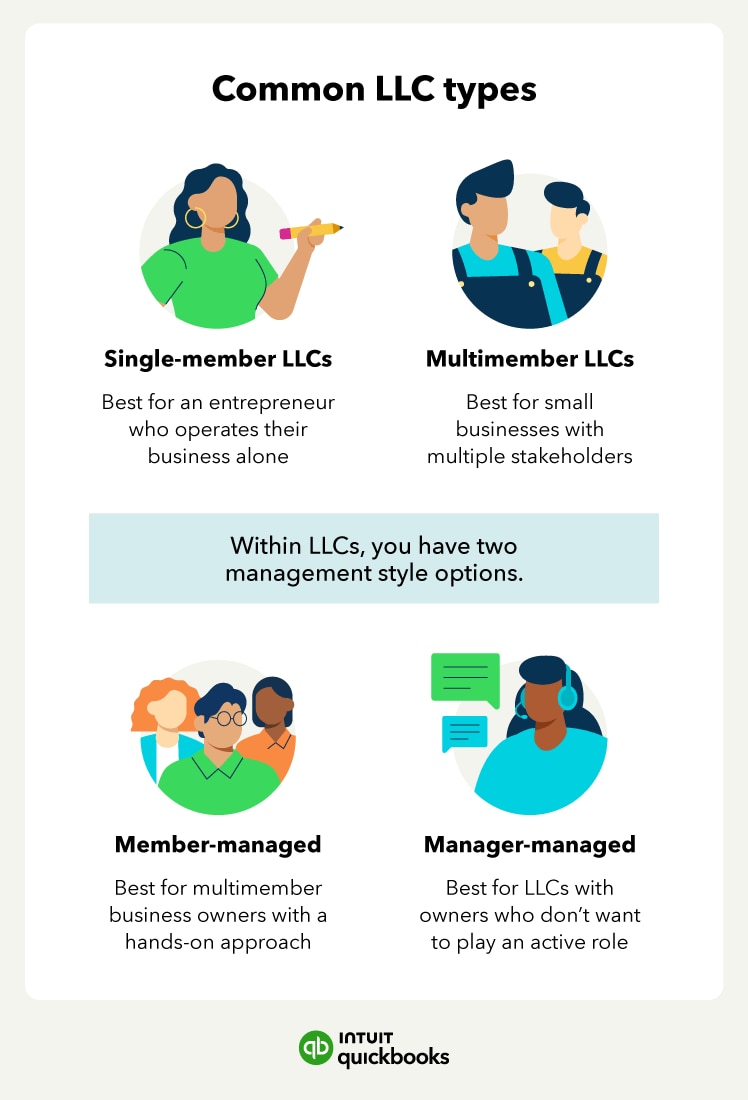
A graphic breaks down the four common LLC types to help answer the question, "What is an LLC?"

Step 1: Choose a name for your Illinois LLC

Your initial step is to select the legal name of your business. Choose a name that is easy to remember and lets prospective customers know what products or services your company will provide. Keep in mind, however, that your name needs to comply with the state’s naming rules.

Illinois LLC naming rules

When selecting a name for your LLC, there are state guidelines you must follow:

Uniqueness requirement

  • Your LLC name cannot be identical or deceptively similar to an existing LLC registered in Illinois.

LLC designation 

  • The name must include one of the following designations:
  • Limited Liability Company
  • L.L.C.
  • LLC 

Prohibited terms

  • The name cannot contain words implying a different business structure, such as:
  • "Corporation"
  • "Corp."
  • "Incorporated"
  • "Inc."
  • "Limited Partnership"
  • "L.P."
  • "Ltd."
  •  It's also prohibited to use words that might construe your business as a government agency or create connotations consumers find offensive.

Character restrictions

  • Use only English alphabet letters and Arabic numerals. Special characters and symbols are generally not permitted.

Restricted words

  • Certain words require authorization before inclusion in your LLC name, such as:
  • "Bank"
  • "Trust"
  • "Insurance"

Before finalizing your LLC name, ensure it meets these requirements to avoid delays or rejection in the registration process. Read The Guide for Organizing Domestic Limited Liability Companies from the Illinois Secretary of State for more information. 

Check for name availability

Once you have chosen a name for your new business, you must ensure that no other company is already using it. Check name availability through the Illinois Secretary of State’s Business Entity Search.

In Illinois, subtle variations in business names may not be sufficient to make them legally distinct. The state applies strict criteria when determining name uniqueness. For example:

  • Suffixes (e.g., Inc., LLC, Co.), for example, Town Pottery, Co. and Town Pottery, LLC are not considered different.
  • Articles (e.g., the, a, an)
  • Interchanging "and" with "&"
  • Singular, plural, or possessive forms of a word
  • Substituting numbers for words (five vs. 5) 

When searching for name availability, focus on your preferred core name without these variations.

Reserve your LLC name

While not required, you can reserve your LLC name while you complete the paperwork for your LLC formation. It does not establish your LLC, but does reserve your preferred business name for 90 days. Fill out form LLC-1.15. Fee is $25. 

Step 2: Choose a registered agent in Illinois

When forming an LLC in the state of Illinois, you must appoint a registered agent. This individual or entity is responsible for receiving important legal documents, tax forms, and other official correspondence for the LLC.

Who needs a resident agent?

  • All Illinois LLCs must appoint a resident agent.
  • Foreign LLCs registering in Illinois must also designate a resident agent, even if they have an agent in their home state.

Who can be a registered agent?

  • Individual: An adult (at least 18 years old) who resides in Illinois and meets the following requirements.
  • Has a physical street address in Illinois (P.O. boxes are not acceptable).
  • Is available during standard business hours to receive legal documents on behalf of your LLC.
  • Business entity: A company authorized to conduct business in Illinois can act as a registered agent, provided it maintains a physical office within the state and is available during standard business hours.
  • Registered agent service: If you prefer not to receive legal documents at your personal or business address, consider hiring a professional registered agent service. These companies provide a physical street address in Illinois for your LLC to receive documents. 

In Illinois, an LLC cannot act as its own registered agent.

Choosing a registered agent service

There are many registered agent services available in Illinois. If you’re thinking about hiring a professional provider, here are some tips for finding the right one.

Research and compare

Be sure to research different providers and compare factors such as:

  • Cost: Fees typically start around $50 per year.
  • Reputation: Choose a reputable company with a proven track record.
  • Customer support: Ensure they provide excellent customer service and support.
  • Knowledge. Select a provider with a strong understanding of Illinois-specific compliance requirements to ensure your business stays in good standing.
  • Coverage. For businesses operating in multiple states, choose a provider that offers services across all the states where you plan to operate.

Consider bundled services

If you're using a company formation service or an attorney to set up your LLC, they may offer registered agent services as part of a package.

Step 3: Complete the Articles of Organization form and file your Illinois LLC

Once you’ve decided on your name and your registered agent, the next step is to fill out the Articles of Organization form.

What is an Articles of Organization?

An Articles of Organization is a legal document submitted to the Illinois Secretary of State’s Department of Business Services to officially form your LLC. It includes details such as your business name, address, and registered agent information. Filing the Articles of Organization establishes your LLC's legal presence within the state. 

Filing the Articles of Organization in Illinois

The Articles of Organization form is filed with the Illinois Secretary of State’s Department of Business Services. The standard filing fee is $150. 

You have two options for submitting the Articles of Organization:

Option 1: Online filing

Use the Illinois Secretary of State's online portal to submit your Articles of Organization electronically. 

Option 2: Mail-in filing

If you prefer to file by mail, you can download and complete the Articles of Organization form. Mail the form along with the required payment to:

Secretary of State

Department of Business Services

Limited Liability Division

501 S. Second St., Rm. 351

Springfield, IL 62756

How long does it take for an LLC to get approved in Illinois?

It takes approximately 10 business days. Expedited services are available. You will receive a confirmation email once the Department of Business Services reviews and approves your filing.

What to include in your LLC's Articles of Organization form

Completing the Articles of Organization form is a fairly simple process since not much information is required. You will be asked to provide:

  • The name of your LLC
  • Principal place of business address
  • Effective date of the LLC
  • Registered agent information
  • Business purpose
  • Member names if applicable 
  • Your signature

If you are not an Illinois resident: 

If your LLC was formed in another state and you intend to conduct business in Illinois, you must register as a foreign LLC with the Illinois Secretary of State. The required steps include:

  1. Complete the Application for Admission to Transact Business.
  2. Obtain a Certificate of Good Standing or Existence from your LLC's home state, authenticated within 60 days prior to submission.
  3. Appoint a registered agent in Illinois
  4. Submit your application with the required filing fee of $150.

Step 4: Get an Employer Identification Number (EIN)

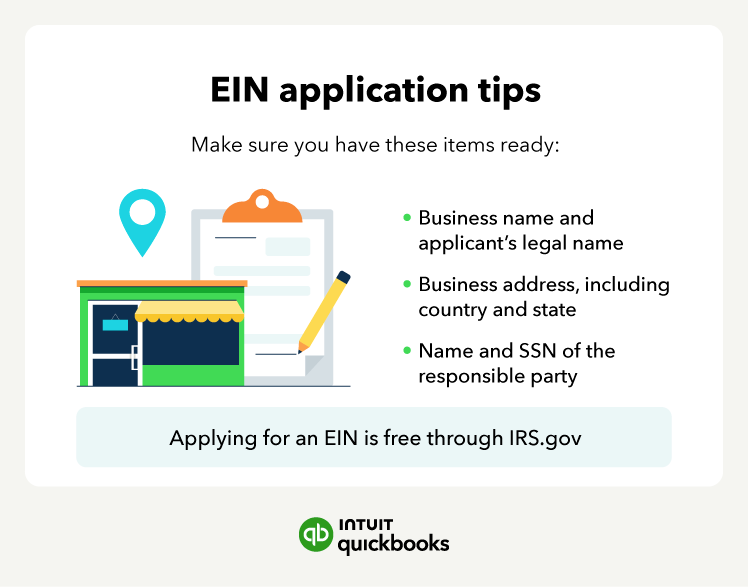
You’ll likely need an Employer Identification Number (EIN) from the Internal Revenue Service to form an LLC in Illinois. An EIN is a nine-digit number that identifies a business for tax purposes, similar to a Social Security Number for your company.

According to the IRS, you need an EIN if any of the following apply:

  1. You have employees
  2. Your business operates as a corporation or partnership
  3. You file employment, excise, or alcohol, tobacco, and firearms tax returns
  4. You withhold taxes on income, other than wages, paid to a non-resident alien
  5. You have a Keogh plan (a tax-deferred pension plan)
  6. You are involved with certain types of organizations, including trusts, estates, real estate mortgage investment conduits, non-profit organizations, farmers' cooperatives, or plan administrators

Single-member LLC considerations

If you are a single-member LLC, you may not be required to obtain an EIN. However, getting one is still a smart idea, as your business needs might change over time, and obtaining an EIN is free.

An EIN becomes mandatory if your LLC elects to be taxed as a corporation, hires employees, or files excise or employment tax returns.

Having an EIN also simplifies opening a business bank account and protects your personal Social Security Number, reducing the risk of identity theft.

Requesting an EIN

You can request an EIN by mail or phone, but the fastest method is completing the process online on the IRS website. After obtaining an EIN, use accounting software to track business expenses and ensure your company’s finances remain separate from your personal finances. 

A sign that says "HSE fees apply".

Step 5: Ongoing compliance and required filings

In order to keep your business in good legal standing, you must remain compliant with federal and state laws. In Illinois, LLCs have specific obligations:

  • Annual report
  • Filing requirement: All Illinois LLCs must file an annual report with the Secretary of State to maintain active status.
  • Due date: The annual report is due each year prior to the first day of the LLC's anniversary month.
  • Filing method: Reports can be filed online through the Illinois Secretary of State's website or by mail.
  • Fees: As of 2025, the filing fee is $75.
  • Beneficial Ownership Information Report
  • Filing requirement: Under the Corporate Transparency Act, most LLCs are required to submit a Beneficial Ownership Information (BOI) Report to the U.S. Department of the Treasury's Financial Crimes Enforcement Network (FinCEN).
  • Purpose: This report identifies individuals who own or control the LLC, aiding in the prevention of financial crimes.
  • Who needs to file: All LLCs formed on or after January 1, 2025, must file within 30 days of formation. LLCs formed before this date have until December 31, 2025, to comply.
  • How to file: Reports are submitted online through the FinCEN reporting portal.
  • Fees: There is no filing fee.
  • Business licenses and permits
  • Requirement: Certain licenses or permits may be necessary, spending on your LLC’s location and industry.
  • Examples: Professional services, food and beverage establishments, construction firms, and other regulated industries may have special licensing requirements.
  • Verification: Consult the Illinois Department of Financial and Professional Regulation and your local city or county offices for guidance.
  • State tax registration
  • Requirement: If your LLC will collect state taxes, such as sales tax, you must register with the Illinois Department of Revenue.
  • Tax determination: Use the Department's resources to identify applicable taxes for your business.
  • Registration methods: Register online through the MyTax Illinois portal.
  • Purchase insurance
  • Requirement: Depending on your business activities, you may be required to obtain particular types of insurance.
  • Examples: Commercial auto insurance, liability insurance, and workers’ compensation insurance are common types.
  • Information: The Illinois Department of Insurance provides resources to help determine necessary coverage.
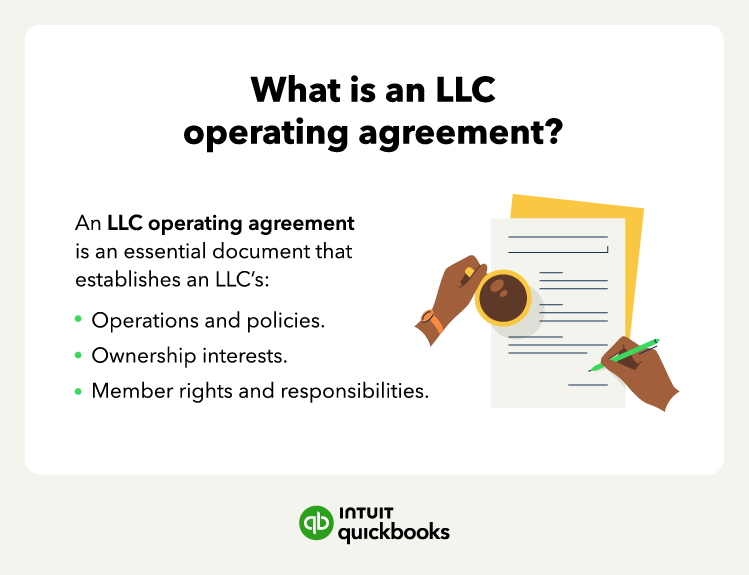
A graphic showcases the definition of an LLC operating agreement, a document you'll need when learning how to start an LLC.

Types of LLCs to consider in Illinois 

When setting up your LLC, it's important to understand the different LLC types to determine which best suits your business needs.

Single-member LLC

A single-member LLC is owned by one individual or entity, providing liability protection while allowing for simplified management and taxation. In Illinois, a single-member LLC can be treated as a disregarded entity for federal income tax purposes, meaning the business activities are reported on the owner's personal tax return.

Multi-member LLC

A multi-member LLC consists of two or more members who share ownership. This structure offers flexibility in management and profit distribution among members. Multi-member LLCs are typically treated as partnerships for tax purposes, unless they elect to be taxed as a corporation.

Professional LLC (PLLC)

Designed for licensed professionals in fields such as medicine, architecture, engineering, law, real estate, and cosmetology, a PLLC allows individuals to offer professional services under an LLC structure. In Illinois, a PLLC is specifically for services that legally require a licensed individual to render them. 

Attorneys must contact the Illinois Supreme Court for formation. Real estate requires a separate application with the Illinois Department of Financial and Professional Regulation, Division of Professional Regulation.

It's advisable to consult with the appropriate Illinois licensing boards to determine eligibility and specific requirements.

Manager-managed LLC

In a manager-managed LLC, members appoint one or more managers to handle the daily operations, allowing non-managing members to act as passive investors.

Member-managed LLC

A member-managed LLC involves all members actively participating in the management and decision-making processes of the company. This is the default management structure for LLCs in Illinois unless otherwise specified in the Articles of Organization.

Costs of setting up an LLC in Illinois

Setting up an LLC in Illinois involves several fees:

  • A one-time fee of $150 is required to file your Articles of Organization with the Illinois Secretary of State.
  • If you choose to hire a registered agent, fees typically start at $50 per year.
  • Illinois mandates that LLCs file an annual report with a $75 fee.

Additional expenses may include late fees for overdue filings and costs for necessary business licenses or permits, especially if your LLC operates in a regulated industry.

Open an Illinois LLC business account

One of the biggest benefits of forming an LLC in Illinois is protecting your personal assets from business liabilities. But that protection isn't automatic—if you mix personal and business finances, you could lose it.

To keep your LLC liability protection intact, open a dedicated business bank account. This not only safeguards your personal funds but also helps keep your business finances organized and legally compliant. A business bank account also builds credibility with customers and vendors, simplifies tax filing, and makes bookkeeping more efficient.

What you'll need 

When opening a business bank account, you’ll typically need:

  • Your EIN number
  • Articles of Organization
  • (Possibly) an operating agreement 
  • Personal identification

Out-of-state residents should consider choosing a bank with a presence in the state.

After opening your bank account, use QuickBooks accounting software to keep track and manage your finances. 

LLC taxes in Illinois

Running an LLC requires understanding various tax classifications and obligations at both the federal and Illinois state levels.

Federal tax classification

Illinois LLCs can choose their federal tax classification, which influences their taxation at the state level:

  • Single-member LLCs: By default, treated as disregarded entities, with income and expenses reported on the owner's personal federal tax return.
  • Multi-member LLCs: Default to partnership taxation, requiring the filing of Form 1065 with the IRS.
  • Election as a corporation: LLCs can opt to be taxed as a C corporation or S corporation by filing the appropriate forms with the IRS.

State income tax

Illinois imposes state income tax on personal income, affecting LLC members differently based on the entity's tax classification:

Pass-through entities

For LLCs taxed as sole proprietorships, partnerships, or S corporations, profits pass through to members' personal tax returns. Members are then subject to Illinois's state income tax rates on their share of the income. For 2025, the individual state income tax rate is a flat 4.95%.

C Corporations 

LLCs electing to be taxed as C corporations are subject to Illinois's corporate income tax. In 2025, the corporate tax rate in Illinois is 9.50%. This consists of a 7% income tax and a 2.5% Replacement Tax

Sales and use tax

Illinois businesses are subject to sales and use tax:

  • Requirement: LLCs selling tangible personal property or certain taxable services are responsible for registering to collect and remit sales tax.
  • Registration: Businesses must register with the Illinois Department of Revenue (IDOR) to obtain the necessary licenses.

Employment taxes

LLCs with employees have specific tax responsibilities:

  • Withholding tax: Employers must withhold state income tax from employee wages and remit them to the IDOR.
  • Unemployment insurance tax: Employers are required to pay unemployment insurance taxes, which fund unemployment benefits for workers. The SUI tax rate is currently 0.75% to 7.85%, depending on the business’s experience level.

Illinois-related resources

  • Illinois Secretary of State: The Secretary of State's office handles business entity registrations, including corporations, limited liability companies (LLCs), and assumed business names (DBAs). Through their online services, you can file necessary documents, search business names, and obtain certificates of good standing.
  • The Illinois Department of Revenue: This department provides resources for understanding tax obligations and registering for business taxes in Illinois. Their website offers information on sales tax permits, employer withholding, and other tax requirements, along with access to necessary forms and guidance.
  • Illinois Small Business Development Centers (SBDCs): Located throughout the state, Illinois SBDCs provide confidential business guidance, training, and other resources for startups and existing small businesses. Services include assistance with business plans, market information, financial analysis, and access to capital.
  • Illinois Department of Commerce and Economic Opportunity (DCEO): DCEO offers a comprehensive clearinghouse of information for entrepreneurs starting a new business in Illinois. Their resources include guidance on business planning, financing, licensing, and regulatory requirements. The First Stop Business Information Center provides personalized assistance to help navigate the startup process.
  • Illinois Environmental Protection Agency: The Illinois EPA offers resources to help small businesses understand and comply with environmental regulations. Their Small Business Environmental Assistance Program provides free, confidential consultations on environmental compliance issues, helping businesses navigate state and federal requirements.

Federal-related resources 

  • Small Business Administration (SBA): The SBA supports small businesses through various loan programs, including the 7(a) loan, provides resources for government contracting, and offers counseling and training programs to help entrepreneurs start and grow their businesses.
  • Internal Revenue Service (IRS): The IRS provides essential information for LLCs, including tax classifications, employer identification numbers (EINs), and filing requirements. Its Small Business and Self-Employed Tax Center offers guidance on tax obligations specific to LLCs.
  • U.S. Patent and Trademark Office (USPTO): For businesses looking to protect their intellectual property, the USPTO provides resources on how to apply for patents and register trademarks, which can be essential for safeguarding your unique products or services.
  • U.S. Department of Labor (DOL): The DOL's website offers information on federal labor laws, workplace safety regulations, and employee benefits that LLC owners need to consider when hiring staff.

Frequently asked questions

Disclaimer: 

This content is for information purposes only and information provided should not be considered legal, accounting or tax advice or a substitute for obtaining such advice specific to your business. Additional information and exceptions may apply. Applicable laws may vary by state or locality. No assurance is given that the information is comprehensive in its coverage or that it is suitable in dealing with a customer’s particular situation. Intuit Inc. does not have any responsibility for updating or revising any information presented herein. Accordingly, the information provided should not be relied upon as a substitute for independent research. Intuit Inc. cannot warrant that the material contained herein will continue to be accurate, nor that it is completely free of errors when published. Readers should verify statements before relying on them. 


Recommended for you

Mail icon
Get the latest to your inbox
No Thanks

Get the latest to your inbox

Relevant resources to help start, run, and grow your business.

By clicking “Submit,” you agree to permit Intuit to contact you regarding QuickBooks and have read and acknowledge our Privacy Statement.

Thanks for subscribing.

Fresh business resources are headed your way!

Looking for something else?

QuickBooks

From big jobs to small tasks, we've got your business covered.

Firm of the Future

Topical articles and news from top pros and Intuit product experts.

QuickBooks Support

Get help with QuickBooks. Find articles, video tutorials, and more.