







You could save up to 25% on transaction costs².
Speak with us now to see if you qualify.
Talk to sales 1-800-515-8366
Monday - Friday, 6 AM to 4 PM PT

Table of contents
Table of contents
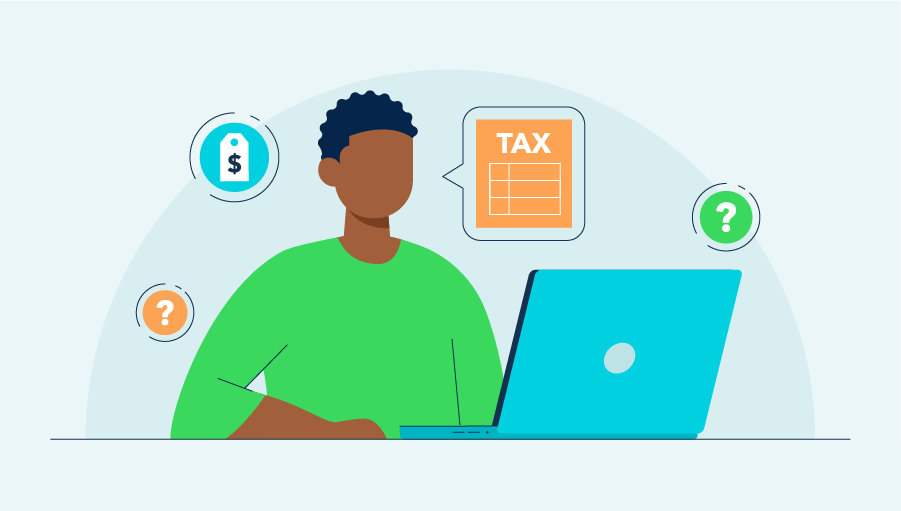
Tax season is stressful for most business owners; 77% report tax anxiety, according to our 2026 Business Owner Report. Figuring out what you can write off is a big part of that stress. When it comes to applying the business meal deduction, that stress and confusion can pile on.
The business meal tax deduction is usually 50%, but some meals qualify for 100%. While most businesses fall under 50%, some business owners can claim higher deductions depending on their business type and activities.
Below, we break down how much you can deduct, what’s changed for 2026, which meals qualify, and how to use expense tracking software to keep your records audit-ready come tax time.
The business meal deduction allows large and small business owners alike to deduct a portion of the cost of work-related meals, including taxes and tips. According to IRS guidance, this “portion” is 50% (in most cases) of the actual meal, provided that it meets these requirements:
The deduction (as well as all of its limitations) applies to sole proprietors, single-member LLCs, S-corp owners, C-corp owners, and self-employed individuals. Where you claim it depends on the business tax forms you file. Sole proprietors, for example, report business meals on Schedule C.

Most W-2 employees can’t deduct unreimbursed business meals on their personal return, even if they choose itemized over standard deductions.
While 50% is the default in most situations, there are actually cases where you can deduct up to 100%. Here’s a table breaking it down for you:
There are two exceptions to these deductions, though.
First, employers can no longer deduct expenses related to entertainment, amusement, or recreation, even when combined with meals. That might make it difficult to deduct business meals that combine food with entertainment, such as Medieval Times Dinner & Tournament or getting a corn dog at your county fair.
Second, Publication 15-B states that businesses can’t deduct the cost of feeding employees for the company’s convenience. So, if you were to bring in some small snacks to thank your employees for staying late, you might not be able to deduct them. Consult a tax professional to find out how your break room applies.
Starting in 2026, businesses can no longer deduct the cost of feeding employees on-site for the company's convenience. That includes running a company cafeteria or bringing in food, so your team can keep working without leaving the office. Before 2026, these costs were 50% deductible. Thanks to changes from the 2017 Tax Cuts and Jobs Act, they're no longer deductible at all.
There are a few exceptions. First, restaurants that feed their own on-shift staff at no cost (or at a discount) can still deduct 100% of the costs. The same 100% deduction rule applies to crews on fishing vessels and to some employees who work at fish-processing facilities.
Client and travel meals aren’t affected by this as long as they’re considered ordinary and necessary for the business. If you or an employee is present to enjoy these meals, they’re still 50% deductible.
You should ask yourself four key questions before deciding whether a meal is deductible for business purposes:
1. Is the meal ordinary and necessary?
2. Are you or an employee present?
3. Is the meal overly extravagant?
4. Does the meal involve a business contact or travel?

Below, we break down what Publication 463 says about deductible business meals.
For a meal to be deductible in your business, it needs to fall into two categories:
You don’t need an expense to be required, like restocking office supplies, for it to be deductible. As long as the business meal makes sense and isn’t overly lavish, it can qualify as a deduction from your taxable income.
Unless a taxpayer (you) or an employee is present with the food, it doesn’t count as a business meal. If you deliver food, such as a gift basket, to a business contact, it’s treated as a gift and is subject to a $25 limit under Publication 463.
While there’s no fixed dollar threshold for business meals, the IRS states that meals cannot be “lavish or extravagant” to remain deductible. For example, $300 for a client dinner may be considered reasonable when closing a major deal, but the same amount for a routine coffee chat may be scrutinized more closely.
A current or potential customer, client, consultant, employee, or other business contact needs to be involved for a business meal to count. Solo meals can count too, as long as you or an employee is traveling for business.
Most business meals fall into one of a few everyday situations that follow the same basic math: take the full cost of the meal (including taxes and tips) and deduct 50%. In all cases, it’s important to keep the receipts so you can properly track these meals.
As long as you or an employee is there and you’re dining with a business contact, you can deduct 50% of the cost. For example, if you have a $180 dinner with a prospective client, $90 of that meal is deductible when factoring in the cost of the meal, the taxes, and the tip.
Your meals are 50% deductible when you travel overnight for work, even when you’re eating alone. However, if you’re not traveling overnight, you won’t be able to deduct that 50% amount. The travel also needs to be away from your tax home (your main place of business).
If you want to avoid the headache of tracking receipts, the standard meal allowance is a simpler alternative. This allowance uses a flat rate for meals and incidental expenses (M&IE) set by the US General Services Administration (GSA).
In most of the country, the standard rate set by the GSA is $68 per day. This can vary by the city you’re traveling through, so use the GSA per diem lookup to find out how much you can expense per day.
Also, keep in mind that the 50% rule still applies, so you can only deduct 50% of that $68 ($34). On the days you leave and return, you can claim 75% of this daily rate ($51).

You’ll need receipts and other documents showing how much you spent, when and where the meal took place, why it was for business, and who you ate with. Without these, the IRS can disallow your deduction, even if the meal was really business-related.
Here’s what the IRS looks for and where to find it:
While a credit card statement can show the amount and date, you’ll need the purpose and attendees from your other documents.
Try to remember to record this information during the meal. Jot a note in your expense app or on the receipt so you don’t have to worry about this later. This small-business tax tip saves you from having to reconstruct details later.
If your expenses are below $75 dollars, you don’t need a receipt. However, you still need to record the date, place, business purpose, and who attended.
Here’s how to set up QuickBooks so your meal expenses are sorted and documented as you go:
1. Set up meal categories: Create subcategories in your chart of accounts that line up with how much you can deduct. That way, the split between 50%, 100%, and nondeductible meals is already done when you (or your tax pro) review your books.
2. Snap a photo of the receipt: Before you leave the table, use the QuickBooks mobile app to upload the receipt and let QuickBooks pull the details for you. If we spot a matching transaction from your feed, you can match the receipt in one step.
3. Add details in the memo: Use the memo field to note why the meal was business and who was there. Make sure the memo also documents the business purpose.
4. Review meal categories: Before tax season, look for expenses without memos, meals sitting in the wrong bucket, and anything that should have moved to the right category.

Most business meal deduction mistakes come down to a few repeat mistakes. Do a quick gut check before you file:
You can deduct a meal as a self-employed individual as long as it isn’t lavish or extravagant, is separate from entertainment, and you have records proving it's a business meal. For instance, you can deduct meals with a potential client or customer, as long as you have notes on the meeting indicating its business purpose.
You don’t need a receipt as long as your business expenses are below $75 and you have evidence (such as notes) proving that it was a business meal. If the meal costs more than this, you’ll need a receipt to prove its expense.
Yes, coffee with a client is a deductible meal as long as you’re speaking with a legitimate business client. You or an employee must be present during the meeting for the coffee to be deductible.
Business meals are really easy to miss when your records fall short. Once you know which meals to count, you can capture the right details instead of scrambling. For everything else on your list, use our small business tax prep checklist.
With the Accounting Agent in QuickBooks, AI sorts each meal into the right category and matches it to your bank feed, so there's less to clean up come tax time. Try QuickBooks expense tracking software and turn every receipt into a ready-to-claim deduction.
Disclaimers:
**QuickBooks Free: Free is currently available at no charge and may be offered for a limited time. Features and availability, are subject to change or discontinuation at any time, with or without notice. If the Free plan is discontinued, we will notify you in advance and provide you with comparable options to transition to another QuickBooks plan that meets your business needs. Certain add-on products may be eligible for use with the Free plan. To utilize any add-on products, you must agree to additional terms and conditions, and limitations and fees for and any selected add-ons will apply.
Terms, conditions, pricing, special features, service and support options are subject to change without notice.








Call Sales: 1-800-285-4854