QuickBooks Blog
A person talking on a phone while sitting at a table.
Washington

Washington small business taxes: Types, rates, deadlines, and how to file in 2025

Washington is considered one of the best states for businesses and workers throughout the country, with key industries in aerospace, agriculture, forest products, clean technology, computer technology, and maritime services. No matter what industry you work in, Washington has no corporate tax or personal income tax. However, there are other taxes you have to consider, particularly the business and occupation (B&O) tax.

Paying Washington business tax can feel daunting, but it's not as hard as it may seem. In fact, with this guide, you can learn how to master business taxes in Washington with confidence. Whether you’re starting a business or optimizing your current venture, we're here to help you tackle everything from payroll to local taxes.

Refer to the table of contents below to quickly find the information that matters most to you:

Taxes in Washington overview

  • Washington doesn’t have personal or corporate income tax
  • The state sales tax is 6.5%, but local rates vary
  • Businesses pay a business and occupation (B&O) tax based on their gross income, not profits, with rates varying by industry.
  • Businesses providing utilities, such as transportation, energy, or water services, pay a public utility tax instead of a B&O tax.
  • Some cities impose local B&O taxes, lodging taxes, or transportation fees, which vary by location.

Key Washington business tax adjustments for 2025

Staying informed about the latest tax changes is essential for businesses to maintain compliance, optimize their tax strategies, and plan ahead. Here are some important adjustments and updates for 2025 that could impact your business:

Business and occupation (B&O) tax changes

  • Starting October 2025, businesses earning over $1 million per year in the "service and other activities" category will face a temporary 20% increase in B&O taxes. This higher tax rate will be in effect until December 2026. After this period, the rates will revert to their pre-October 2025 levels. Beginning January 2027, all B&O tax rates will increase permanently by 10%.

Child services B&O tax exemption

  • Effective October 1, 2024, ESSB 6038 expands the B&O tax exemption for certain childcare services. This applies to businesses mainly focused on providing childcare.

Tax exemption for renewable energy facilities

  • Starting January 1, 2025, Washington will exempt certain renewable energy facilities from state personal property tax. This applies to solar and wind facilities that generate at least 10 megawatts (MW) of power.

Local sales tax changes

Washington state income taxes

Washington doesn't have personal or corporate income taxes. However, businesses do still have to pay business and occupation (B&O) taxes. Some businesses must pay public utility and excise taxes depending on their operations, goods they use, and services they purchase or provide.

Out-of-state businesses that sell to customers in Washington must also follow Washington state tax laws. Companies that earn $100,000 or more from Washington-state customers each year must register as a business in the state and are subject to business and occupation taxes and retail sales tax requirements.

The exact amount a business has to pay depends on its gross receipts for the previous tax year. There is no fixed tax rate or corporate income tax. Washington state taxes for businesses depend on the category your company falls into.

For example, business and occupation tax is 0.471% for retail and 0.484% for wholesaling and manufacturing.

Washington also has specialized business taxes, such as a tax for publishing newspapers, being a travel agent or tour operator, and producing meat. Ultimately, it's the type of work you do and how much you earn per year that affects your business taxes in Washington.

Does Washington have a state income tax?

No, Washington doesn't have personal or corporate income taxes, making it a tax-friendly state for residents.

Image Alt Text

Types of business taxes in Washington

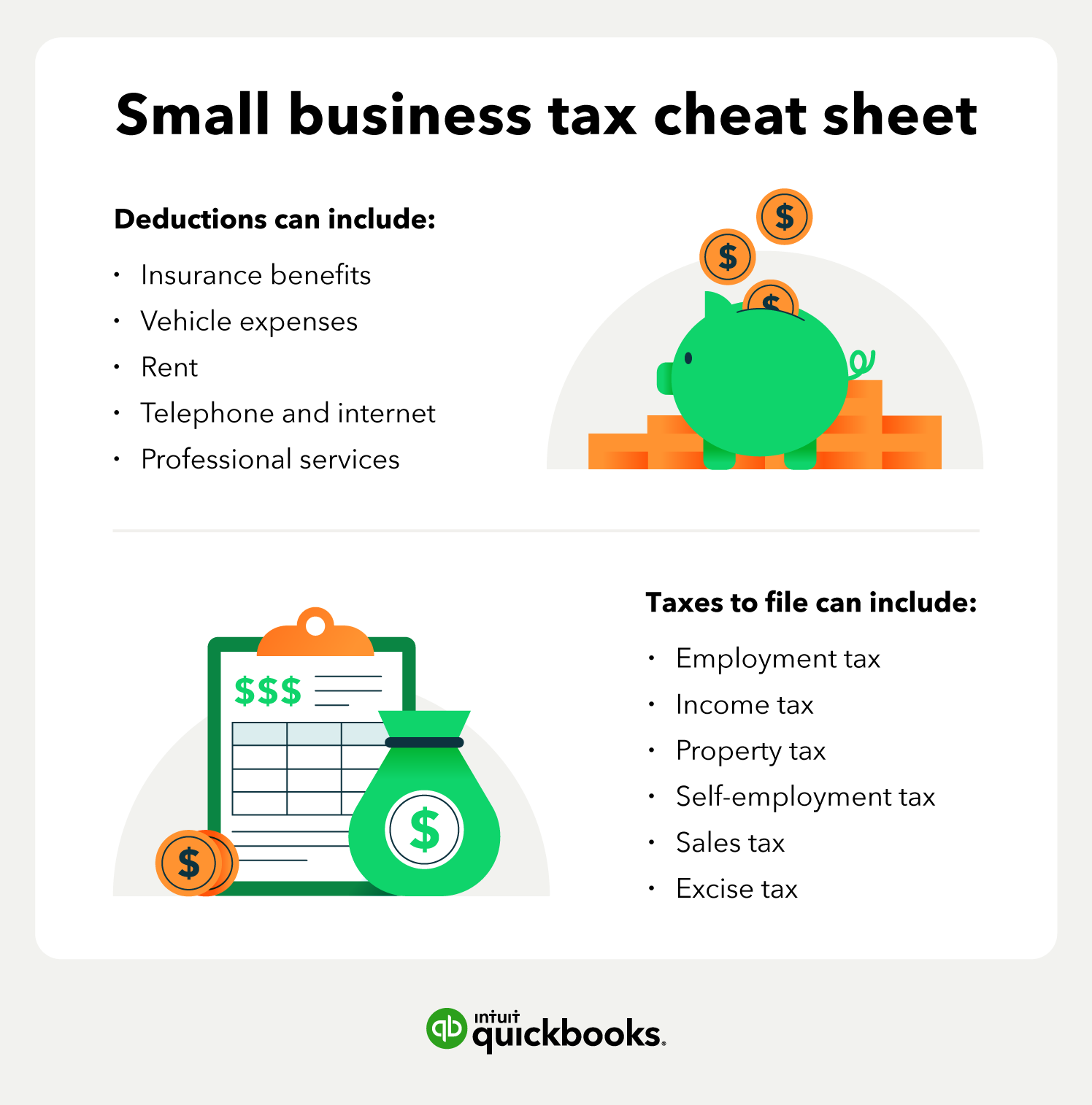
As an employer in Washington, you may be responsible for reporting and paying other business taxes in addition to withholding payroll taxes from your employees' paychecks. From federal to state and local levels, understanding the different tax programs and their impact on your business’s finances is important.

Federal taxes

You'll be responsible for federal taxes in whatever state you open a business in. Unfortunately, there are dozens of federal tax forms with unique due dates and requirements. Using an accountant or small business accounting software can be helpful in avoiding mistakes that can lead to overpayment or penalties. 

As a business owner, you have both personal and business tax filing obligations. Here’s what you need to know:

Personal tax filing

Federal income tax returns:

Every individual is required to file and pay federal personal income tax. This forms the foundation of your overall tax responsibility.

Business tax filing

Business owners have additional filing requirements, depending on the business structure:

  • Sole proprietorship: Income and expenses are reported on your personal tax return using Schedule C (Form 1040).
  • Partnership: A partnership must file an information return (Form 1065) to report income, deductions, and other relevant details, while each partner reports their share of income on their personal return.
  • Corporation: A corporation files a corporate tax return (Form 1120), paying taxes on its profits.
  • S corporation: An S corporation files an informational return (Form 1120S). Its income, losses, and deductions pass through to shareholders, who report them on their personal returns.
  • Limited liability companies (LLCs): LLCs are not classified separately for federal tax purposes and are taxed based on their ownership structure. Single-member LLCs default to sole proprietorship taxation or may elect corporate taxation, while multi-member LLCs default to partnership taxation or may elect corporate taxation.

Self-employment tax

If you work for yourself and earn more than $400 a year, you pay toward Social Security and Medicare programs through a self-employment tax. The Social Security system provides retirement benefits, disability benefits, survivor benefits, and hospital insurance (Medicare) benefits.

Employment taxes

As an employer, you are responsible for withholding and depositing federal income tax and the employee contribution to Social Security and Medicare taxes. You must also pay the employer portion of Medicare and Social Security and pay federal unemployment tax (FUTA). 

State taxes

Washington doesn't have state income taxes, but it does have business and occupation taxes, sales and use tax, and public utility tax rates your business may have to pay. Washington state also has a payroll tax, which is different from a personal income tax. QuickBooks offers payroll services for businesses.

Washington franchise tax

There are no franchise taxes in Washington. Instead, companies have to pay the business and occupation (B&O) tax rate based on their gross receipts. Washington does have a couple of alternative tax types.

What is the franchise tax rate?

Sole proprietorships, LLCs, partnerships, and corporations are subject to a B&O tax in Washington. It calculates this amount based on what you do in the state. The tax rate for businesses in Washington varies by industry. Here is a breakdown of the different rates in 2025:

  • Retailing: 0.471%
  • Wholesaling: 0.484%
  • Manufacturing: 0.484%
  • Other services: 1.5%

Different rates or taxes may apply based on your business and the specific types of goods you sell or services you provide. There are also various deductions to consider that can help you lower your total tax liability.

Be sure to stay mindful of your tax recordkeeping, and consult with an accountant if you have questions.

How is the franchise tax calculated?

The B&O tax is calculated on the gross income from business activities, without deductions for labor, materials, taxes, or other costs of doing business.

Who may be liable for the franchise tax?

Virtually all businesses operating in Washington are subject to the B&O tax, including corporations, limited liability companies (LLCs), partnerships, and sole proprietors, whether they are nonprofit or for-profit entities.

Excise taxes

Excise taxes are special taxes imposed on specific goods or services. In Washington, these taxes apply to a wide range of products and activities, including:


Public utility tax: In Washington, businesses that provide transportation, supply energy, natural gas, water, or public communications services are subject to public utility taxes. Here’s a breakdown of how the public utility tax in Washington applies to different activities:

  • Water distribution: .05029%
  • Electricity distribution: .038734%
  • Urban transportation and watercraft vessels under 65-feet long: .00642%
  • Railroad services: .01926%
  • Log transportation services: .013696%
  • Telegraph companies, distribution of natural gas, and collection of sewerage: .03852%

Real estate excise tax (REET): REET is a tax on the sale of real property, typically paid by the seller. Washington implements a graduated REET rate structure based on the property's selling price:

  • $525,000 or less: 1.10%
  • $525,000.01 - $1,525,000: 1.28%
  • $1,525,000.01 - $3,025,000: 2.75%
  • $3,025,000.01 or more: 3.00%

Tobacco products: Washington imposes an excise tax on tobacco products. The rates are:

  • Moist snuff for cans with net weight of 1.2 ounces or less: $2.526 per can
  • Moist snuff for cans with net weight greater than 1.2 ounces: $2.105 per ounce
  • Cigars (except little cigars): 95% of taxable sales price, not to exceed $0.65 per cigar
  • Little cigars (cigars that have a cellulose acetate integrated filter): $0.15125 per stick ($3.025 per pack of 20)
  • All other tobacco products: 95% of taxable sales price

Marijuana: A 37% tax imposed on the retail sale of marijuana products. This tax is collected from consumers at the point of sale and is in addition to standard sales taxes. 

Spirits: Washington imposes both a spirits sales tax and a spirits liter tax on the sale of liquor. The spirits sales tax rates are 20.5% for the general public and 13.7% for on-premises retailers (e.g., restaurants and bars). The spirits liter tax rates are $3.7708 per liter for the general public and $2.4408 per liter for on-premises retailers.

Unemployment tax

In Washington, employers are required to pay both federal and state unemployment insurance (UI) taxes. The state UI tax is applied to each employee's wages up to a specified annual limit, known as the taxable wage base.

For 2025, the taxable wage base is $72,800. Tax rates vary based on the employer’s experience rating. Employers are assigned to one of 40 rate classes, with rates ranging from 0.24% to 6.00% for qualified employers. Employers with delinquencies face higher rates, which can increase by 0.5% to 2%, depending on the level of delinquency.

For full rate tables and more details, visit the Employer Security Department.

Local taxes

In addition to federal and state taxes, many cities, counties, and other jurisdictions in Washington levy other kinds of local taxes to fund essential services and infrastructure such as schools, roads, police, and fire protection.

For example, many cities impose a local B&O tax, which is separate from the state B&O tax. Some of these cities include: 

  • Bainbridge Island: Businesses with gross revenue in the city of more than $150,000 are subject to a B&O tax rate of 1/10 of 1% (0.001)
  • Shelton: B&O tax is calculated on gross receipts at a rate of 0.2% for all classifications. Businesses with gross receipts of less than $20,000 annually or $5,000 quarterly are not subject to B&O tax
  • Mercer Island: The city collects an annual B&O tax on gross revenues. The first $150,000 per year is exempt, and revenues above that are taxed at a rate of 0.0010

Local jurisdictions may also impose other taxes, such as lodging taxes, rental car taxes, and transportation benefit district taxes, to fund specific local projects or services. For detailed information on all local taxes in Washington, refer to the Local Tax Reference Guide.

Sales and use tax

Washington imposes a 6.5% sales tax. Washington uses a destination-based sales tax system, meaning the tax rate is based on the location where the customer receives the merchandise or service. The combined state and local tax rates vary across different areas, for example:

  • King County: 10.2%
  • Mercer Island: 10.2%
  • DuPont: 9.6%
  • Ellensburg: 8.6%

Utilize the Washington Department of Revenue’s Tax Rate Lookup Tool to find specific rates for any location in the state

Use tax applies to purchases that do not have sales tax or have a sales tax lower than Washington's. It can apply to taxes made in-person or online.

Remote seller tax considerations

Remote sellers are required to register, collect, and remit sales tax in Washington if they meet the following threshold in the current or previous calendar year:

  • Has more than $100,000 in combined gross receipts sourced or attributed to Washington.
  • Is organized or commercially domiciled in Washington

This rule applies to all types of business income, including retail, wholesale, and service-related sales.

Once a remote seller meets the threshold, The seller must register for a business and occupation (B&O) tax account and start collecting Washington sales tax. The requirement starts on the first day of the month at least 30 days after passing the threshold.

Property taxes

For most properties used for business purposes, owners have to pay a personal property tax. This tax includes the property and all supplies used to operate the business, such as furniture and tools. Property tax rates vary significantly across Washington State and are determined by local jurisdictions.

The state requires county assessors to appraise all commercial and industrial property at 100% of its true market value. In industrial businesses, machinery and equipment can be considered part of the property when they are physically attached to the property.


Washington business tax deductions, credits, and exemptions

Washington offers a range of business tax deductions, credits, and exemptions aimed at reducing taxable income and incentivizing specific economic activities. These state-level incentives can significantly lower a business's overall tax burden. Below are a few, but check the Washington Department of Revenue for a full breakdown of the tax credits available.

Credits and exemptions for Washington business and occupation (B&O) tax

Washington State offers several Business & Occupation (B&O) tax credits to support businesses and encourage economic growth, including:

  • Rural County B&O Credit for New Employees: This credit encourages businesses to hire more employees in rural counties or Community Empowerment Zones (CEZs). It applies to businesses with a project in manufacturing or research & development located in these areas. To qualify, businesses must increase their total employees at the facility by at least 15%. The credit is based on the wages paid to new employees.
  • Small Business B&O Tax Credit: Small businesses that owe a low amount of B&O tax can qualify for this credit, which reduces or even eliminates their tax liability. The credit amount depends on how often the business files taxes (monthly, quarterly, or annually). Businesses that file taxes electronically will have this credit applied automatically.
  • Multiple Activities Tax Credit (MATC): Some businesses must pay B&O tax under multiple categories, like manufacturing and selling the same product. Without this credit, they would be taxed twice on the same item. The MATC prevents double taxation by allowing businesses to apply a credit for tax already paid in another category. 
  • Aerospace B&O Tax Credit for Preproduction Development Expenditures: This credit is available for businesses engaged in aerospace product development. It provides a credit against B&O tax for qualified aerospace product development expenditures.
  • The Motion Picture Competitiveness Program B&O Tax Credit: The Motion Picture Competitiveness Program B&O tax credit allows businesses to claim a credit against their Business and Occupation (B&O) tax for cash contributions made to an approved nonprofit motion picture competitiveness program, such as Washington Filmworks

Types of Washington taxes for different business entity types

It’s important to understand the implications of your business structure on your tax liability. Different types of business entities in Washington may be subject to different taxes. If you haven’t set up your business yet and are considering options for structuring it, knowing the tax rules can help you make a decision. 

Of course, all types of businesses will need to pay federal personal or corporate income tax, depending on their structure, plus unemployment insurance and any sales and use, property, or excise taxes that apply to their specific business.

Washington sales taxes

Washington has a general sales tax of 6.5%. It also has a use tax for goods that do not have a sales tax or that have a lower sales tax than the state's.

There are several types of taxable services in Washington, including:

  • Alarm monitoring
  • Construction
  • Credit screening or reporting
  • Digital goods and automated services
  • Landscaping
  • Personal training
  • Retail
  • Restaurants
  • Tattooing

Check out the full list of services subject to sales tax in Washington.

Do you need a sales tax permit?

In Washington, you generally don’t need a separate sales tax permit. However, you’ll likely need a business license, especially if you meet any of the following conditions:

  • Your business requires local or state endorsements.
  • You operate under a business name that’s different from your legal name.
  • You plan to hire employees within 90 days.
  • You sell products or services that require sales tax collection.
  • Your business makes $12,000 or more per year.
  • You must pay taxes or fees to the Department of Revenue.
  • You buy or process specialty wood products.
  • You meet nexus threshold reporting rules (for businesses with economic ties to Washington).

For businesses that make wholesale purchases, Washington issues reseller permits, which allow retailers, wholesalers, and manufacturers to make purchases in Washington without paying sales tax. To apply for a reseller's permit in Washington, you must have a valid business license in the state and endorsements. Laborers and contractors will also need proof of valid licensure.

A reseller permit in Washington is valid for four years. However, you will need to renew your reseller's permit every two years if:

  • You are a contractor
  • You have been in business for under a year
  • You have not reported business income within the last 12 months
  • Your business was on a non-active reporting status when your reseller's permit application was received
  • You have not filed any business tax returns in the last 12 months

It's important to note that Washington does not automatically renew reseller's permits. You will receive notification 90 days before your permit expires to renew it. Buyers with a reseller permit must collect Washington state and local sales taxes and submit them to the Department of Revenue.

How to file business taxes in Washington

A note is placed on a paper on top of a table.

A key part of successful small business accounting is tax preparation. In addition to having good bookkeeping and accounting software on your side, it's helpful to know the fundamentals of Washington taxes so you know when and how to pay yours.

All businesses need to maintain accurate financial records, so they can claim gross revenue (also called gross income or gross receipts). This is how much money your business earned in a year before deducting expenses.

When are taxes due in Washington?

Washington taxes are due by April 15 every year. Monthly returns are due on the 25th of every month. Quarterly returns are at the end of the month following the tax quarter. For example, quarter one (January, February, and March) is due by April 30th of that year. You can file taxes monthly, quarterly, or annually. Corporations are required to publish an annual financial report as well.

To prepare to file business taxes, you will need your employer identification number (EIN). You should also plan ahead to know what tax forms you need to file as a small business.

There are different types of forms you'll need depending on your business structure and activities:

  • Sole proprietors use Schedule C and Form 1040 to report their income.
  • Limited liability companies use Form 1040 (C, E, or F) if they are a single-member entity.
  • LLCs with multiple members use Form 1065.
  • S corporations and pass-through entities use Schedule K-1.
  • Use form 1099-NEC to report non-employee compensation paid to contractors and freelancers.
  • Use Form 720 to report excise tax on qualifying goods and services.

Estimated taxes

In Washington, most businesses don’t have to make estimated tax payments for state taxes like the Business & Occupation (B&O) tax. Instead, they pay taxes monthly, quarterly, or annually, depending on how much they owe each year:

  • Monthly filing: If you owe more than $4,800 per year
  • Quarterly filing: If you owe between $1,050 and $4,800 per year
  • Annual filing: If you owe less than $1,050 per year

For federal taxes, including income and self-employment taxes, some businesses must make quarterly estimated tax payments to the IRS. This applies to:

  • Sole proprietors, partners, and S-corporation shareholders who expect to owe $1,000 or more when filing their return.
  • Corporations that expect to owe $500 or more in taxes.

Here are the due dates for federal quarterly estimated payments:

  • April 15: (Covers income earned January 1 – March 31)
  • June 15: (Covers income earned April 1 – May 31)
  • September 15: (Covers income earned June 1 – August 31)
  • January 15: Covers income earned September 1 – December 31)

If a due date falls on a weekend or holiday, the payment is due the next business day.

Year-end business tax checklist

Stress less during tax season. Use this small business tax checklist to ensure you have everything you need to stay organized throughout the year and file your taxes accurately and on time:

Year-round business tax preparation

  • Maintain accurate records: Keep detailed records of all income and expenses throughout the year.
  • Categorize expenses: Organize your expenses into relevant categories for easier tax preparation.
  • Reconcile bank accounts: Regularly reconcile your bank accounts to ensure accuracy and identify any discrepancies.
  • Track mileage: If you use your vehicle for business purposes, keep a detailed mileage log.
  • Stay informed: Keep up-to-date on federal and state tax laws and regulations that might affect your business.

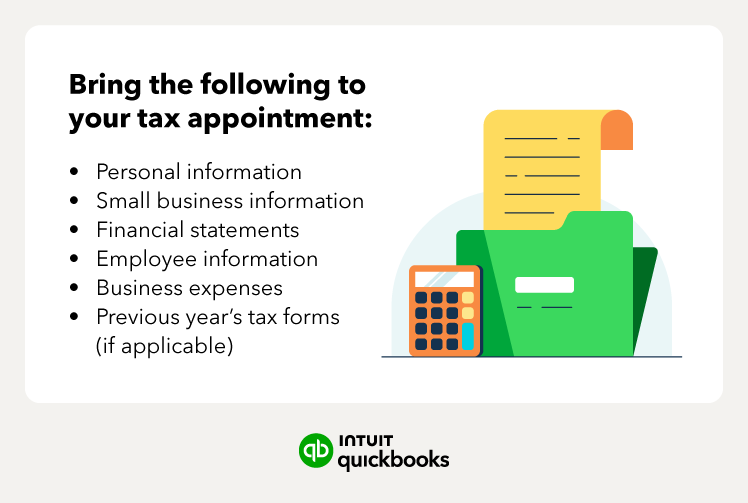
Pre-filing checklist

  • Gather necessary forms and documents:
  • Previous year's tax returns (up to three years prior for both state and federal)
  • Accounting journals and ledgers
  • Balance sheet and income statement
  • Transactional supporting documents (bank deposit slips, bank statements, invoices, checkbook, credit card statements)
  • Vehicle and mileage logs
  • Expense receipts
  • Employee tax forms (W-9, I-9, W-2, 1099)
  • Non-employee tax forms (1099-MISC)
  • State tax forms
  • List of home office deductions (if applicable)
  • Understand which tax forms to file: Determine the specific tax forms required for your business structure and tax obligations.
  • Review and verify information: Double-check all information for accuracy before filing.
  • Consider estimated taxes: If required, calculate and pay estimated taxes throughout the year.

Filing and beyond

  • File your tax returns: Submit your tax returns electronically or by mail before the deadline.
  • Request filing extensions (if needed): If you need more time to file, request an extension before the deadline.
  • Keep copies of your tax returns: Store copies of your filed tax returns for future reference.
  • Plan for next year: Start organizing your records and planning for the next tax season.

Commonly missed tax deductions and credits

Take advantage of valuable tax breaks. Many small businesses overlook possible deductions and credits that could significantly reduce their tax liability. Be sure you claim all the deductions and credits you qualify for.

Common business tax deductions

  • Advertising
  • Depreciation of assets
  • Employee salaries and benefits
  • General business expenses
  • Home office expenses
  • Insurance
  • Business loan interest
  • Internet and phone services
  • Legal services
  • Licenses
  • Meals and entertainment (for business purposes)
  • Business-related travel and mileage expenses
  • Commercial property rent 
  • Training and education
  • Cost of goods sold (COGS)
  • Business banking fees

Proper documentation and recordkeeping are essential to justify deductions in case of an audit. Consulting a tax professional can help ensure compliance with tax laws and maximize your eligible deductions.

Small business tax credits

Take time to familiarize yourself with the variety of business tax credits that may be available to you. Here are some common ones: 

For a complete list of federal tax credits and detailed eligibility requirements, visit the IRS website.

In addition to the federal tax incentives, consider if you could qualify for ones specifically for Washington businesses, such as:

Where do I send my Washington tax reports and payments?

If you're filing a Form 1040, 1040X, or 4868 and not including a payment, you can mail your tax return to the Department of Treasury, Internal Revenue Service, Ogden, UT 84201-0002.

If you're filing a Form 1040X with a payment, you can mail your tax return to the same address.

Filers who want to send a payment with their tax return for a Form 1040 or 4868 can mail their return to Internal Revenue Service, PO Box 802501, Cincinnati, OH 45280-2501.

For other types of forms and addresses, you can visit the IRS page for Washington.

Should I file and pay by paper or electronically?

You can file by paper and mail if you like, but there are electronic options that make the accounting aspect much easier. There are numerous small business and personal tax filing software that allow you to file and pay taxes online without needing to prepare a physical form or go to a post office.

Common mistakes to avoid when filing business taxes in Washington

Washington's tax system can be complex, and small business owners can sometimes encounter common pitfalls during tax season. Being aware of these issues can help you avoid costly mistakes and ensure compliance.

Misclassifying workers

Make sure you're correctly classifying your workers as employees or independent contractors. Misclassification can lead to hefty penalties and back taxes.

Missing deductions

Don't leave money on the table. Explore all eligible deductions, such as those for home office expenses, business travel, and equipment purchases.

Forgetting about B&O tax

Washington doesn’t have a corporate or personal income tax, but businesses must pay business and occupation (B&O) tax based on gross income, not profits. To avoid penalties, ensure you're registered, tracking income, and filing on time.

Overlooking sales tax

If your business sells taxable goods or services, ensure you're collecting and remitting sales tax correctly. Washington has a complex sales tax system with varying local rates, so stay informed.

Failing to pay estimated taxes

If you expect to owe a significant amount in taxes, make sure you're paying estimated taxes throughout the year to avoid penalties.

Find an accountant to help prepare your Washington business taxes

Washington may not have a corporate or personal income tax, but businesses still have to deal with B&O tax, sales tax, and other state taxes. Filing correctly is important to avoid mistakes, overpayments, or penalties. That’s why working with a qualified accountant or tax professional can make tax season much easier.

In Washington, tax preparers don’t need a state-specific license, but here’s what to look for when choosing one:

  • Meets IRS requirements
  • Has a Preparer Tax Identification Number (PTIN) and an Electronic Filing Identification Number (EFIN)
  • Completed the Annual Filing Season Program (AFSP), which covers topics such as new tax laws, filing requirements, ethics, and professional conduct

Find an accountant in Washington, and consider using the right small business accounting software to streamline your finances and ensure you're prepared for tax season with accurate reporting.

Frequently asked questions

Disclaimer: 


This content is for information purposes only and information provided should not be considered legal, accounting or tax advice or a substitute for obtaining such advice specific to your business. Additional information and exceptions may apply. Applicable laws may vary by state or locality. No assurance is given that the information is comprehensive in its coverage or that it is suitable in dealing with a customer’s particular situation. Intuit Inc. does not have any responsibility for updating or revising any information presented herein. Accordingly, the information provided should not be relied upon as a substitute for independent research. Intuit Inc. cannot warrant that the material contained herein will continue to be accurate, nor that it is completely free of errors when published. Readers should verify statements before relying on them.


Recommended for you

Mail icon
Get the latest to your inbox
No Thanks

Get the latest to your inbox

Relevant resources to help start, run, and grow your business.

By clicking “Submit,” you agree to permit Intuit to contact you regarding QuickBooks and have read and acknowledge our Privacy Statement.

Thanks for subscribing.

Fresh business resources are headed your way!

Looking for something else?

QuickBooks

From big jobs to small tasks, we've got your business covered.

Firm of the Future

Topical articles and news from top pros and Intuit product experts.

QuickBooks Support

Get help with QuickBooks. Find articles, video tutorials, and more.