- Start Your BusinessStart Your Business
- Starting a BusinessThe tools and resources you need to get your new business idea off the ground.
- PaymentsEverything you need to start accepting payments for your business.
- Funding & CapitalResources to help you fund your small business.
- Small Business StoriesCelebrating the stories and successes of real small business owners.
- Self-EmployedThe tools and resources you need to run your own business with confidence.
- Run Your BusinessRun Your Business
- Running a BusinessThe tools and resources you need to run your business successfully.
- AccountingAccounting and bookkeeping basics you need to run and grow your business.
- Cash FlowTax and bookkeeping basics you need to run and grow your business.
- PayrollPayroll essentials you need to run your business.
- TaxesTax basics you need to stay compliant and run your business.
- EmployeesEverything you need to know about managing and retaining employees.
- Grow Your BusinessGrow Your Business
- Growing a BusinessThe tools and resources you need to take your business to the next level.
- Sales & MarketingSpread the word: What you need to know about marketing your small business.
- FundingHow to find funding and capital for your new or growing business.
- Midsize BusinessesThe tools and resources you need to manage your mid-sized business.
- Enterprise Suite BlogThe tools and resources you need to grow your own business with confidence.
- E-CommerceHow to start and run a successful e-commerce business.
- TaxesTaxes
- How to fill out a 1099-NEC formLearn how to fill out and file 1099-NEC forms for independent contractors and freelancers.
- How to file small business taxesLearn how to navigate tax season with confidence and minimize your tax liability with this guide.
- Small business 1099: What you need to know for 2025Navigate the complexities of small business 1099 forms and filings with our comprehensive guide.
- 13 documents to give your accountant for small business taxesYour accountant will need these documents to file your small business taxes successfully.
- What's NewWhat's New
- NewsBrowse the latest news, press releases, and reports from QuickBooks.
- AI Resource HubFind the latest on Artificial Intelligence.
- Small Business DataThe latest research and insights for Small Businesses from QuickBooks.
- Small Business StoriesCelebrating the stories and successes of real small business owners.
- Holiday SuccessEverything you need to thrive during your business's busiest seasons.
- AI InnovationsBrowse the latest AI innovations in QuickBooks on the Intuit platform.
- ToolsTools
- All ToolsFree accounting tools and templates to speed up and simplify your workflow.
- AI-Powered Invoice GeneratorTry out this free invoice generator to create an invoice online using Intuit Intelligence.
- Payment Cost CalculatorFind out how much you could save by switching to QuickBooks Payments.
- Paycheck CalculatorAccurately estimate pay for all your employees.










Table of contents
Table of contents
Key takeaways:
- What is a 1099-NEC? A U.S. tax form that reports nonemployee compensation, helping the IRS track independent contractors' earnings and collect the correct taxes.
- Businesses must issue Form 1099-NEC to any independent contractor or freelancer paid $600 or more for services during the year.
- The deadline to file Form 1099-NEC and provide copies to recipients is February 2, 2026.
If you're a small business owner who works with freelancers, you may need to file Form 1099-NEC. Introduced in 2020, this form reports income paid to independent contractors, helping the IRS track their earnings and ensure the correct amount of taxes is collected.
In this article, we'll explore the details of Form 1099-NEC, including how it works, how to fill it out, and key differences from other 1099 forms. By understanding Form 1099-NEC, you can ensure compliance with tax regulations and maintain a smooth business operation.
How does Form 1099-NEC work?
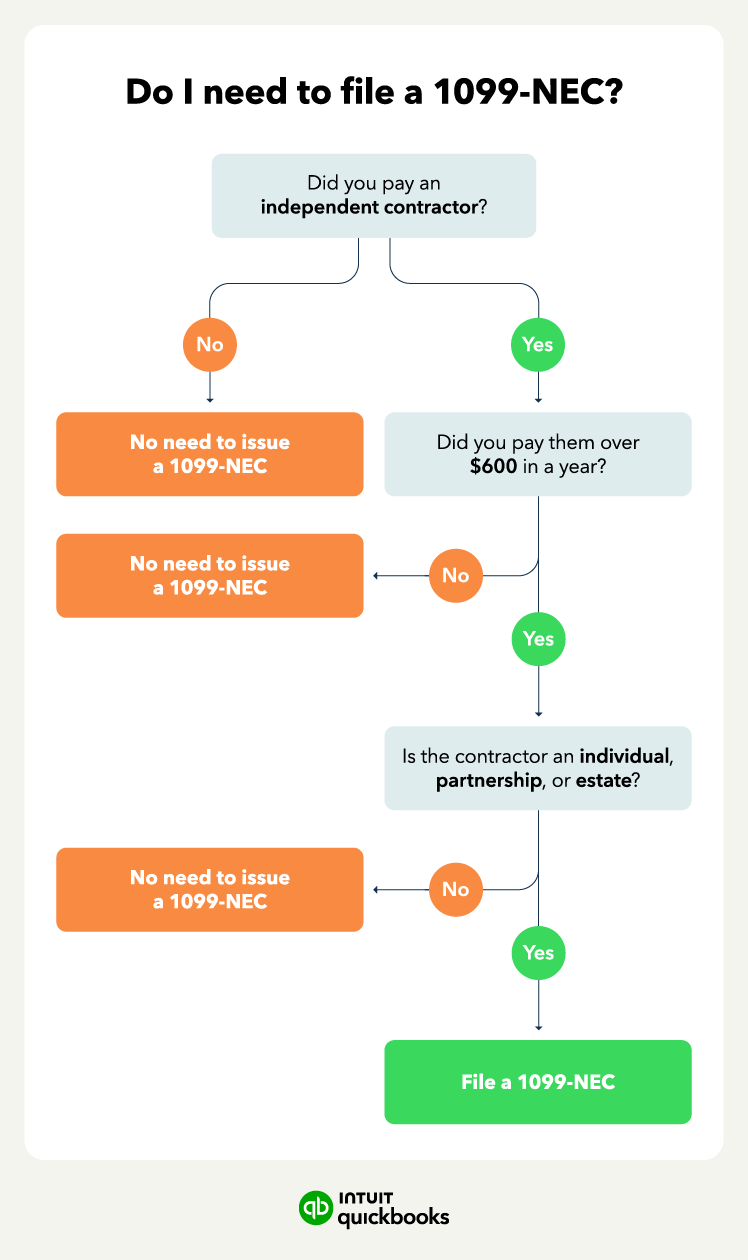
Businesses must issue a 1099-NEC to independent contractors earning over $600 annually. If you pay an independent contractor more than $600 in a year, the IRS requires you to file a Form 1099-NEC with the IRS and provide a copy to the contractor.
This applies to all types of independent contractor payments, such as those made to freelancers, consultants, and other nonemployees.

Example: If you have 10 freelance graphic designers who each earned more than $600 from you in a year, you would need to send a Form 1099-NEC to each designer. Note that this applies to businesses of all sizes.
What is nonemployee compensation?
Nonemployee compensation refers to payments made to individuals classified as independent contractors or freelancers rather than employees. This includes work such as freelancing, consulting, and contract labor.
Nonemployee compensation is reportable if it meets the following criteria:
- The payment is made to an individual who isn't an employee.
- The payment is made in the course of a trade or business.
- The total payments made to the individual in a year exceed $600.
- The recipient is an individual, partnership, or estate.
If you pay an independent contractor more than $600 in a year for work related to your business, you generally must report this income on Form 1099-NEC.
Do contractors have to pay taxes on 1099-NEC income?
When a business pays a contractor, it does not withhold any money for taxes (unlike with regular employees). This means the person who receives the 1099-NEC form is responsible for setting aside their own funds to pay taxes later.

Your accounting, your taxes. All in one place.
Save time by seamlessly moving from books to taxes in QuickBooks, then file your return with unlimited expert help and your maximum refund.*
What’s the difference between 1099-MISC and 1099-NEC?
Form 1099-MISC and Form 1099-NEC are both used to report nonemployee compensation, but they serve different purposes.
- Form 1099-MISC: Reports payments like rent or prizes that aren't subject to self-employment tax.
- Form 1099-NEC: Reports nonemployee compensation likely subject to self-employment tax. Introduced in 2020, it helps the IRS track income from independent workers more effectively.
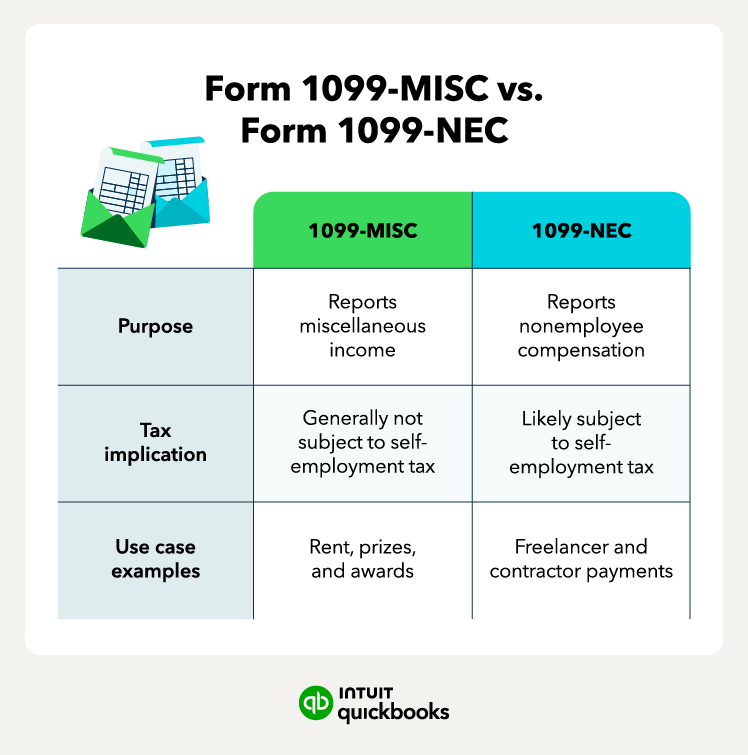
Remember to choose the correct form based on the type of payment you're reporting.

The 1099-K rule: If you pay a contractor via credit card, debit card, or a third-party payment network (like PayPal, Venmo, or Stripe), do not issue a 1099-NEC. The payment processor is responsible for reporting those funds on Form 1099-K, and reporting these payments yourself on a 1099-NEC can cause double-reporting.
What are the filing requirements and deadlines for filing Form 1099-NEC?
To properly file Form 1099-NEC, you'll need the following information:
- The TIN of the recipient
- Your business’s TIN and information
- Payment amounts made to the independent contractor during the year
Also, note that under current IRS regulations, businesses filing 10 or more information returns (including W-2s and all types of 1099s) are now required to file electronically. So if you are filing 10 or more returns, you will need to plan to e-file.
QuickBooks Bill Pay helps you see your vendors and everyone who needs a 1099 in one place, helping you stay compliant. You can get unlimited 1099 e-filing, with printing and mailing, for no additional fee. This ensures your forms are automatically submitted to the IRS and state agencies, meeting the electronic mandate without manual paperwork.
Remember to provide recipients with their Form 1099-NEC and file it with the IRS by February 2, 2026. The deadline is typically January 31st, but since that date falls on a weekend, it is extended to the next business day in 2026.
How to fill out a 1099-NEC form
Learning how to fill out Form 1099-NEC is a straightforward process, provided your bookkeeping is organized and up to date. As you fill it out, remember that accuracy is paramount; even a small typo in a TIN can lead to IRS notices and potential penalties.
If you're worried about getting it right, you can download an informational copy of Form 1099-NEC directly from the IRS website to review before you get started filing.
1. Gather necessary information
To properly file Form 1099-NEC, you'll need the following information:
- The TIN of the recipient
- Your business’s TIN and information
- Payment amounts made to the independent contractor during the year
2. Complete the 1099-NEC form
Once you have gathered the necessary information, you can begin filling out Form 1099-NEC.
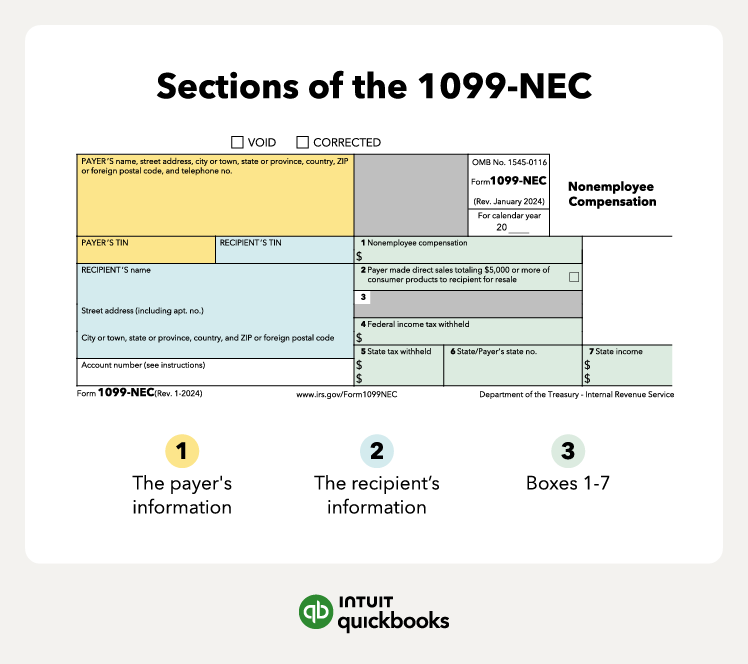
- Payer’s information: Fill in the top portion of the 1099-NEC with your business's information, including your name, address, and Employer Identification Number (EIN). Double-check this information for accuracy to avoid errors and potential penalties.
- Recipient information: Identify all independent contractors you paid more than $600 in the year. Before starting work with each contractor, collect a Form W-9. This form will provide the necessary information to fill out the recipient's portion of the 1099-NEC.
- Boxes 1-7: Box 1 is the primary box to complete on a 1099-NEC, reporting the total amount paid to the independent contractor during the year. If any of the other boxes (2-7) apply to your situation, refer to the IRS website for specific instructions for completing them.
3. Verify and distribute form copies
Review and distribute form copies based on the number of independent contractors you pay over $600.
There are five copies of Form 1099-NEC:
- Copy A: For the IRS
- Copy 1: For your state tax department
- Copy B: For the recipient (the person you paid)
- Copy 2: Also for the recipient
- Copy C: For payer (your copy for recordkeeping)
Taking the time to verify the details up front ensures a seamless filing process—and helps maintain a professional, transparent relationship with your contractors.

Stay on top of 1099s with Bill Pay**
See your vendors and everyone who needs a 1099 all in one place. Plus, get unlimited 1099 e-filing, with printing and email, for no additional fee.
What are the penalties for not filing a 1099-NEC form?
Missing the Form 1099-NEC filing deadline can result in fines that increase with each day the form is late, so meeting the due date is essential to avoid penalties.
The IRS imposes varying penalties for late submissions:
- Starting at $60 per form if you file up to 30 days after the due date
- Starting at $130 per form if over 30 days late but before Aug 2
- Starting at $340 per form after Aug 1 or if you don’t file at all
- Starting at $680 per form for intentionally disregarding filing requirements
To avoid these penalties, file your 1099-NEC accurately and on time. If unexpected delays occur, you can request an extension using Form 8809 for additional time.
Common challenges with filing 1099-NEC forms
Navigating tax season is often the most stressful part of running a business, *especially* when paperwork doesn't go as planned.
Here are some of the most common complications you might experience when filing 1099-NEC forms, and what to do about them:
You received a 1099-NEC in error
If you receive a 1099 tax form by mistake, immediately contact the sender to request the correct form. Receiving a 1099-NEC in error can result in overpaying taxes or underreporting your income, both of which can have serious financial consequences.
You can find the issuer’s information in the top left corner of the 1099-NEC under “Payer’s information.”
Your 1099-NEC did not arrive in time for the deadline
If you haven't received your 1099-NEC form and the tax filing deadline is approaching, take immediate action.
Contact your employer or payer directly and request a copy of the missing form. If you still haven't received it by the tax deadline, call the IRS at 800-829-1040. Be prepared to provide the following information:
- Your name, address, phone number, Social Security number, and dates of employment.
- Your employer's or payer's name, address, and phone number.
Note: It's important to file your tax return on time, even if you're still waiting for a missing form. You can always file an amended return later if the form arrives.
You earned income as both an employee and a contractor
Receiving both a W-2 and a 1099-NEC Form indicates that you earned income from both employment and self-employment during the year. This is common among individuals who hold full-time jobs and also work as freelancers or independent contractors.
To file a W-2 and a 1099-NEC together:
1. Report your W-2 income: This includes your wages, tips, and other compensation from your employer.
2. Report your 1099-NEC income: This includes your earnings from self-employment activities, such as freelance work.
3. Calculate self-employment tax: You'll need to pay both the employer and employee portions of Social Security and Medicare taxes on your self-employment income. You can use a self-employment tax calculator for this step.
4. Include all additional forms: This may include Schedule C to report your self-employment income and expenses.
Find peace of mind come tax time
To streamline your tax preparation, especially when dealing with 1099-NEC income and calculating tax deductions, consider using accounting software with integrated payroll functions.
These tools can automate many tasks, saving you time and reducing the risk of errors. By automating payroll functions and calculations like self-employment tax and generating tax forms, you can focus on growing your business and enjoy a less stressful tax season.
You could save up to 25% on transaction costs².
Speak with us now to see if you qualify.
Talk to sales 1-800-515-8366
Monday - Friday, 6 AM to 4 PM PT
Payroll Compliance

Details on the One Big Beautiful Bill Act and how it affects payroll

USPS changes may affect your postmark date

Mandatory State Paid Family Leave Programs
Accounting
Paperless accounting: What it is and tips on making the switch

The accounting equation: A beginner’s guide with examples
Customer Stories

Why Amborella Organics trusts QuickBooks AI to handle the heavy lifting of a $10M+ vision
At Petal Salon, Amanda Lee Harvey keeps her clients in the pink

Normal Ice Cream saves 7 hours a week on banking admin thanks to QuickBooks Bill Pay

How The Baby Pantry shows up for families in need
Disclaimer:
**Unlimited 1099 e-file: 1099 forms are e-filed with the IRS only for the current filing year and for payments recorded in QuickBooks. Includes state filings for eligible states participating in IRS Combined Federal/State Filing program. If you have the Bill Pay Basic plan, 1099 e-filing services will be charged at the standard 1099 E-file Service pricing.
Recommended for you



Explore what you can do with QuickBooks
Explore what you can do with QuickBooks

See profit at a glance


Get expert help
Looking for something else?
Firm of the Future
Topical articles and news from top pros and Intuit product experts.
QuickBooks Support
Get help with QuickBooks. Find articles, video tutorials, and more.
Call Sales: 1-800-285-4854





© 2026 Intuit Inc. All rights reserved.
Intuit, QuickBooks, QB, TurboTax, Credit Karma, and Mailchimp are registered trademarks of Intuit Inc.
Money movement services are provided by Intuit Payments Inc., licensed as a Money Transmitter by the New York State Department of Financial Services. For details about our money transmission licenses, or for Texas customers with complaints about our service, please click here.
By accessing and using this page you agree to the Website Terms of Service.