QuickBooks Blog
Two people sitting at a table with laptops.
Nevada

Nevada small business taxes: Types, rates, deadlines, and how to file in 2025

Choosing where to build your business in the United States can feel overwhelming, as most states have their own tax laws, requirements, and regulations. However, Nevada may be ideal for those seeking a favorable tax environment, especially if you’re starting a business.

Knowing the state's different business entity types and tax structures can help you determine if Nevada is the right place for your next business venture. This comprehensive guide covers the types of business taxes in Nevada (including payroll taxes), business entity types, and how to ensure your taxes are properly filed on time each year.

Refer to the table of contents below to quickly find the information that matters most to you:

Taxes in Nevada overview

  • Nevada doesn’t impose a state income tax on individuals or businesses, making it an attractive option for businesses.
  • Businesses generating over $4 million in annual Nevada gross revenue must pay the Commerce Tax, with rates varying by industry.
  • Employers must pay the Modified Business Tax (MBT) on taxable wages exceeding $50,000 per quarter. The general rate is 1.17%, with a higher rate of 1.554% for financial institutions.
  • Nevada’s base sales tax rate is 6.85%, but local jurisdictions may add additional rates.
  • Nevada requires businesses with employees to pay unemployment insurance tax on the first $41,800 of wages per employee. Rates range from 0.25% to 5.40%, depending on employer experience.

Key Nevada tax adjustments for 2025

Staying informed about the latest tax changes is essential for businesses to maintain compliance, optimize their tax strategies, and plan ahead. Here are some important adjustments and updates for 2025 that could impact your business:

Modified Business Tax (MBT)

  • The MBT tax rate for most general business employers decreased from 1.378% to 1.17%. The first $50,000 in wages is still exempt from taxes under NRS 363B.110.
  • The tax rate for financial institutions is now set at 1.554% on wages after health benefit deductions. No wage exemption is provided. There’s no exemption for the first $50,000, so the 1.554% rate applies to all wages minus the allowed deductions.

Diaper exemption

  • Starting January 1, 2025, Nevada will no longer charge sales tax on diapers for both infants and adults.

Unemployment tax

  • Effective January 1, 2025, Nevada will increase its unemployment insurance taxable wage base from $40,600 in 2024 to $41,800 after January 1, 2025.

Senate Bill 497

  • Senate Bill 497 removed the requirement for business entities with Nevada gross revenue of $4,000,000 or less in a taxable year to file a commerce tax report.

Nevada state income taxes

Nevada doesn’t have a corporate income tax for businesses, and there’s no state income tax for individual wage earners. Nevada is one of seven states in the U.S. that doesn’t impose a personal state income tax.

What is the state income tax in Nevada?

No, Nevada doesn’t have state income tax. Although there’s no state income tax, federal and payroll taxes apply in Nevada. Learning the difference between payroll taxes and income tax types can help you better understand the state's tax structure and system.

Additionally, the Commerce Tax and Modified Business Tax (MBT) may apply to your business. For more details on Nevada's tax policies, you can visit the Nevada Department of Taxation's official website.

Image Alt Text

Types of business taxes in Nevada

In Nevada, a state that does not enforce a traditional state income tax on businesses or individuals, there are different types of taxes to understand, like payroll taxes. Traditional sales and use taxes, commerce taxes, and self-employment taxes may be required, depending on the type of business you have registered and your preferred tax structure.

Federal taxes

You'll be responsible for federal taxes in whatever state you open a business in. Unfortunately, there are dozens of federal tax forms with unique due dates and requirements. Using an accountant or small business accounting software can be helpful in avoiding mistakes that can lead to overpayment or penalties. 

As a business owner, you have both personal and business tax filing obligations. Here’s what you need to know:

Personal tax filing

Federal income tax returns:

Every individual is required to file and pay federal personal income tax. This forms the foundation of your overall tax responsibility.

Business tax filing

Business owners have additional filing requirements, depending on the business structure:

  • Sole proprietorship: Income and expenses are reported on your personal tax return using Schedule C (Form 1040).
  • Partnership: A partnership must file an information return (Form 1065) to report income, deductions, and other relevant details, while each partner reports their share of income on their personal return.
  • Corporation: A corporation files a corporate tax return (Form 1120), paying taxes on its profits.
  • S corporation: An S corporation files an informational return (Form 1120S). Its income, losses, and deductions pass through to shareholders, who report them on their personal returns.
  • Limited liability companies (LLCs): LLCs are not classified separately for federal tax purposes and are taxed based on their ownership structure. Single-member LLCs default to sole proprietorship taxation or may elect corporate taxation, while multi-member LLCs default to partnership taxation or may elect corporate taxation.

Self-employment tax

If you work for yourself and earn more than $400 a year, you pay toward Social Security and Medicare programs through a self-employment tax. The Social Security system provides retirement benefits, disability benefits, survivor benefits, and hospital insurance (Medicare) benefits.

Employment taxes

As an employer, you are responsible for withholding and depositing federal income tax and the employee contribution to Social Security and Medicare taxes. You must also pay the employer portion of Medicare and Social Security and pay federal unemployment tax (FUTA). 

State taxes

If you're learning about payroll taxes, it's important to familiarize yourself with Nevada state taxes, which you will also be responsible for as a business owner with employees. Software solutions such as QuickBooks Payroll can streamline the process of managing state taxes and federal filings for your business in Nevada.

Nevada Modified Business Tax (MBT)

The Nevada Modified Business Tax (MBT) is a payroll tax levied on employees' gross wages minus any healthcare benefits provided by the employer. Employers who pay their workers more than $50,000 per business quarter are subject to the MBT. See the State of Nevada Department of Taxation for exceptions.

Nevada franchise taxes

In some states, a franchise tax is imposed on companies wishing to open a business there. Nevada is unique, though, because it doesn't impose a franchise tax. However, the state does impose a Commerce Tax.

What is the franchise tax rate?

While Nevada doesn't currently have a traditional franchise tax for business owners, the Commerce Tax applies to all Nevada-based businesses generating revenue exceeding $4 million annually. This tax rate will vary based on your industry. Each business sector has its own tax rate, which applies only to the portion of gross revenue over $4 million during a fiscal year. To find the exact rate for your industry, check out the official resources on the Nevada Department of Taxation's website.

How is the franchise tax calculated?

The Commerce Tax in Nevada is based on the revenue your business earns in the state during the fiscal year (July 1 to June 30). It only applies if your Nevada gross revenue exceeds $4 million. The tax rate depends on your business's industry, as defined by North American Industry Classification System (NAICS) codes. Here's how it works:

  1. Calculate gross revenue: Add up all the revenue your business earns in Nevada.
  2. Subtract exemptions/deductions: Some types of revenue may not count, based on Nevada law.
  3. Apply the $4 million threshold: If your revenue is over $4 million, the tax only applies to the amount above that.
  4. Use your industry’s tax rate: Multiply the taxable revenue (over $4 million) by your specific industry’s tax rate.

For step-by-step examples, see the Commerce Tax Return Instructions on the Nevada Department of Taxation's website.

Who may be liable for a franchise tax?

Any business operating in Nevada must pay the Commerce Tax if it earns more than $4 million in gross revenue during the fiscal year. This applies to:

  • Corporations
  • Partnerships
  • LLCs (Limited liability companies)
  • Sole proprietorships
  • Joint ventures
  • Other types of businesses

Some organizations are exempt, like nonprofits under section 501(c), government entities, and credit unions. For a full list of exemptions, see the Nevada Department of Taxation’s Commerce Tax FAQs.

If your business earns $4 million or less in Nevada, you don’t have to file a Commerce Tax return. But if your revenue goes over this amount, you’ll need to file and pay the tax.

Nevada excise taxes

Excise taxes are special taxes imposed on specific goods or services. In Nevada, these taxes apply to a wide range of products and activities, including:

Alcoholic beverages: Nevada imposes an excise tax on the sale of alcoholic beverages. The tax rates per gallon are:

  • Malt beverage: $0.16
  • Alcohol content 0.5% to 14%: $0.70
  • Alcohol content 14.1% to 22%: $1.30
  • Alcohol content 22.1% to 80%: $3.60

Tobacco products: The state levies taxes on cigarettes and other tobacco products (OTP). For cigarettes, the rates are:

  • $1.80 for a pack of 20 cigarettes
  • $2.25 for a pack of 25 cigarettes

The tax rate for OTP in Nevada is generally 30% of the wholesale price, with an exception for premium cigars. Here’s how the tax is calculated for premium cigars:

  • If 30% of the wholesale price is greater than $0.50 per cigar, the tax is capped at $0.50 per cigar
  • If 30% of the wholesale price is less than $0.30 per cigar, the minimum tax is $0.30 per cigar
  • For wholesale prices between these thresholds, the tax remains 30% of the wholesale price

Cannabis: Nevada applies two types of taxes on cannabis:

  • Wholesale tax: 15% of the fair market value at the cultivation level.
  • Retail tax: 10% of the retail sales price for recreational cannabis sold to consumers.

Gold and silver mining: Nevada charges an excise tax on businesses extracting gold and silver. A 0.75% tax is applied to taxable revenue between $20 million and $150 million, while a 1.1% tax is applied to any taxable revenue over $150 million.

Live Entertainment Tax (LET): LET applies to venues providing live entertainment, such as concerts and shows, with specific criteria determining applicability. The current LET rate is 9% of the admission charge for venues with a capacity of 200 or more people.

Unemployment tax

Business owners in Nevada with employees are required to pay state unemployment insurance (SUI) tax. This tax covers workers who need unemployment benefits due to injury, illness, or even a poor economy. 

As of January 1, 2025, Nevada's taxable wage base is $41,800, up from $40,600 in 2024. This means employers pay state UI taxes on each employee's wages up to this amount annually. The SUI tax rates in Nevada range from 0.25% to 5.40%, depending on employer experience. New employers have a tax rate of 2.95%. There’s also an additional 0.05% tax charged for the Career Enhancement Program (CEP).

You can learn more about the unemployment insurance tax in Nevada on the official Nevada Department of Employment, Training and Rehabilitation website.

Local taxes

In addition to federal and state taxes, many cities, counties, and other jurisdictions in Nevada levy other kinds of local taxes to fund essential services and infrastructure such as schools, roads, police, and fire protection.

For example, hotels and motels in Nevada charge a transient lodging tax, which varies by location. In unincorporated Clark County (including the Las Vegas Strip), the tax ranges from 10.5% to 13.38%, depending on the location.


Sales and use tax

Nevada has a base sales tax rate of 6.85% on certain services and tangible goods. However, it's important to note that some jurisdictions in Nevada have sales tax rates as high as 8.375%.

Because Nevada's sales tax rate comprises a state base rate and local surtaxes, you may need to research cities and counties to find an optimal location for your business. While Nevada's state base tax rate is currently 6.85%, some counties generally add between 1.25% and 3.75% to their local tax rates to help cover the cost of local and community-centric services. Some cities charge sales taxes, too. Ultimately, average local tax rates anywhere in Nevada range between 6.85% and 8.375%. A few county examples in Nevada include:

  • Douglas County: The current local sales tax rate is 7.10%
  • Clark County (Las Vegas): The current local tax rate is 8.375%, making it one of the highest-taxed regions in Nevada
  • Washoe County (Reno): The current local county tax rate in Washoe County, Nevada, is 8.265%

Remote seller tax considerations

Since the 2018 South Dakota v. Wayfair, Inc. decision, Nevada requires remote sellers—businesses without a physical presence in the state—to collect and pay sales tax if they meet these certain thresholds:

  • Makes over $100,000 in gross sales to Nevada customers, or
  • Completes 200 or more separate transactions with Nevada customers.

If you exceed either threshold, you need to register with the Nevada Department of Taxation and start collecting sales tax. Registration must be completed by the first day of the month after 30 days from when you meet the threshold. For example, if your sales exceed $100,000 on October 1, you must register and collect tax by November 1.

Property taxes

Some local governments, cities, and school districts in Nevada levy property taxes. Funds collected from owned properties support community services involving road repairs, public safety, and education.

Property in Nevada is assessed at 35% of its taxable value, which is based on the property’s market value and depreciation. Tax rates are set in dollars per $100 of assessed value. For example, if a property’s assessed value is $100,000 and the tax rate is $3.20 per $100, the annual property tax would be $3,200.

When real property is sold or transferred in Nevada, a Real Property Transfer Tax (RPTT) is imposed. The general rate is $1.95 for every $500 of the property's value. Additional county rates may apply. For instance, the total RPTT rate in Clark County is $2.55 per $500.


Nevada business tax deduction, credits, and exemptions

Nevada offers a range of business tax deductions, credits, and exemptions aimed at reducing taxable income and incentivizing specific economic activities. These state-level incentives can significantly lower a business's overall tax burden. Here are a few examples of these incentives:

Commerce Tax credit

Businesses that pay the Commerce Tax can receive a credit to offset their Modified Business Tax (MBT) liabilities. The credit is equal to 50% of the Commerce Tax paid in the preceding taxable year.

Opportunity Zones Taxes Incentive

The Opportunity Zone Tax Incentive encourages private investment in designated low-income areas. Investors can benefit from tax advantages, including:

  • Delayed taxes on past gains if reinvested in an Opportunity Fund.
  • Reduced taxes on gains if investments are held for five to seven years.
  • No taxes on new gains if investments are held for 10+ years.

New Markets Tax Credit Program

The Nevada New Markets Jobs Act (NMJA) Program helps small businesses in low-income areas get low-cost loans or funding. While businesses don’t get direct tax credits, they can benefit from better financing options, creating jobs and boosting local economies.

Credits and exemptions for Nevada sales tax

Nevada has a sales and use tax on the sale, rental, or use of tangible personal property in the state. However, certain credits and exemptions are available.

Non-profit organizations

Non-profits with religious, charitable, or educational purposes can qualify for a sales tax exemption in Nevada. However, having federal 501(c) status doesn’t automatically grant this exemption. Organizations must apply to the Nevada Department of Taxation for approval. If approved, the exemption lasts for five years and must be renewed afterward.

Standard abatements

Nevada offers various standard abatements, including:

  • Sales and Use Tax Abatement: Businesses may qualify for a reduced sales and use tax rate, as low as 2%, on eligible purchases of capital equipment.
  • Modified Business Tax Abatement: Companies can receive a 50% reduction on the Modified Business Tax, lowering the 1.17% tax rate on quarterly wages exceeding $50,000.
  • Personal Property Tax Abatement: Eligible businesses may benefit from up to a 50% reduction in personal property tax, applicable for a maximum duration of 10 years.
  • Real Property Tax Abatement for Recycling: Recycling businesses that meet the criteria can receive an abatement of up to 50% on real and personal property taxes for up to 10 years.

See the Nevada Governor’s Office of Economic Development (GOED) for more information.

Data center abatements

Data center companies that establish or expand their operations in Nevada can benefit from partial tax abatements. These abatements also apply to businesses that operate within the data center.

For instance, qualified capital equipment purchases may receive a reduced tax rate as low as 2% for up to 10 or 20 years. This requires approval by a two-thirds vote from the GOED Board. Also, eligible businesses can receive up to a 75% reduction in personal property taxes for a period of 10 or 20 years.

Visit the Nevada Governor’s Office of Economic Development (GOED) for more information.

Aviation abatements

Aviation companies that establish or expand their operations in Nevada may qualify for partial tax abatements, including:

  • Reduced tax rates, as low as 2%, on eligible capital equipment purchases for up to 10 years. Approval from the GOED Board, with a two-thirds vote, is required for the 2% rate.
  • Up to a 50% reduction in personal property taxes for a maximum period of 10 years.

See the Nevada Governor’s Office of Economic Development (GOED) for more information.

Types of Nevada taxes for different business entity types

Once you understand the tax basics for different business entity types in Nevada, you can be sure you're filing your taxes appropriately and accurately. Not all business types in Nevada have the same tax obligations and responsibilities. The more familiar you are with various tax structures, the easier it will be for you to finalize your decision when it's time to register a business of your own in the state.

Nevada sales tax

Nevada imposes a 6.85% state sales and use tax on sales, leases, and rentals of tangible personal property. Many local jurisdictions add additional taxes, making the total sales tax rate vary across the state.

The types of items that are generally taxable are:

  • Most tangible personal property transferred for value
  • Goods, wares, and merchandise
  • Services necessary for completing the sale of tangible personal property

Some key exemptions include:

  • Unprepared food
  • Farm machinery and equipment
  • Newspapers
  • Finance charges on credit sales

Visit the Department of Taxation’s Sales Tax FAQs for more information.

Do you need a sales tax permit?

If you're seeking a sales tax permit to begin generating revenue from sold goods, you'll need to complete the following steps:

  1. Register your business entity: You must officially register your business in the State of Nevada or use the official SilverFlume Business Portal online for those interested in operating in Nevada.
  2. Obtain a sales tax permit: Submit an application for a sales tax permit via the official Nevada Tax Center. Complete the Sales Tax Permit Application, which may be labeled "Taxable Sales Return."
  3. Pay required fees: You may be required to pay a fee at the time of your submission.

How to file business taxes in Nevada

A note is placed on a paper on top of a table.

Filing and paying taxes on time and in compliance with Nevada law is crucial to avoid potential fees or penalties. Filing taxes in Nevada as an individual or business owner is possible via the official Nevada Tax Center website.

When filing taxes in Nevada for your business, you must follow a fiscal year schedule, which depends on your registered business type, to avoid late fees and penalties. In Nevada, the fiscal year can involve a traditional calendar year (from Jan. 1 to Dec. 31) or any 12-month period that ends on the last day of any month other than December. If you're interested in matching traditional fiscal cycles for business, you may begin your fiscal year on July 1 of every year.

Whenever you're filing taxes for your business in Nevada, keep the following tips in mind:

  • Register your business: Properly registering your business with the Nevada Department of Taxation is essential. This will provide you with the necessary documents, licensing, tax identification, and permits to begin conducting operations. You can also register your business in Nevada using the SilverFlume Business Portal.
  • Obtain an EIN: Applying for and obtaining an EIN is vital if your business requires one in Nevada. To expedite processing, you can use the official IRS website to apply for an EIN.
  • Understand tax obligations: You need to know your tax obligations based on the type of business entity you've registered in Nevada. You'll need to learn about basic tax requirements, such as sales and use taxes (State Unemployment Tax), Modified Business Tax (MBT), and Commerce Tax.
  • Maintain accurate filings and records: Detailed records and reports can ensure accurate tax filings each quarter or annually.
  • Use a tax checklist: This can help you feel more confident in your decisions once you report and file your business taxes.
  • Deadlines: Adhere to existing tax deadlines in Nevada based on the type of taxes you are responsible for based on your business type and tax structure.
  • Use accounting software: Using accounting software solutions, such as QuickBooks, is one way to learn more about managing taxes for your business in Nevada right from the comfort of your home.

When are business taxes due in Nevada?

The due dates and time frames for Nevada taxes vary, depending on the type of tax you are required to pay:

  • Sales and use tax: Businesses that are required to pay a sales and use tax (for selling tangible goods) must submit a return on the last day of the month following the initial reporting period. Depending on your business and its tax structure, reporting periods may be monthly, quarterly, or annually.
  • Commerce Tax: This is due 45 days after the end of every fiscal year in Nevada, which runs from July 1 to June 30.
  • Modified Business Tax (MBT): In Nevada, modified business taxes are due by the last day of the month following the end of each quarter.

Once you're familiar with the basics of an EIN, you can use a small business tax checklist to keep track of tax responsibilities and filing dates.

Estimated taxes

Nevada doesn’t require estimated state income tax payments, as the state does not impose an individual or corporate income tax. However, businesses in Nevada may still need to make estimated federal tax payments if they expect to owe $1,000 or more in federal taxes after subtracting withholding and refundable credits. Corporations are required to make estimated tax payments if they expect to owe $500 or more in federal taxes when their return is filed.

This typically applies to:

  • Self-employed individuals
  • Sole proprietors
  • Partners in a partnership
  • S corporation shareholders who receive income not subject to withholding

For 2025, federal estimated tax payments are due on the following dates:

  1. 1st Quarter Payment: Due on April 15 (for income earned January 1 - March 31)
  2. 2nd Quarter Payment: Due on June 16 (for income earned April 1 - May 31)
  3. 3rd Quarter Payment: Due on September 15 (for income earned June 1 - August 31)
  4. 4th Quarter Payment: Due on January 15, 2026 (for income earned September 1 - December 31)

If a due date falls on a weekend or holiday, the payment is due the next business day.

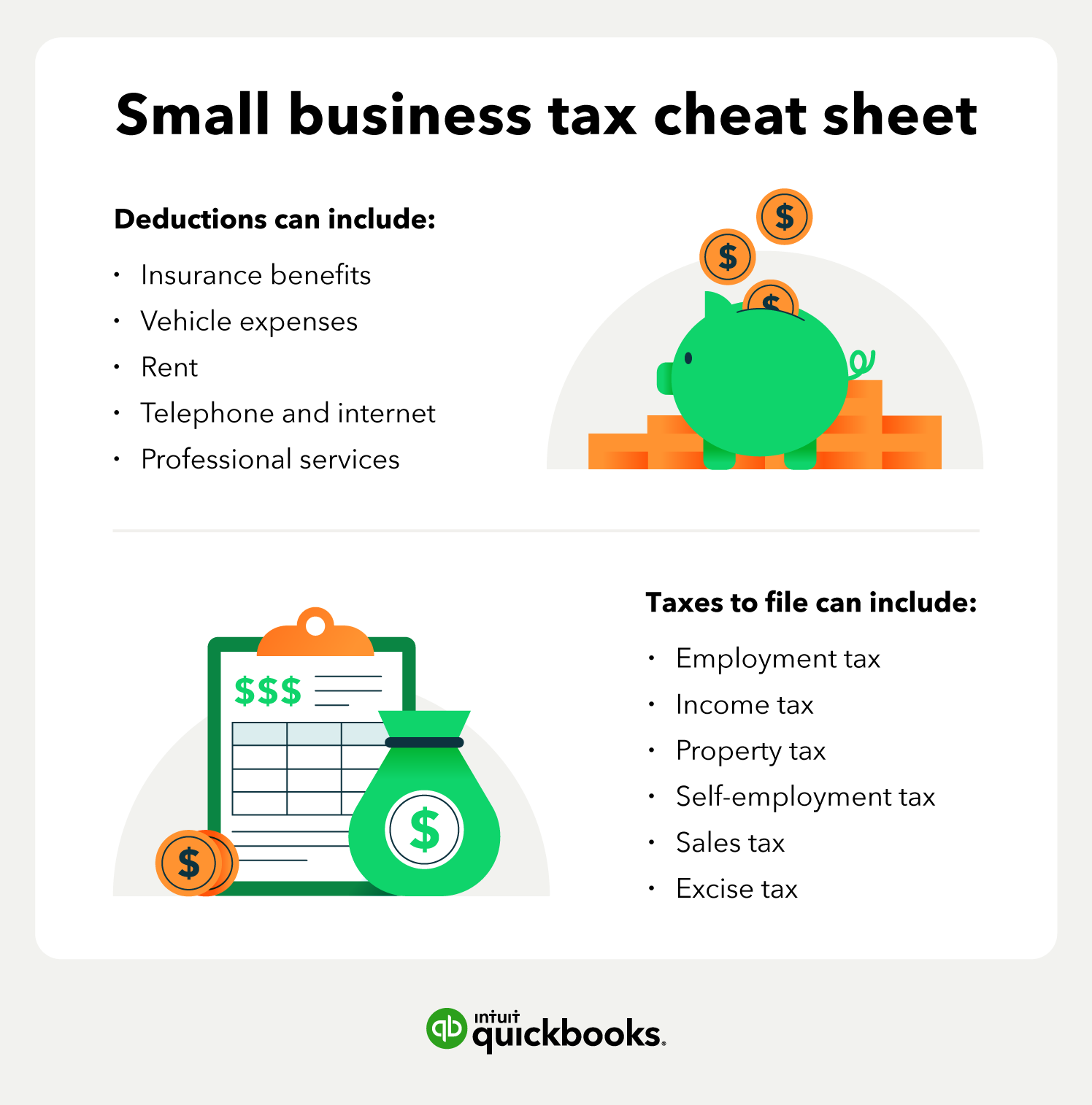
Year-end business tax checklist

Stress less during tax season. Use this small business tax checklist to ensure you have everything you need to stay organized throughout the year and file your taxes accurately and on time:

Year-round business tax preparation

  • Maintain accurate records: Keep detailed records of all income and expenses throughout the year.
  • Categorize expenses: Organize your expenses into relevant categories for easier tax preparation.
  • Reconcile bank accounts: Regularly reconcile your bank accounts to ensure accuracy and identify any discrepancies.
  • Track mileage: If you use your vehicle for business purposes, keep a detailed mileage log.
  • Stay informed: Keep up-to-date on federal and state tax laws and regulations that might affect your business.

Pre-filing checklist

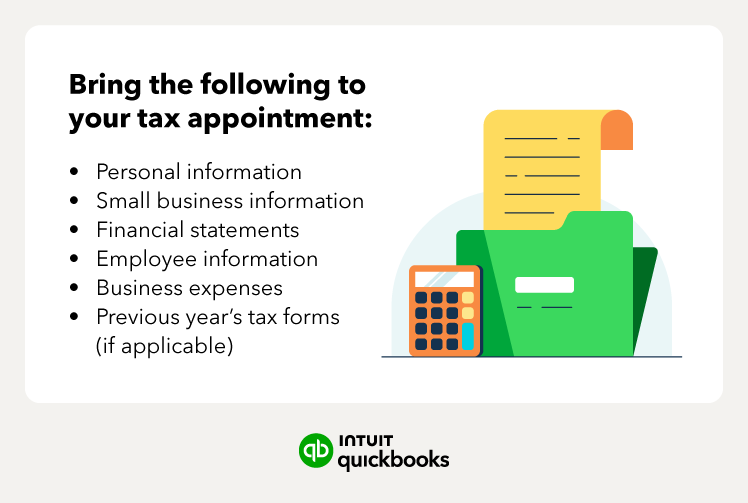
  • Gather necessary forms and documents:
  • Previous year's tax returns (up to three years prior for both state and federal)
  • Accounting journals and ledgers
  • Balance sheet and income statement
  • Transactional supporting documents (bank deposit slips, bank statements, invoices, checkbook, credit card statements)
  • Vehicle and mileage logs
  • Expense receipts
  • Employee tax forms (W-9, I-9, W-2, 1099)
  • Non-employee tax forms (1099-MISC)
  • State tax forms
  • List of home office deductions (if applicable)
  • Understand which tax forms to file: Determine the specific tax forms required for your business structure and tax obligations.
  • Review and verify information: Double-check all information for accuracy before filing.
  • Consider estimated taxes: If required, calculate and pay estimated taxes throughout the year.

Filing and beyond

  • File your tax returns: Submit your tax returns electronically or by mail before the deadline.
  • Request filing extensions (if needed): If you need more time to file, request an extension before the deadline.
  • Keep copies of your tax returns: Store copies of your filed tax returns for future reference.
  • Plan for next year: Start organizing your records and planning for the next tax season.

Commonly missed tax deductions and credits

Take advantage of valuable tax breaks. Many small businesses overlook possible deductions and credits that could significantly reduce their tax liability. Be sure you claim all the deductions and credits you qualify for.

Common business tax deductions

  • Advertising
  • Depreciation of assets
  • Employee salaries and benefits
  • General business expenses
  • Home office expenses
  • Insurance
  • Business loan interest
  • Internet and phone services
  • Legal services
  • Licenses
  • Meals and entertainment (for business purposes)
  • Business-related travel and mileage expenses
  • Commercial property rent 
  • Training and education
  • Cost of goods sold (COGS)
  • Business banking fees

Proper documentation and recordkeeping are essential to justify deductions in case of an audit. Consulting a tax professional can help ensure compliance with tax laws and maximize your eligible deductions.

Small business tax credits

Take time to familiarize yourself with the variety of business tax credits that may be available to you. Here are some common ones: 

For a complete list of federal tax credits and detailed eligibility requirements, visit the IRS website.

Where do I send my Nevada tax reports and payments?

The Nevada Department of Taxation handles tax reports and filings in Nevada. Submitting filings and reports can be done online via the Nevada Tax Center. If you choose to mail your tax reports, you can do so by sending them to:

Nevada Department of Taxation

1550 College Parkway, Suite 115

Carson City, NV 89706-7937

Should I file and pay by paper or electronically?

Filing your taxes in Nevada electronically can expedite processing. Tax documents submitted online may be processed within a few business days to a couple of weeks, while mailed documents may require several weeks to process successfully.

Common mistakes to avoid when filing business taxes in Nevada

Tax season can be a little overwhelming, but with some preparation, you can avoid costly mistakes and keep your business on the right track. Here are some common pitfalls to watch out for.

Misclassifying workers

Make sure you're correctly classifying your workers as employees or independent contractors. Misclassification can lead to hefty penalties and back taxes.

Missing deductions

Don't leave money on the table. Explore all eligible deductions, such as those for home office expenses, business travel, and equipment purchases.

Forgetting about the Commerce Tax

Nevada doesn’t have a state income tax, but businesses with gross revenue over $4 million in a fiscal year are required to file and pay the Commerce Tax. Be sure to understand the filing requirements and meet the annual August 14 deadline to avoid penalties. 

Overlooking sales tax

If your business sells taxable goods or services, ensure you’re collecting and remitting Nevada sales tax properly. Rates vary by location, so it’s important to stay updated on the rules for your area.

Failing to pay estimated taxes

If you expect to owe a significant amount in taxes, make sure you're paying estimated taxes throughout the year to avoid penalties.

Find an accountant to help prepare your Nevada business taxes

Even though Nevada doesn’t have a state income tax, filing business taxes here can still feel complex. To make sure your filings are accurate and to avoid any penalties, it’s a good idea to hire an accountant or bookkeeper who knows Nevada’s tax rules inside and out.

While Nevada doesn’t require special licenses for tax preparers, here are a few things to look for when choosing the right person:

  • They should have a Preparer Tax Identification Number issued by the IRS.
  • If they’ll be e-filing for you, make sure they’re approved with an Electronic Filing Identification Number.
  • Participate in the Annual Filing Season Program (AFSP) to stay updated on new tax laws, filing requirements, ethics, and professional standards.

Find an accountant in Nevada, and consider using the right small business accounting software to streamline your finances and ensure you're prepared for tax season with accurate reporting.

Frequently asked questions

Disclaimer: 


This content is for information purposes only and information provided should not be considered legal, accounting or tax advice or a substitute for obtaining such advice specific to your business. Additional information and exceptions may apply. Applicable laws may vary by state or locality. No assurance is given that the information is comprehensive in its coverage or that it is suitable in dealing with a customer’s particular situation. Intuit Inc. does not have any responsibility for updating or revising any information presented herein. Accordingly, the information provided should not be relied upon as a substitute for independent research. Intuit Inc. cannot warrant that the material contained herein will continue to be accurate, nor that it is completely free of errors when published. Readers should verify statements before relying on them. 


Recommended for you

Mail icon
Get the latest to your inbox
No Thanks

Get the latest to your inbox

Relevant resources to help start, run, and grow your business.

By clicking “Submit,” you agree to permit Intuit to contact you regarding QuickBooks and have read and acknowledge our Privacy Statement.

Thanks for subscribing.

Fresh business resources are headed your way!

Looking for something else?

QuickBooks

From big jobs to small tasks, we've got your business covered.

Firm of the Future

Topical articles and news from top pros and Intuit product experts.

QuickBooks Support

Get help with QuickBooks. Find articles, video tutorials, and more.