Types of business taxes in North Carolina
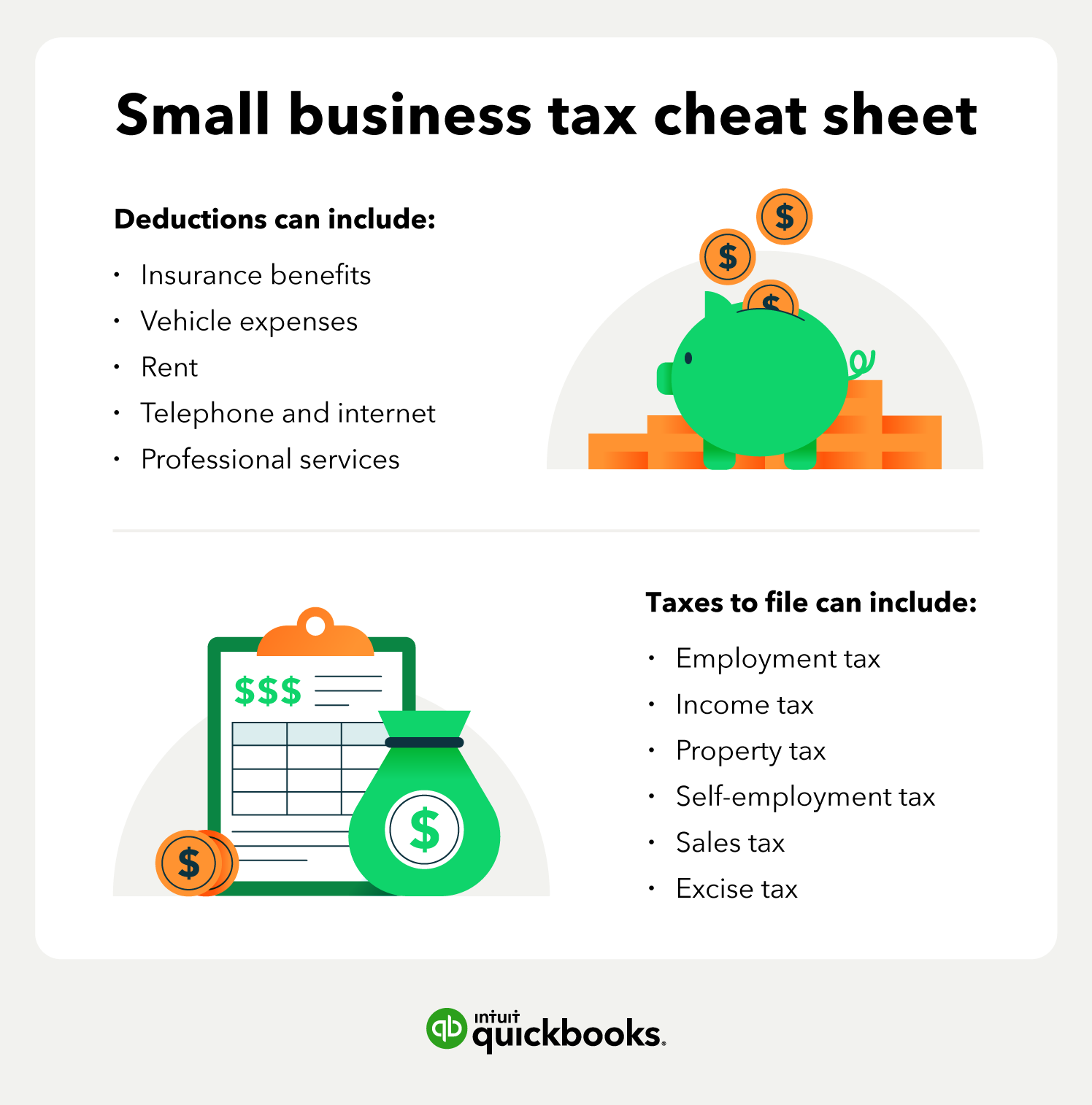
As a business owner, you may be responsible for reporting and paying other business taxes in addition to withholding payroll taxes from your employees' paychecks. From federal to state and local levels, understanding the different tax programs and their impact on your finances is important.
Federal taxes
No matter where you open a business, you'll be responsible for paying federal taxes. There are dozens of federal tax forms with unique due dates and requirements, so using an accountant or small business accounting software can help you avoid mistakes that could lead to overpayment or penalties.
As a business owner, you have both personal and business tax filing obligations. Here’s what you need to know:
Personal tax filing
Federal income tax returns:
Every individual is required to file and pay federal personal income tax. This forms the foundation of your overall tax responsibility.
Business tax filing
Business owners have additional filing requirements, depending on the business structure:
- Sole proprietorship: Income and expenses are reported on your personal tax return using Schedule C (Form 1040).
- Partnership: A partnership must file an information return (Form 1065) to report income, deductions, and other relevant details, while each partner reports their share of income on their personal return.
- Corporation: A corporation files a corporate tax return (Form 1120), paying taxes on its profits.
- S Corporation: An S corporation files an informational return (Form 1120S). Its income, losses, and deductions pass through to shareholders, who report them on their personal returns.
- Limited Liability Companies (LLCs): LLCs are not classified separately for federal tax purposes and are taxed based on their ownership structure. Single-member LLCs default to sole proprietorship taxation or may elect corporate taxation, while multi-member LLCs default to partnership taxation or may elect corporate taxation.
Self-employment tax
If you work for yourself and earn more than $400 a year, you pay toward Social Security and Medicare programs through a self-employment tax. The Social Security system provides retirement benefits, disability benefits, survivor benefits, and hospital insurance (Medicare) benefits.
Employment taxes
As an employer, you are responsible for withholding and depositing federal income tax and the employee contribution to Social Security and Medicare taxes. You must also pay the employer portion of Medicare and Social Security and pay federal unemployment tax (FUTA).
State taxes
North Carolina has a variety of state taxes, like most states. It’s important to know which kinds of taxes your business may be liable for, based on your structure and business activities.
North Carolina franchise tax
North Carolina levies a franchise tax on C and S corporations and limited liability companies that have elected to be treated as C corporations for tax purposes. This tax is for the privilege of engaging in business in the state.
How is the franchise tax calculated?
The franchise tax rates are calculated as follows:
- For C corps: $1.50 per $1,000 (minimum $200)
- For S corps: $200 for the first $1,000,000 of the corporation's tax base and $1.50 per $1,000 of the tax base that exceeds $1,000,000 (minimum $200)
Who is liable for the North Carolina franchise tax?
Corporations doing business in North Carolina are liable for the franchise tax. An annual franchise or privilege tax is imposed on:
- Domestic corporations (organized under North Carolina laws)
- Foreign corporations (not organized under North Carolina laws) that have a Certificate of Authority to do business in the state or are in fact doing business in North Carolina
North Carolina corporate income tax
In addition to its franchise tax, North Carolina currently has a flat corporate income tax of 2.25%. However, the legislature has passed bills to phase out this income tax gradually, lowering the rate until it reaches 0% in 2030.
How is the corporate income tax calculated?
Corporate income tax is calculated by applying the state's tax rate to a corporation's net taxable income.
- Use the corporation's federal taxable income.
- Add or subtract as required by North Carolina law.
- If applicable, allocate income to North Carolina using the state's formula.
- Multiply taxable income by 2.25% (2025 rate).
Learn more about corporate income tax rates at the North Carolina Department of Revenue website.
Who is liable for the corporate income tax?
Corporations are subject to corporate income tax if they are:
- Incorporated in North Carolina
- Conducting business within the state
The term "doing business" relates to having a nexus in the state. In North Carolina, nexus can be established through:
- Physical presence: Having tangible assets, property, or employees in the state.
- Economic presence: Deriving income from North Carolina in the current or previous calendar year, even without a physical presence.
Nexus rules can be complex and may change over time. It's advisable to consult with a tax professional or the North Carolina Department of Revenue for guidance specific to your business situation.
Excise Taxes
North Carolina levies special excise taxes on certain products, services, and business activities. Some examples include:
Alcoholic beverages: Products such as liquor, beer, malt beverages, wine, and mixed drinks are subject to varying excise tax rates. For instance, fortified wine is taxed at $.2934/liter
Motor fuels: The excise tax rate for motor fuels and alternative fuels is currently 40.3 cents per gallon or gallon equivalent.
Cigarettes: There is an excise tax of $0.45 per cigarette pack.
Unemployment tax
As in all states, employers must pay federal unemployment insurance (UI) taxes. In North Carolina, employers are responsible for funding the state's Unemployment Insurance (UI) program through payroll taxes. These taxes are not deducted from employee wages but are paid directly by employers. State UI tax is paid on each employee's wages up to a maximum annual amount. That amount is known as the "taxable wage base" or "taxable wage limit."
For 2025, the taxable wage limit for North Carolina UI tax is $32,600. Rates range from 0.06% to 5.76%, depending on the business’s experience rating.
See the North Carolina Department of Commerce website for more information.
Local taxes
Cities and counties in North Carolina may levy additional local taxes to fund essential services and infrastructure such as schools, roads, and public safety.
Sales and use taxes
The state sales tax rate in North Carolina is 4.75%. However, cities and counties can add an additional 2% to 2.25% as local sales tax. In some areas, transit authorities may also impose an extra 0.5%. Rates vary by county and municipality. You can locate your local rate on the state Department of Revenue’s chart of local sales tax rates.
Remote seller tax considerations
A remote seller is a business without a physical presence or legal obligation to register in North Carolina but sells products for delivery into the state.
Remote sellers must register to collect and remit North Carolina sales and use tax if they exceed gross sales of over $100,000 sourced to North Carolina. This includes sales made through marketplaces. Sellers can voluntarily begin collecting and remitting tax before meeting these thresholds.
Property taxes
The property tax in North Carolina is a locally assessed tax, collected by the counties. The property tax rate is determined by each county assessor and varies widely depending on the location of the property. For information regarding your property tax bill (real property and motor vehicles), contact your local property tax office.