






If you run a business, chances are you’ve dealt with invoice payments, either sending them out or paying them yourself. In this guide, we’ll walk you through what invoice payments are, when to use them, and how to make the process smoother and faster.
Invoice payments definition
An invoice payment is when a customer pays a business after receiving an invoice—a document that shows how much is owed, when it’s due, and any special payment terms. Once the customer sends the payment, the transaction is complete.
Invoice payments are a key part of the accounts receivable process for the seller and the accounts payable process for the buyer. They serve as a paper trail for business transactions, helping both parties stay organized, keep accurate records, and stay on top of their cash flow.
When a business should use invoices
Businesses should use invoices whenever they provide a product or service and expect to be paid later, not right on the spot. This is common in industries like consulting, freelance work, construction, or B2B services, where billing happens after the job is done or goods are delivered.
Here are a few common situations where it makes sense to generate an invoice:
- You’re offering services over time (like monthly marketing or legal support).
- You deliver a product before receiving payment.
- You have net payment terms (like net 15 or net 30, which give clients time to pay).
- You need a record for tracking income or tax reporting.
- You’re working with another business that requires formal documentation for expenses.
However, invoices may not be necessary in some situations:
- For retail or point-of-sale transactions where payment happens immediately (like in a coffee shop or online store checkout).
- For very small, one-off jobs where a simple receipt might be enough.
- When using a payment app or POS system that generates its own confirmation.
Benefits of using invoices
Whether you’re a freelancer, contractor, or small business owner, using invoices can bring a lot of benefits to your business. Here are some of the advantages:
Helps you get paid on time
Invoices clearly outline what your customer owes, when it’s due, and how to pay. That kind of clarity helps avoid back-and-forth and keeps your payments on schedule.
Keeps your finances organized
Invoices create a paper trail. You can track what’s been paid and what’s still owed and then use that info when it’s time to do your books or file taxes.
Makes your business look professional
A well-designed invoice with your logo and terms shows clients that you’re running a legitimate, trustworthy operation.
Protects you in case of disputes
If there’s ever a disagreement about what was delivered or how much was owed, an invoice serves as proof of the agreement.
Supports long-term business growth
Over time, invoices provide you with helpful insights, such as how quickly customers pay or which jobs generate the most income. That kind of data can help you make smarter business decisions down the line.
Steps of the invoicing process
Here’s a step-by-step look at how the invoicing process typically works from start to finish.
Step 1: Create the invoice
Include your business name and contact info, your client’s details, the invoice number, the date of issue, a description of what you’re charging for, the total amount due, and your payment terms. If you use invoicing software like QuickBooks, this step is fast and easy with built-in invoice templates.
Step 2: Send the invoice to your client
Once it’s ready, deliver your invoice through email or your accounting platform. Make sure the subject line and message are clear so the client knows exactly what the invoice is for. Some platforms even let you track when the invoice is opened.
Step 3: Track and manage the invoice
Keep an eye on your sent invoices so nothing slips through the cracks. Most invoicing tools will show you which invoices are unpaid, past due, or paid. This helps you stay on top of your cash flow and follow up if needed.
Step 4: Receive and record the payment
When your customer pays, make sure you mark the invoice as paid. Record how the payment came in, such as credit card, ACH transfer, check, or another method. If you’re using QuickBooks or a similar system, this step usually happens automatically.
Step 5: Send a receipt or confirmation
It’s a good idea to follow up with a quick “thank you” or receipt once you receive the payment. It shows professionalism and closes the loop with your customers.
Step 6: Reconcile and report
At the end of the week or month, reconcile your payments to make sure your books match your bank account. Invoicing data also helps with financial reports, taxes, and long-term planning.
What should an invoice include
A good invoice is clear, easy to read, and includes all the info your customer needs to pay you without confusion. Here's what every invoice should have:
- Your business name and contact information: Include your logo, email, phone number, and address so customers know who the invoice is from and how to reach you.
- Your customer’s name and contact details: Double-check this info because it’s important for communication and bookkeeping on both sides.
- Invoice number: This unique ID helps you (and your customer) track the invoice.
- Invoice date: The day the invoice is sent.
- Payment due date: This is when you expect to be paid. Based on the terms you’ve agreed on (e.g., net 15 or net 30)
- A clear description of the product or service provided: List each item or service with a brief description, quantity, and rate.
- Subtotal, taxes, discounts, and total amount due: Break it all down so your customer can see how the final total was calculated.
- Payment terms and instructions: Include how to pay (e.g., bank transfer, credit card, PayPal), and call out any late fees or early payment discounts.
- Notes or personal message (optional): A simple “thank you” can help build stronger relationships.
Understanding invoice numbers
An invoice number is a unique number assigned to each invoice you send. Invoice numbers help:
- Track which invoices have been sent, paid, or are still outstanding
- Avoid duplicate payments or confusion with similar jobs or clients
- Keep clean records for taxes, accounting, or audits
You can number invoices however you’d like—sequentially (e.g., 1001, 1002, 1003), by client, or by project. Just be consistent and make sure each invoice has its own unique ID.
Types of invoices
Depending on how you run your business, there are a few different types of invoices you might use. Here are some common types and when to use them:
Standard invoice
This is the most common type. It includes basic details like services provided, amount due, and payment terms. This works great for most freelancers and service-based businesses.
Recurring invoice
Recurring invoices are used for ongoing work, such as monthly retainers or subscription-based services. These are sent at regular intervals (weekly, monthly, etc.) with the same payment terms.
Pro forma invoice
This is a preliminary bill sent before the actual work is completed. It gives the client an estimate of the cost so they know what to expect.
Credit invoice
Credit invoices—also known as credit memos—are issued when you need to refund a customer or apply a credit to their account, particularly if they overpaid or returned an item.
Debit invoice
This is the opposite of a credit invoice. You use this if you need to add a charge—e.g., extra hours or an overlooked item—to a previous bill.
Timesheet invoice
A timesheet invoice is common for hourly workers or consultants. It breaks down your hours worked and your hourly rate so clients can see exactly what they’re paying for.
Progress invoice
Progress invoices are often used in long-term or large projects (like construction). They break down the total cost into smaller payments over time based on project milestones.
Final invoice
You send this invoice after completing a project to show the total amount due, minus any deposits or progress payments.
Types of invoice payment methods
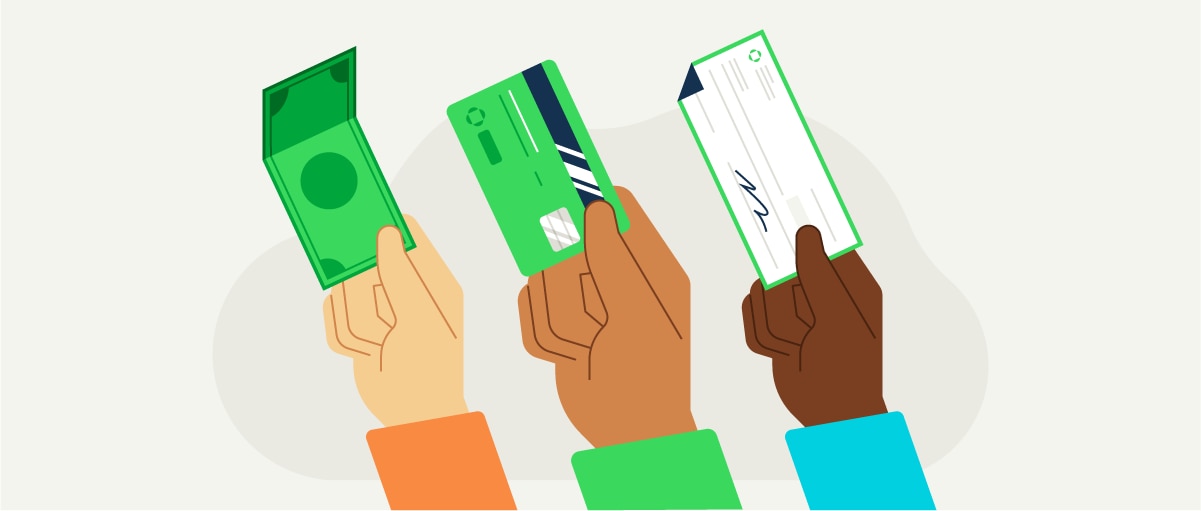
The more invoice payment options you offer, the easier it is for people to settle up on time. Here are some of the most common ways to accept payments:
Credit and debit cards
Credit and debit cards are some of the most popular options. Customers can quickly pay online with a card, and funds usually hit your account within a few business days.
ACH bank transfers
Also known as direct deposit or electronic bank transfers, ACH payments are a reliable way to get paid directly from your customer’s bank account, usually with lower fees than credit cards.
Checks
Checks are still used by many businesses, especially for larger payments or vendors with established workflows. While not the fastest method, they can be easier to track in traditional accounting systems.
Cash
Cash is not super common for invoiced work, but if you’re local and working in person, some clients may prefer to pay in cash. Just make sure to give them a receipt and record it in your books.
Wire transfer
If you’re dealing with large sums or international clients, a wire transfer might be the way to go. It’s fast and reliable, but usually comes with higher fees.
Digital wallets and payment platforms
Services like PayPal, Apple Pay, and Google Pay let customers pay with just a few taps. These can be a great fit for freelancers and online businesses that want to offer modern, mobile invoicing options.
Common invoice payment terms to know
Invoice payment terms are the rules that spell out when and how you expect to get paid. Here are some of the most common invoice payment terms small businesses use:
- Net 15/net 30/net 60: These terms mean payment is due 15, 30, or 60 days after the invoice date. Net 30 is the most common.
- Due upon receipt: Payment is expected as soon as the customer receives the invoice. This is common for one-off jobs or small, quick-turnaround projects.
- End of month (EOM): The customer agrees to pay by the end of the current month, no matter when the invoice is sent.
- Milestone or progress payments: Used for long-term or project-based work. You send invoices as each phase of the project is completed.
- Advance payment: Some businesses require full or partial payment upfront before work begins, especially for custom work or new clients.
What to do if someone doesn't follow the payment terms
Late payments can be frustrating, but they’re not uncommon. Whatever the situation, it’s important to respond professionally and stay on top of the situation. Here’s a quick guide to help you handle it: