







QuickBooks Blog
An image of a freelancer researching tax tips for 1099 employees.
taxes

10 tax tips for 1099 employees, freelancers, and contractors


Smart tax moves for 1099 employees:

  • Track every expense because it could mean more deductions come April.
  • Separate personal and business costs to stay compliant.
  • Plan ahead for quarterly taxes so there are no surprises.
  • Use accounting softwares to simplify 2026 tax prep and recordkeeping.


Tax season is around the corner, and if you’re self-employed, it pays to prepare early. Whether you’re a freelancer, independent contractor, or solopreneur, you’ll likely receive one or more 1099 forms, and that means extra tax responsibilities.

Unlike W-2 employees, you’re on the hook for tracking income, managing expenses, and paying your own taxes. But with the right approach, you can avoid costly mistakes and keep more of what you earn.

Here are ten smart tax tips for 1099 employees and contractors to help you stay organized and maximize your deductions for the 2026 tax season.

1. Understand your 1099 forms

2. Write off all your business expenses

3. Don’t try to deduct personal expenses

4. Capitalize on vehicle deductions

5. Keep accurate records

6. Pay your estimated taxes

7. Audit-proof your taxes

8. Maximize your retirement contributions

9. Don’t forget your self-employment tax obligations

10. Separate personal and business finances
3 things to know if you receive a 1099

Find peace of mind come tax time

A small business owner reviewing tax tips for 1099 employees.

1. Understand your 1099 forms 

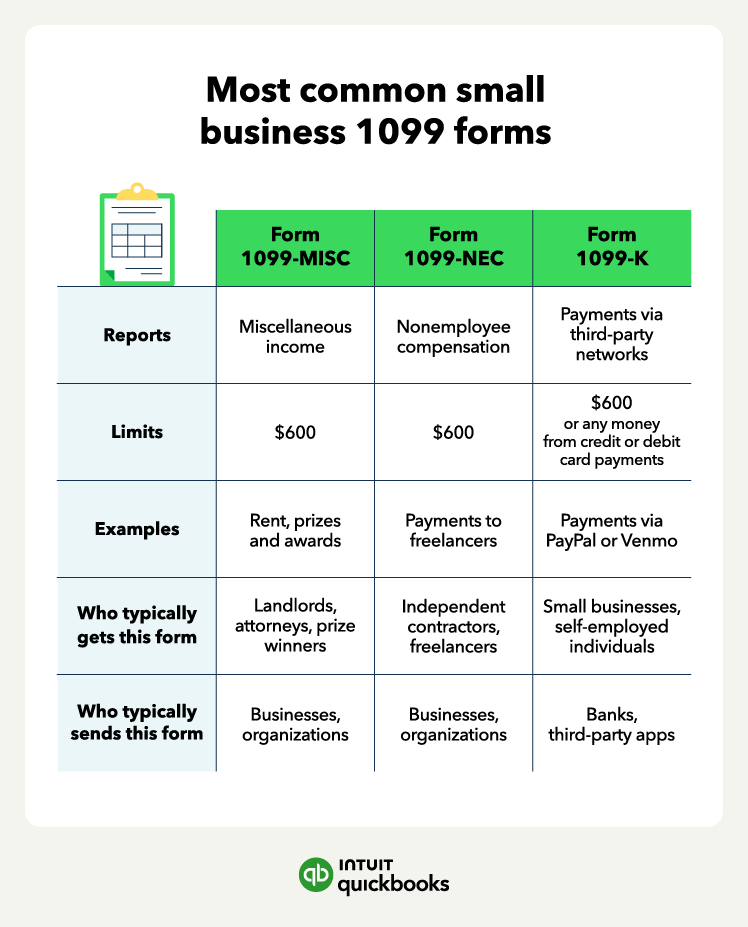
You might receive many types of 1099s forms—each with specific tax-reporting requirements. Form 1099-NEC is the form you’ll receive from a company or client if you receive $600 or more for contract, freelance, or consultant work.

Most common small business 1099 forms.

If you earn $400 or more from self-employment, you have to file an income tax return. Note that your Form 1040 is different from your 1099 forms. Your 1040 form is the individual income tax form both employees and independent contractors use.


note icon

FYI: Businesses must send out most 1099 forms on or before Jan. 31 of each year for the prior calendar year.


2. Write off all your business expenses

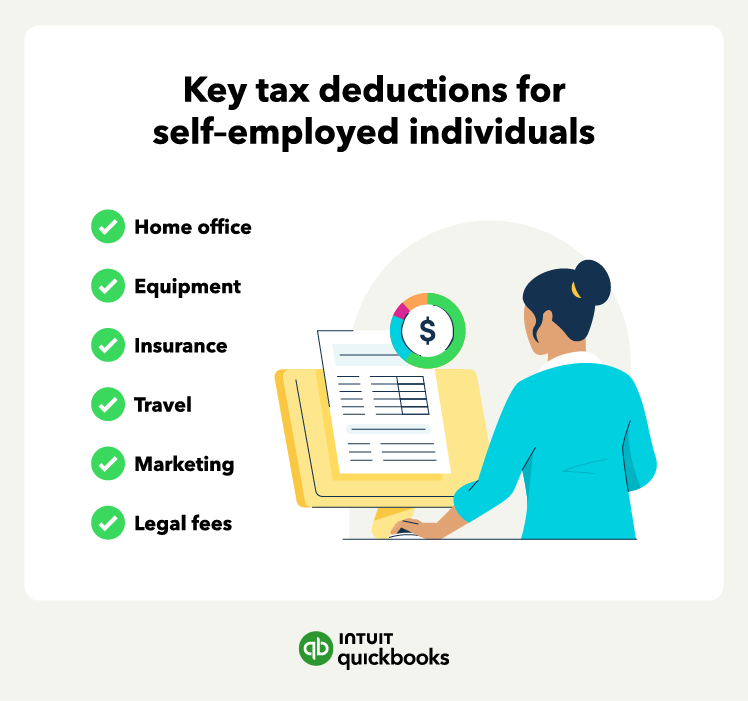
One of the perks of being self-employed is the tax deductions for independent contractors. For example, employees can’t write off commuting costs, but if you’re self-employed and you have to drive to a client’s office, you can write the commute off as a business expense.

Self-employed tax deductions can include various business expenses, such as insurance, marketing, and legal fees. You can also depreciate most business equipment that has a useful life of more than one year. This may include computers, furniture, and machinery.

Key tax deductions for self-employed individuals.

3. Don’t try to deduct personal expenses 

You can’t deduct expenses that are for personal use, but the difference between personal expenses and business expenses isn’t always clear. For example, if you use your cellphone for personal and business use, the bill is not a tax write-off for 1099 contractors.

Instead, you can deduct part of your bill according to your business use. Say, after tracking your phone usage, you find you use your cell phone for business 50% of the time. You can deduct half of your bill as a tax deduction. 

Your computer, vehicle, and business travel expenses fall under the same constraints, meaning you can only deduct the portion you use exclusively for business. In other words, think twice before writing off the entire cost of an expense unless it’s solely for work.

4. Capitalize on vehicle deductions 

If you’re self-employed, there might be times when you have to use your car for business. You can deduct this use as a self-employed tax deduction. 

You can either take the standard mileage deduction or calculate a percentage of the wear and tear on your vehicle from business use. 

You can calculate your business vehicle use in one of two ways: 

  1. For the actual vehicle expenses method, start by adding up all of your vehicle operating expenses, such as insurance, gas, repairs, and maintenance. Next, divide the miles you drive for business by the total miles. Multiply that percentage by the total vehicle expenses. 
  2. In the simplified method, apply the current IRS-mandated mileage rate to the total miles driven for business in the year. 

Whichever method you choose, you must keep track of all business miles. This can be as easy as jotting down miles, dates, and descriptions in a notebook, or you can use mileage tracking software to keep track of your mileage and avoid any errors.

5. Keep accurate records

Even if you’ve done a great job deducting your allowable business expenses on your taxes, you must also keep adequate records. The IRS requires you to keep track of all business receipts as proof. Yes, it takes a little time and organization, but it’s worth the effort in the long run.

When it comes to 1099 income, one of the main causes of mistakes is a lack of organization, which can lead to additional tax payments and penalty fees.

6. Pay your estimated taxes 

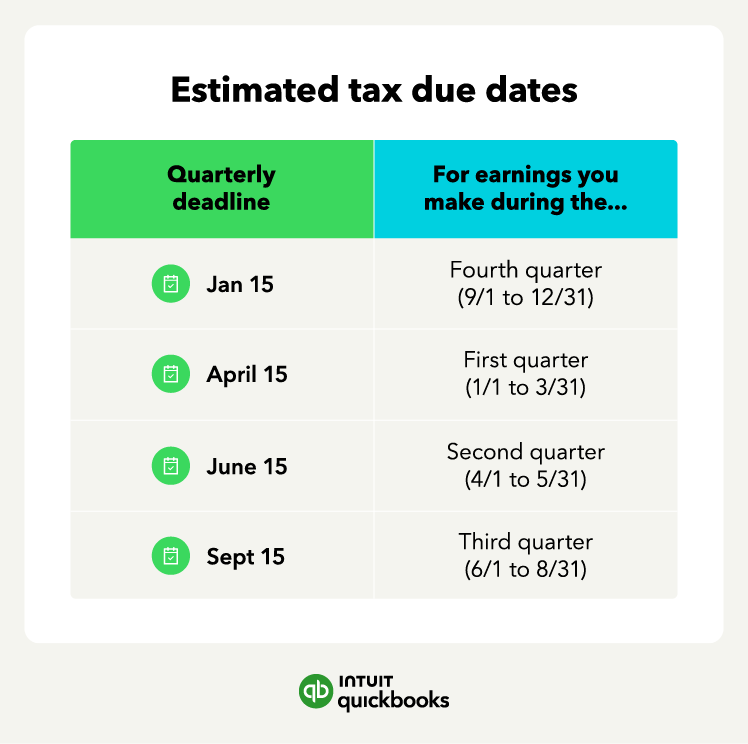
If you expect to owe less than $1,000 in taxes for the year after subtracting federal income tax, you are exempt from quarterly tax payments. Not sure how much you’ll owe? Use a self-employment tax calculator to estimate your taxes.  

If you owe quarterly estimated taxes, you’ll need to pay them on these due dates: 

  • April 15, 2026
  • June 15, 2026 
  • September 15, 2026
  • January 15, 2027
Estimated tax due dates.

Also, if you have federal tax withholdings—perhaps because you also have W-2 income— you may be exempt from filing quarterly taxes as long as those federal tax withholdings equal 90% or more of what you’ll owe for the year.

7. Audit-proof your taxes

Tax mistakes can lead to fines, penalties, or IRS audits. The IRS uses your taxpayer identification number and formulas to select individuals for audits, which means that everyone has a chance at an audit. However, you can lower your chances of an audit by: 

  • Ensuring your reported income matches your tax documents: As an employee, you receive a Form W-2 at the end of the year, but as a contractor, you receive a 1099-NEC form. Match your internal records or accounting software with the forms you receive from your clients.  
  • Documenting commonly audited expenses: The IRS will audit some income and expenses more than others—people commonly abuse the system and make mistakes. For self-employed contractors, a few common areas that sound the alarm are auto and home office expenses. 
  • Not claiming a hobby as a business: If you sustain a loss for your business for many years in a row, the IRS may claim that you’re pursuing a hobby and not running a business. You’ll need to prove that you had the intent to make a profit and clarify the reasons you didn’t.

If the IRS decides your business is a hobby, they might disallow any business expenses you have previously written off, meaning you could be on the hook for back taxes and penalties.

Stay on top of 1099s with Bill Pay

See your vendors and everyone who needs a 1099 all in one place. Plus, get unlimited 1099 e-filing, with printing and email, for no additional fee.

8. Maximize your retirement contributions

As a 1099 employee, you're responsible for setting up your own retirement savings plan. Consider contributing to tax-advantaged accounts like a SEP-IRA, SIMPLE IRA, or Solo 401(k). These accounts offer substantial tax benefits and can reduce your taxable income while helping you save for the future.

9. Don’t forget your self-employment tax obligations

Unlike W-2 employees, 1099 workers are responsible for paying both the employee and employer portions of Social Security and Medicare taxes. This is called the self-employment tax, and it amounts to 15.3% of your net earnings. It breaks down to 12.4% for Social Security and 2.9% for Medicare. Make sure to account for this in your financial planning to avoid surprises when tax season comes around.

10. Separate personal and business finances
To keep your finances organized and simplify tax filing, open a separate bank account and credit card specifically for business transactions. A designated business account will make it easier to track expenses, monitor cash flow, and avoid mixing personal and work-related expenditures.

Keeping clear records also helps if you apply for a loan or other business financing, as lenders will review your business income and expenses to determine eligibility.

Stay on top of 1099s

QuickBooks makes it easy to see all your vendors and anyone who needs a 1099 in one place. You get unlimited 1099 e-filing with printing and mailing at no extra cost, helping you stay compliant and simplifying tax reporting for your freelance or contractor work.

3 things to know if you receive a 1099

Getting a 1099 form means you’re considered self-employed for tax purposes, even if you only do contract work part-time. 

In other words, you’re responsible for managing your own taxes, tracking your income, and taking advantage of deductions that employees can’t. Here are three essentials every 1099 worker should know before filing.

1. It's helpful to set aside 20–30% of your income for taxes

Setting money aside as you earn it helps avoid penalties and cash flow stress when tax deadlines arrive. The exact amount depends on your tax bracket and deductible expenses, but saving a portion of every payment ensures you’re prepared for quarterly estimates

2. 1099 income taxes can be lowered with deductions

Vehicle expenses, home office costs, and equipment purchases can all reduce your taxable income when documented properly. Review IRS guidelines each year to make sure you’re claiming every deduction available for self-employed individuals.

3. You may still receive a tax refund

If you have withholdings or business expenses that reduce your taxable income, you could qualify for a refund—even as a self-employed worker. Accurate recordkeeping and on-time estimated payments can increase your chances of getting money back at filing time.

Find peace of mind come tax time 

Preparing for the 2026 tax season doesn’t have to be stressful. By organizing your income, documenting deductions, and planning ahead for estimated payments, you’ll stay compliant and confident come tax time.

Make things easier by using accounting software built for freelancers and contractors—it helps you track expenses, estimate quarterly taxes, and file with confidence when the IRS deadlines roll around.

Start getting ready today, and make the 2026 tax season your smoothest yet.

Disclaimer:

** QuickBooks Bill Pay: QuickBooks Bill Pay account subject to eligibility criteria, credit, and application approval. Subscription to QuickBooks Online required. Not available in U.S. territories or outside the U.S. Money movement services are provided by Intuit Payments Inc., licensed as a Money Transmitter by the New York State Department of Financial Services.  For more information about Intuit Payments' money transmission licenses, please visit https://www.intuit.com/legal/licenses/payment-licenses/.


Recommended for you

Mail icon
Get the latest to your inbox
No Thanks

Get the latest to your inbox

Relevant resources to help start, run, and grow your business.

By clicking “Submit,” you agree to permit Intuit to contact you regarding QuickBooks and have read and acknowledge our Privacy Statement.

Thanks for subscribing.

Fresh business resources are headed your way!

Looking for something else?

QuickBooks

From big jobs to small tasks, we've got your business covered.

Firm of the Future

Topical articles and news from top pros and Intuit product experts.

QuickBooks Support

Get help with QuickBooks. Find articles, video tutorials, and more.