
QuickBooks Blog
A businesswoman calculates credit for her personal and business finances
bookkeeping

What is a credit? Definition, types, and importance in 2025

This guide will help you learn what credit means in everyday life, how it works for your business, and why it’s a key part of accounting. We’ll also show you how QuickBooks can help you stay on top of it all, whether you’re tracking your credit score or managing your invoices.

Credit definition 

A credit is a key financial term with two meanings, depending on the context:

  • In accounting: An accounting credit is an entry recorded on the right side of a ledger in the double-entry bookkeeping system.
  • In finance: Credit refers to an agreement where a lender provides funds, goods, or services to a borrower, who agrees to repay in the future (typically with interest).

Why credit matters 

In the financial context, credit matters because it can shape the opportunities you have in life and business. Good credit can open doors, while bad credit can close them.

When your personal credit is strong, you can:

  • Get approved for loans like a mortgage, car loan, or personal loan, usually with better rates that save you money.
  • Rent an apartment more easily since many landlords check your credit to see if you’re likely to pay on time.
  • Set up utilities like electricity or internet, since utility companies often run credit checks before opening accounts.
  • Save money because better credit scores can mean lower insurance premiums and interest costs over time.
  • Get a job, as some employers may check your credit for roles where you handle money or sensitive information.

For businesses, good credit is just as important. A solid business credit profile can help you:

  • Access financing like small business loans, lines of credit, or equipment leasing, typically with higher limits and lower interest rates.
  • Negotiate better terms with suppliers since vendors may offer longer payment terms or larger orders when they trust your business’s creditworthiness.
  • Manage cash flow during slow months, so you don’t have to dip into savings or miss payroll.
  • Grow faster by leveraging financing to invest in inventory, hire employees, or expand operations.

Business vs. personal credit scores

If you run a business, it’s important to know how business credit scores differ from your personal credit history.

Personal credit scores are tied to you as an individual. They show how well you manage personal debts like credit cards, auto loans, or mortgages. These scores usually range from 300 to 850. The higher your score, the more likely lenders think you’ll pay your bills on time. Companies like Equifax, Experian, and TransUnion calculate these scores based on your payment history, how much you owe, how long you’ve had credit, new credit accounts, and the mix of credit you use

Business credit scores measure how well your business pays its bills and manages credit. These scores are completely separate from your personal scores. Agencies like Dun & Bradstreet (D&B) and Experian Business figure out your business credit score based on your company’s payment history with vendors, how much credit it uses, public records like liens or bankruptcies, and how long your business has been operating

Credit for businesses

Credit can be a powerful tool for businesses of all sizes. When you use it wisely, it helps you cover day-to-day costs, invest in new opportunities, and keep cash flowing when times are slow. Building strong business credit also shows lenders and suppliers you’re reliable, so you can get better rates and terms to help your business grow.

What is business credit? 

Business credit is your company’s ability to borrow money or get goods and services now, with the promise to pay later. Unlike personal credit, it’s tied to your business, not you. A solid business credit score makes it easier to get loans, lines of credit, or flexible payment terms with suppliers, all of which help your business move forward

Types of business credit

Businesses have a few options when it comes to credit:

  • Bank loans: Borrow a set amount for big needs like equipment or renovations.
  • Business lines of credit: Flexible funds you can draw from as needed, perfect for handling slow seasons or emergencies.
  • Trade credit: Agreements with vendors that let you buy goods or services now and pay for them later, typically within 30, 60, or 90 days.
  • Business credit cards: Pay for everyday expenses and earn rewards or cash back.

Building and monitoring your business credit profile

Follow these key steps to help you set up and maintain a good business credit score:

  1. Establish a separate legal entity: Form a limited liability company (LLC) or corporation so your business can build its own credit.
  2. Get an EIN and D-U-N-S number: Your employer identification number (EIN) and Dun & Bradstreet’s D-U-N-S number help credit agencies identify your business.
  3. Open a dedicated business bank account. Separate your personal and business finances to stay organized, simplify taxes, and protect your personal assets.
  4. Pay bills on time: Consistent, on-time payments build a positive credit history.

You may also want to consider using QuickBooks Online. It helps you build great business credit by tracking accounts payable and making sure you pay vendors on time. Many vendors report payments to business credit bureaus, so paying on time matters. QuickBooks also creates reports like profit and loss statements and balance sheets, which lenders usually ask for when you apply for loans or lines of credit.

When personal credit affects your business 

Even if your business has its own credit, your personal credit can still play a role. Lenders and landlords can look at your personal credit if your business is new or doesn’t have a long credit history yet. A strong personal credit score can help you get startup loans, secure leases, or qualify for lines of credit that require a personal guarantee.

Credit for individuals 

Credit is a key part of everyday life. It helps you buy items you can’t afford to pay for all at once, like a car or a home. It can also affect situations you might not expect, like renting an apartment or securing car insurance. Good credit makes life easier and can save you money over time. Bad credit can mean higher costs or fewer options. That’s why understanding and managing your personal credit is so important.

What is personal credit?

Personal credit is a lender’s trust that you’ll pay back the money you borrow. It’s based on your history of using and repaying credit, like credit cards, auto loans, or mortgages. It’s a way for banks, landlords, or even utility companies to decide if they can trust you to pay on time. When you apply for a new credit card or loan, lenders check your personal credit to decide if they’ll approve you, how much to lend, and what interest rate to charge.

Why your personal credit score matters 

Your personal credit score is a three-digit number (usually between 300 and 850) that shows how likely you are to repay borrowed money. Lenders use scores like FICO and VantageScore to decide if they should give you credit and what interest rate to offer. A higher score makes it easier to get approved and can save you thousands in interest over time.

Your score can affect other areas beyond loans. Landlords can check it when you apply for an apartment. Insurance companies might use it to set your premiums. Some employers may even check credit as part of their hiring process for jobs involving money or sensitive information.

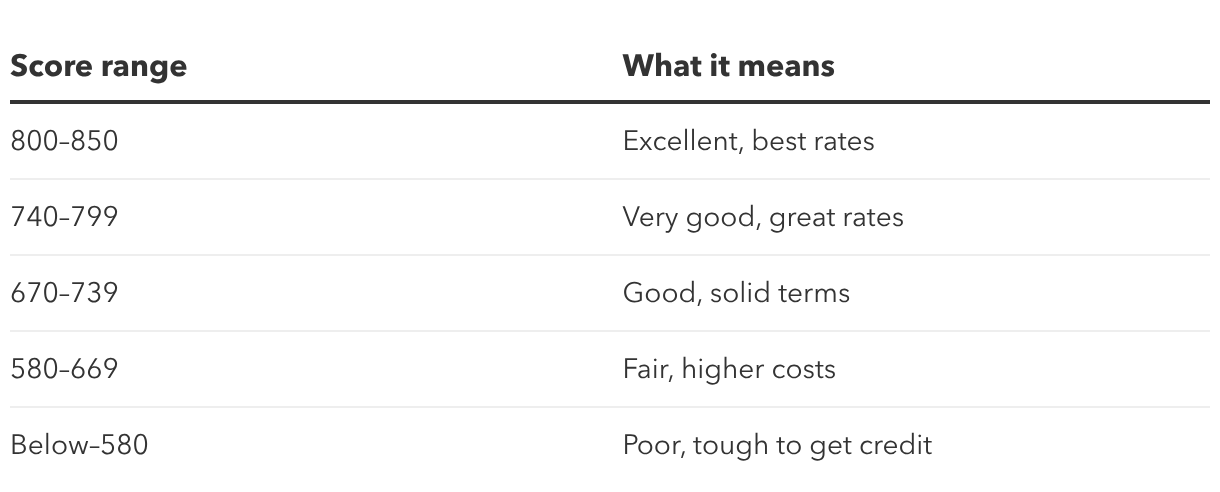
Here’s a look at what different credit score ranges mean:
Building and maintaining healthy personal credit 

Want to keep your credit strong? Here are a few simple steps:

  1. Pay your bills on time: This is the single biggest factor in your credit score. Even one late payment can hurt your score, so set reminders or use automatic payments to stay on track.
  2. Keep your balances low: Try to use less than 30% of your available credit on credit cards. High balances can make you look like a risky borrower.
  3. Check your credit reports regularly: Look for mistakes or signs of identity theft. You can get a free report every year from each of the three major credit bureaus at AnnualCreditReport.com.
  4. Use different types of credit responsibly: Having both revolving credit (like credit cards) and installment credit (like car loans) shows you can handle different kinds of debt, which can help your score.

If you’re self-employed or a freelancer, QuickBooks Solopreneur can help you stay organized by tracking your income and expenses. When you manage your money well, you’re more likely to pay bills on time and keep your credit healthy.

Common types of personal credit

Not all credit works the same way. The two most common types of personal credit are revolving credit and installment credit.

Revolving credit lets you borrow, repay, and borrow again up to a set limit. You don’t have to pay the full balance each month, but interest adds up if you carry a balance. The most common example is a credit card. Another example is a home equity line of credit (HELOC), which lets you borrow against your home’s value and pay it back over time.

Installment credit gives you a lump sum that you pay back over time in regular monthly payments. This kind of credit has an end date—once you pay it off, you’re done. Mortgages, car loans, and student loans are all types of installment credit. They’re great for big purchases where you know exactly how much you need and want predictable payments each month.

Credit as an accounting principle (bookkeeping entry)

In accounting, credit isn’t about loans. It’s a core part of how businesses keep track of their finances. In the double-entry accounting system, credits help ensure you record every transaction accurately so your books stay balanced.

The double-entry system

Double-entry accounting means every transaction gets recorded in at least two places—a debit in one account and a credit in another. It’s like a system of checks and balances for your money. 

This method keeps your books aligned with the accounting formula:

Assets = Liabilities + Equity

When everything balances, you know your records are right.

Debit

A debit is an entry you make on the left side of your accounting ledger. Depending on the type of account, a debit can either add to or take away from your balance. For example, adding money to your checking account is a debit because it increases your assets. But if you’re recording a payment on a loan, that debit reduces your liability.

Credit

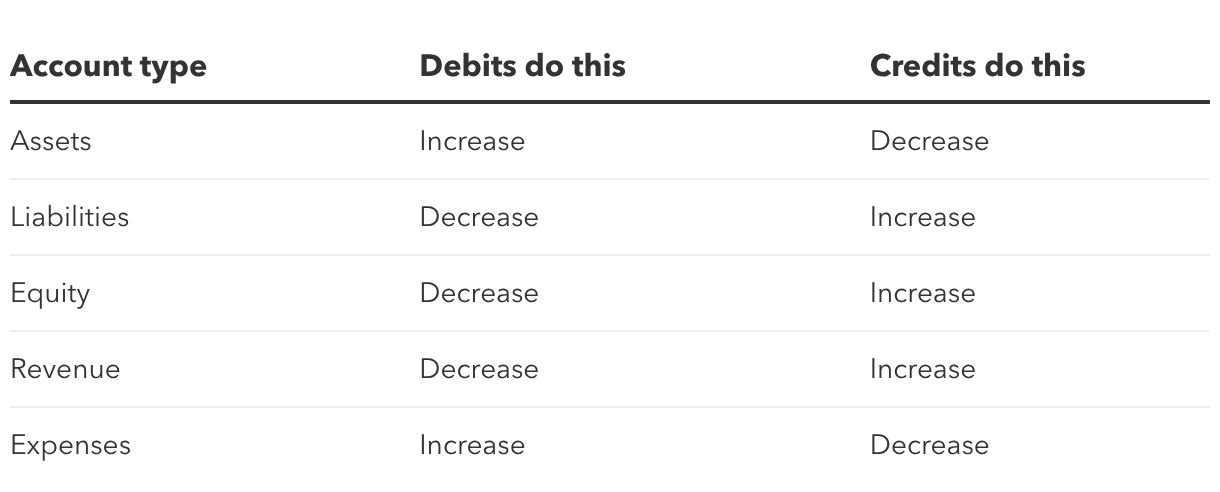
A credit is an entry you make on the right side of your ledger. Just like with debits, whether a credit increases or decreases your balance depends on the type of account. Credits increase things like what you owe (liabilities), what you own outright (equity), and what you earn (revenue). But credits decrease what you own (assets) or what you spend (expenses).

Rules of credit in accounting

Credits don’t work the same way for every account. Here’s a quick look at how they affect each type:

Credits increase:

  • Liabilities (like loans you need to pay back)
  • Equity (your or your investors’ stake in the business)
  • Revenue (money you earn from sales)

Credits decrease:

  • Assets (items you own, like cash or inventory)
  • Expenses (money you spend on costs like rent or supplies)

Use this chart to see what debits and credits do for each account type:

Practical accounting examples

Seeing real-life examples can make it easier to understand how credits work in your business books. Here are a few common credit entries you might come across:

  • Recording sales revenue: When you sell a product or service, you credit your revenue account. This increases your revenue and shows that you earned money. For example, if you sell $1,000 worth of goods, you credit your sales revenue account by $1,000.
  • Receiving a loan: When your business takes out a loan, you credit a liability account, like loans payable. This shows you now owe money to a lender. For example, if you receive a $10,000 loan, your credit loans payable by $10,000.
  • Owner’s investment: When you or an investor puts money into the business, you credit an equity account. This increases the owner’s equity and shows the business has more resources to use. For example, if you invest $5,000 of your own money, you credit the owner's capital by $5,000.

QuickBooks takes care of these debit and credit entries automatically. When you generate an invoice, record a deposit, or pay a bill in QuickBooks, the software handles the right debits and credits behind the scenes. This means you don’t have to manually track every entry, so you can focus on running your business while knowing your books are accurate.

Credit in customer relationships (accounts receivable)

When you extend credit to your customers, you give them the flexibility to pay after they receive your product or service. This is called trade credit, and it’s a common way for businesses to build trust, grow relationships, and increase sales.

Extending trade credit to customers

Trade credit is when you allow a customer to buy now and pay later. Instead of collecting payment right away, you send an invoice with set payment terms—usually net 30, which means the customer has 30 days to pay. Other common terms include net 15 or net 60, depending on the agreement.

This approach can bring real benefits like:

  • Increased sales: Customers may buy more when they don’t have to pay upfront.
  • Stronger relationships: Offering flexible payment terms can build customer loyalty and repeat business.

However, trade credit also carries some risks, including:

  • Delayed payments: Some customers may pay late, which affects your cash flow.
  • Bad debt: In rare cases, customers may not pay at all, leaving you with a loss.

Managing accounts receivable (A/R)

Accounts receivable (A/R) is the total amount of money your customers owe you for goods or services delivered on credit. It’s a key part of your business’s balance sheet and plays a key role in your cash flow. If you don’t manage A/R well, you risk falling short on cash, even if your sales are strong.

Here are some best practices for managing A/R:

  • Send clear, professional invoices with due dates and payment terms.
  • Follow up consistently on outstanding balances.
  • Set customer credit policies so you know who qualifies for trade credit and under what conditions.

QuickBooks makes managing accounts receivable simple. With just a few clicks, you can create and send professional invoices, track who owes you and how much, and set up automatic reminders so customers know when payments are due. If someone falls behind, QuickBooks generates aging reports that show you which accounts are overdue, helping you follow up quickly and keep your cash flow on track.

How QuickBooks supports your understanding and management of credit

Managing credit—whether it’s tracking what you owe, what’s owed to you, or just keeping your books straight—can get complicated fast. QuickBooks is built to make all of it easier, so you can spend less time stressing over numbers and more time focusing on what you do best.

Here’s how our accounting software helps you stay in control of your credit and finances:

Streamlined expense and income tracking

QuickBooks lets you track every dollar that comes in or goes out of your business. This helps you stay organized and build the kind of financial records that lenders and credit bureaus look for. You can categorize transactions, tag expenses, and run detailed reports to see exactly how your business is doing.

Automated bookkeeping

You don’t need to worry about which account to debit or credit. Our automated bookkeeping software takes care of that behind the scenes. Whether you’re sending an invoice, recording a payment, or paying a bill, it logs everything properly so your books stay balanced and accurate.

Comprehensive A/P and A/R management

With built-in tools for accounts payable and accounts receivable, you can track bills, schedule payments, send professional invoices, and set up customer reminders. Staying on top of this builds trust with vendors and helps protect your business credit.

Financial reporting and analysis

Need to know how your business is doing financially? QuickBooks creates real-time financial reports like profit and loss statements and balance sheets, which are the same ones lenders and banks often ask for when you’re applying for a loan or line of credit.

Stay in control of your cash flow

Explore the many ways to manage your cash flow with QuickBooks.


Recommended for you

Mail icon
Get the latest to your inbox
No Thanks

Get the latest to your inbox

Relevant resources to help start, run, and grow your business.

By clicking “Submit,” you agree to permit Intuit to contact you regarding QuickBooks and have read and acknowledge our Privacy Statement.

Thanks for subscribing.

Fresh business resources are headed your way!

Looking for something else?

QuickBooks

From big jobs to small tasks, we've got your business covered.

Firm of the Future

Topical articles and news from top pros and Intuit product experts.

QuickBooks Support

Get help with QuickBooks. Find articles, video tutorials, and more.