









You could save up to 25% on transaction costs².
Speak with us now to see if you qualify.
Talk to sales 1-800-515-8366
Monday - Friday, 6 AM to 4 PM PT

Table of contents
Table of contents
According to a recent QuickBooks Business Insights survey, nearly 3 in 5 companies expect higher quarterly revenue but many small businesses still reach a point where they need outside funding to fuel the next stage of growth. They may be looking to purchase real estate, acquire a competitor, or simply boost working capital. An SBA loan is often one of the financing options business owners consider.
SBA loans offer favorable terms, lower down payments, and longer repayment periods compared to conventional bank loans. However, because these loans are so advantageous, the application process is rigorous. The SBA maintains strict guidelines to ensure that funds are directed toward viable businesses that are ready to grow.
If you’re a small business owner, navigating SBA loan requirements doesn't have to be overwhelming. Once you know what lenders focus on, preparing your application becomes more straightforward. This guide breaks what you need to know about SBA loan requirements so you determine if this business funding option aligns with your goals.
The SBA doesn't lend money directly to small businesses. Instead, it guarantees a portion of loans made by approved lenders, reducing the risk for banks and making them more willing to lend to small businesses.
This guarantee structure allows the SBA to set certain standards that all borrowers must meet. When a bank knows that the government will cover a percentage of the loss if a borrower defaults, it is more inclined to approve loans for small businesses that might not qualify for traditional financing. However, because taxpayer money backs these guarantees, the vetting process is thorough.
While specific criteria can vary slightly by lender and the specific SBA loan program, the core requirements revolve around your business's size, financial health, and ability to repay the debt.
The first step when applying for an SBA loan is to ensure you and your business meet the fundamental eligibility criteria set by the government.
Your business must qualify as "small" under SBA size standards. These standards vary by industry and are based on either the average number of employees or average annual receipts for your North American Industry Classification System (NAICS) code.
To be eligible for SBA assistance, your business generally must:
Beyond the legal structure, the SBA requires that businesses meet specific operational standards:
Your credit history is one of the most significant factors in the approval process. While the SBA doesn't mandate a specific minimum credit score for every loan program, lenders have their own internal thresholds.
Most lenders look for:
Lenders typically review both business and personal credit histories. A score below 680 doesn't automatically disqualify you, but it may require additional documentation or compensating factors, such as sufficient collateral.
The SBA updated its ownership and residency requirements for 7(a) and 504 loans approved on or after January 1, 2026. Under these guidelines, SBA-financed businesses must generally be owned and controlled by U.S. citizens, U.S. nationals, or lawful permanent residents, and must be formed and based in the United States or its territories.
The updated rules include limited exceptions — for example, businesses may have up to 5% total ownership by certain non-U.S. individuals, subject to SBA eligibility criteria. Because these requirements involve specific legal and immigration-related factors, business owners should consult directly with an SBA-approved lender or a qualified attorney to determine how the current rules apply to their situation.
For the most up-to-date eligibility criteria, visit the SBA's 7(a) loan program page.
SBA lenders need assurance that your business generates enough income to cover its operating expenses and any new loan payments. As such, they will review the following:
Most SBA loan programs require a track record of stability:
Lenders evaluate your financials to ensure you have a consistent revenue history and positive cash flow. Many lenders look for a Debt Service Coverage Ratio (DSCR) around 1.25. This means your business generates $1.25 in cash flow for every $1 of debt payment.
Understanding the difference between revenue, net income, and cash flow is critical here. Lenders focus on the cash your business can generate to service its debts, often starting from net income and adjusting for non‑cash expenses.
Compared with many conventional commercial loans that require larger upfront equity contributions, SBA loans are often structured with lower equity requirements. The amount needed depends on the loan size, business type, and how the funds are used.
The SBA generally requires borrowers to pledge available collateral to secure the loan. However, a key feature of the SBA program is that a loan will not be declined solely due to insufficient collateral if there is solid cash flow.
Common collateral includes:
For loans over $350,000, lenders typically require collateral equal to the loan amount when available.
Almost all SBA loans require a personal guarantee. This is a legal promise to repay the loan if the business cannot.
All owners with 20% or more ownership stake must:
The paperwork for an SBA loan is extensive. Being organized can significantly speed up the process.
You will need to provide:
Lenders will scrutinize your financial history. Expect to provide:
You must prove how you will use the money. This includes:
Different SBA programs serve different needs, and each comes with unique requirements. Below is a breakdown of the most common types of SBA loans.
The most popular SBA loan program, the 7(a), is versatile and used for a wide range of business purposes.

The 504 program is designed specifically for major fixed assets that promote business growth and job creation, such as buying buildings or heavy machinery.
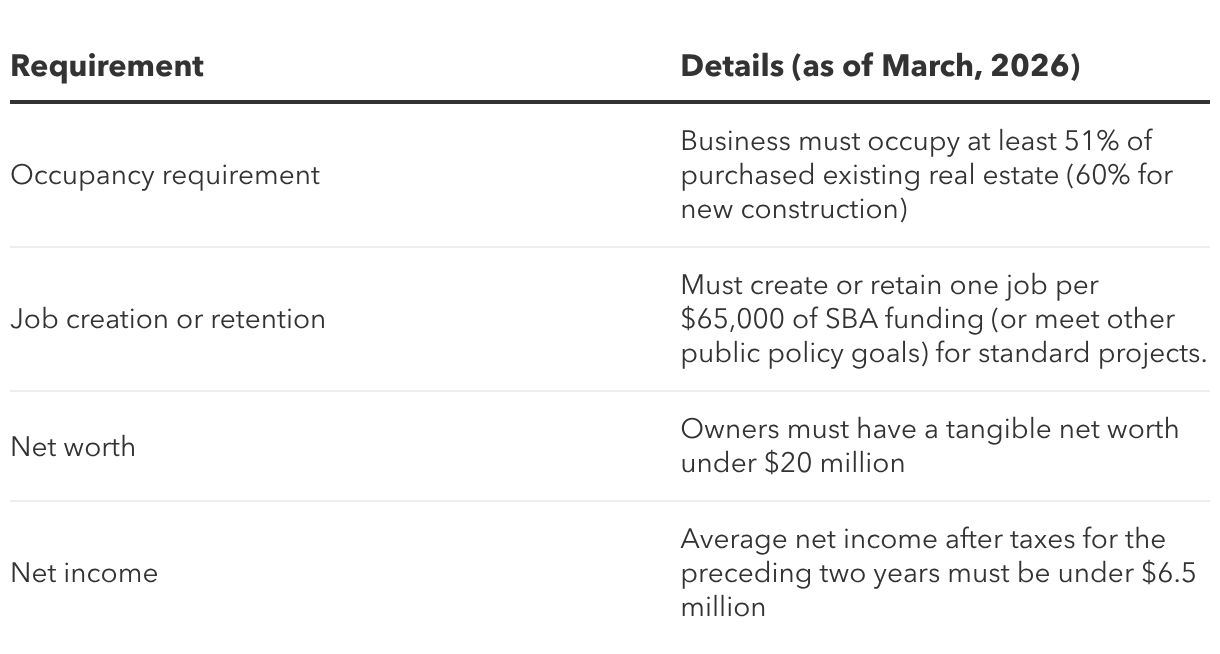
For smaller funding needs, the microloan program offers up to $50,000. These are often easier to qualify for than 7(a) loans.

If you need capital quickly, the SBA Express loan offers an accelerated review process.

While most businesses are eligible for SBA loans, the SBA prohibits lending to certain industries to avoid conflicts of interest or high-risk ventures.
Certain businesses are ineligible for SBA loans, including:
Even if you meet the main criteria, there are a few other rules to keep in mind.
SBA loan proceeds generally cannot be used for:
If you or your business has previously defaulted on a federal loan (like a student loan or a previous SBA loan) or has delinquent federal debt, you may be ineligible until the debt is resolved.
Meeting the minimum SBA loan requirements is just the first step. Being proactive can help strengthen your application. Do the following prior to applying for your loan:
Your credit history reflects how consistently you’ve managed debt and financial obligations over time. To build your business credit, focus on paying all bills on time and reducing existing debt before you start the application process. A good credit score may help you negotiate better terms.
Maintain organized records that provide a transparent look at your business health. When you provide accurate financial statements, you show lenders that you are a prepared and trustworthy partner.
A well-crafted business plan is your roadmap to success. Use this document to share your vision, clear strategies, and realistic projections. This helps lenders see the potential we already know your business has.
Contributing your own funds shows lenders that you’re invested in the success of the business. This is especially important for startups or business purchases.
Letting lenders know what assets your business owns, such as equipment or vehicles, helps them understand how the loan could be secured if needed.
You are the expert in your field, so don’t be afraid to show it. Highlight your track record and hands-on experience to prove you have the skills and knowledge necessary to lead your business to new heights.
Partnering with an SBA-preferred lender can help streamline the process. These lenders—including banks, credit unions, and select non-bank institutions—have delegated authority to approve certain SBA loans, which can reduce review time and speed up decisions.
Patience is a virtue when applying for government-backed financing. Understanding the typical timeline helps set realistic expectations.
SBA loans can make sense for businesses that have the time and documentation to work through the process. But when your plans don’t line up with SBA timelines or requirements, it’s helpful to have other options. QuickBooks offers access to business financing designed for businesses that want a streamlined application and faster access to capital—so you can focus less on paperwork and more on what you’re building.
Disclaimer:
*QuickBooks Term Loan and QuickBooks Line of Credit loans are issued by WebBank.

Call Sales: 1-800-285-4854