QuickBooks Blog
A businesswoman studies to become a bookkeeper
bookkeeping

How to become a bookkeeper: a guide for beginners

Bookkeeping is a skill businesses rely on, and one that you can turn into a long-term career or flexible side hustle. How hard is it to become a bookkeeper? It’s not as demanding as you might think. You don’t need a degree to get started, and there are plenty of free or low-cost resources to help you learn the basics.

In this guide, we’ll walk you through what bookkeepers do, the skills you’ll need, and how to take your first steps in the field.

Jump to:

What is a bookkeeper?

A bookkeeper is a professional who maintains financial records for businesses and organizations. They focus on the day-to-day financial details, like tracking sales, recording expenses, managing invoices, and reconciling bank statements. Ultimately, their work helps business owners stay on top of cash flow, get ready for tax time, and understand how their business is doing.

Tasks of a bookkeeper

A bookkeeper’s daily responsibilities may vary depending on the size and type of business. But generally, this is what a bookkeeper does:

Bookkeeper vs. accountant

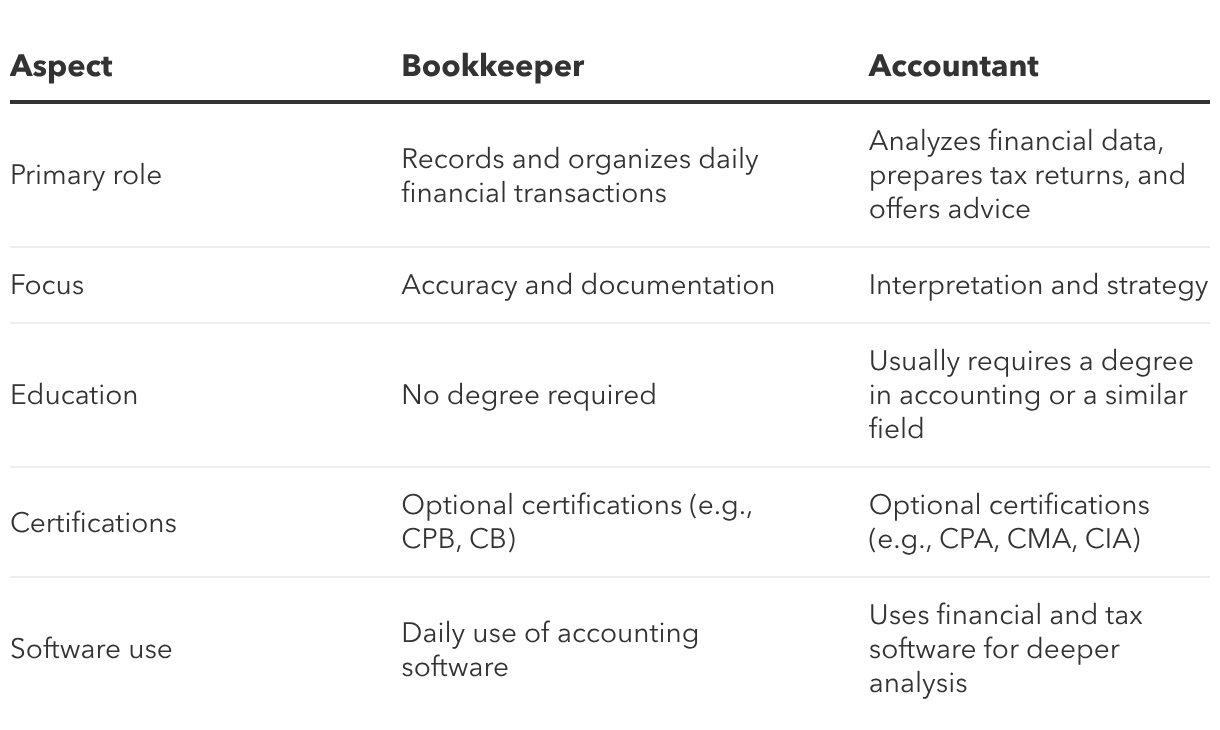
The roles of a bookkeeper and an accountant are often confused. However, there are important differences in their responsibilities and qualifications. Take a look at the chart below to see how they differ:

Want to dive deeper? Check out our in-depth article for a full comparison:

Education

Generally, you don’t need a college degree to become a bookkeeper, but having one can help, especially if you’re just starting out or want to stand out to employers. According to the U.S. Bureau of Labor Statistics (BLS), some employers prefer candidates who’ve taken college courses or earned a degree in accounting or a related field. Others are open to hiring bookkeepers with just a high school diploma, particularly if they’re detail-oriented and willing to learn on the job.

So, while a college degree can give you a strong start, it’s not the only point of entry. Many bookkeepers get started through real-world experience, on-the-job training, or self-paced learning. Internships, apprenticeships, or entry-level jobs in accounting or finance can also help you learn the ropes and build confidence as you go.

How long does it take to become a bookkeeper? It depends on your path. It can be as short as a few months for basic training and entry-level work or up to two years or more if you pursue professional certification and experience.

Certifications

Certifications aren’t required to become a bookkeeper, but they can boost your credibility, especially if you’re looking to freelance or work with multiple clients. Certifications show that you understand industry standards, follow best practices, and take your work seriously.

If you want to know how to become a certified bookkeeper, here are a few certifications to consider:

Certified Bookkeeper (CB) 

Designed for experienced bookkeepers, this nationally recognized certification from the American Institute of Professional Bookkeepers (AIPB) requires passing a four-part exam and having at least two years of full-time bookkeeping experience (or 3,000 hours of part-time/freelance work).

Certified Public Bookkeeper (CPB) 

Offered by the National Association of Certified Public Bookkeepers (NACPB), this certification is great if you want to prove your knowledge in areas like accounting basics and payroll. You must complete NACPB’s proprietary training program (or show equivalent coursework), pass an exam, and have at least one year of professional bookkeeping experience.

QuickBooks Certification

This certification validates your expertise in QuickBooks Online, one of the most widely used accounting software platforms for small businesses. Through self-paced training, you’ll learn how to navigate QuickBooks, manage clients, and stay up to date with the latest features.

Free resources for aspiring bookkeepers

Want to become a bookkeeper without spending a lot of money? Many people start with free or low-cost resources to learn the basics and build their skills.

Here are a few free or budget-friendly resources to help you get started:

QuickBooks tutorials

We offer a wide range of free training videos, step-by-step guides, and how-to articles to help you learn QuickBooks Online and understand bookkeeping essentials.

YouTube channels

Many professionals share free videos covering real-world bookkeeping scenarios. Popular channels like BookkeepingMaster, FitSmallBusiness, and Intuit QuickBooks offer beginner-friendly lessons and software demos.

Public libraries and workforce programs

Your local library or job training center may offer free classes, books, or workshops on bookkeeping and accounting. Many workforce development programs partner with community colleges to help job seekers build in-demand skills at no cost.


Introducing Intuit Assist

Your new generative AI-powered financial assistant. Intuit Assist handles administrative items on your to-do list, so you can focus on big picture growth.

Skills needed to become a bookkeeper

Bookkeepers need a mix of soft and technical skills to do their jobs well. Let’s take a look at some of these skills and how they help you stay accurate, organized, and dependable.

Soft skills

Soft skills are people-centered traits that help you work well with others and handle everyday tasks. Here are a few that successful bookkeepers usually have:

  • Attention to detail: Small errors can lead to big problems, so you must be careful with every number.
  • Organization: Bookkeepers deal with tons of financial information, so you need to keep records clean, clear, and easy to follow.
  • Time management: Staying on schedule helps meet tax deadlines, monthly reports, and payroll runs.
  • Communication: Helps explain reports, budgets, and transactions to clients or team members who don’t have a finance background.
  • Problem-solving: When something doesn’t add up, you need to spot the issue and fix it.
  • Trustworthiness: Businesses rely on bookkeepers to keep their financial data secure and private.

Technical skills

Bookkeepers also need the right tools and training to manage financial data. You can learn many of these technical skills through hands-on experience or online courses like QuickBooks Certification.

Here are some core technical skills for bookkeepers:

  • Data entry: Recording daily transactions quickly and accurately is the foundation of good bookkeeping.
  • Spreadsheet use: Tools like Excel or Google Sheets help with tracking, calculating, and organizing financial data.
  • Accounting software knowledge: Programs like QuickBooks Online are standard in the industry.
  • Financial reporting: Bookkeepers prepare reports like income statements and balance sheets.
  • Bank reconciliation: Matching financial records with bank statements is a common task.
  • Payroll basics: Many bookkeepers also help run payroll or manage employee expenses.

Bookkeeping as a side hustle

Bookkeeping is a flexible skill that works well as a side hustle. Many bookkeepers work part-time, set their own schedules, or take on just a few clients. With the rise of virtual bookkeeping, it’s easier than ever to work from home or anywhere with an internet connection. As long as you have the right skills and reliable software, you can support clients without being tied to a traditional office.

And demand is growing. According to Upwork’s 2024 Skills Report, bookkeeping ranks as one of the top 10 most in-demand skills in the accounting and consulting category, and it's also among the top three fastest-growing skills on the platform. That means more small businesses are turning to freelance bookkeepers for help with their books, especially as they scale or adjust to remote operations.

Freelancing sites like Upwork, Fiverr, and Belay are filled with part-time bookkeeping opportunities, so check out these platforms to see what’s available. Many jobs are fully remote, project-based, and ideal for beginners building their portfolio.

Average salary of a bookkeeper

According to the most recent data from the U.S. Bureau of Labor Statistics (BLS), the median pay for bookkeeping, accounting, and auditing clerks is $49,210 per year or $23.66 per hour. That means half of the workers in the role earned more than that amount, and half earned less.

The lowest 10% earned under $34,600, while the top 10% made over $72,660, usually due to experience, certifications, or working in high-paying industries.

Here’s how the median wages break down by industry:

Factors that affect pay

Several factors can impact how much a bookkeeper earns. Here are some of the most common:

  • Experience level: New bookkeepers may start on the lower end of the pay scale, while experienced professionals usually earn more, especially if they manage complex accounts or take on supervisory roles.
  • Certifications: Earning credentials like Certified Bookkeeper (CB), Certified Public Bookkeeper (CPB), or QuickBooks ProAdvisor can help boost your credibility and income potential.
  • Industry: As shown above, bookkeepers in industries like construction or professional services often earn more than those in retail or healthcare.
  • Location: Wages vary depending on where you live. Bookkeepers in major metro areas or high-cost-of-living regions typically earn more than those in smaller towns or rural areas.
  • Employment type: Freelancers and virtual bookkeepers often set their own rates. While pay can vary, many independent bookkeepers earn more per hour, especially if they serve multiple clients or offer niche services like payroll or tax preparation.

Want to learn more? Check out our article that goes more into detail about a bookkeeper’s salary.

How to find a bookkeeping job

So, you’re ready to jump into bookkeeping, but not sure where to start? Luckily, there are lots of ways to land your first job. Let’s walk through a few simple steps to help you find the right fit and start building your career.

Step 1: Decide how and where you want to work

Bookkeepers can work in many settings:

  • Remote: This option lets you work from home or anywhere with an internet connection. It’s especially common for freelancers or part-time contractors.
  • In-house: Traditional bookkeepers work full time for one company, usually in roles within finance, operations, or accounting teams.
  • Freelance: Many bookkeepers work for several clients at once. You can offer your services through platforms like Upwork or Fiverr, or build your own client base.

Step 2: Build your resume or portfolio

Even if you’re new, you can show employers that you’re serious about bookkeeping by building a strong resume or portfolio. Here’s what to include:

  • Any related experience (even informal or volunteer work)
  • Certifications (like CB, CPB, or QuickBooks ProAdvisor)
  • Bookkeeping software you're familiar with
  • Soft skills like communication, attention to detail, and organization
  • Sample reports or templates you've created (if you have them)

If you’ve taken any free or paid courses from sites like QuickBooks, Coursera, or AccountingCoach, be sure to include those, too.

Step 3: Search on job boards and freelance sites

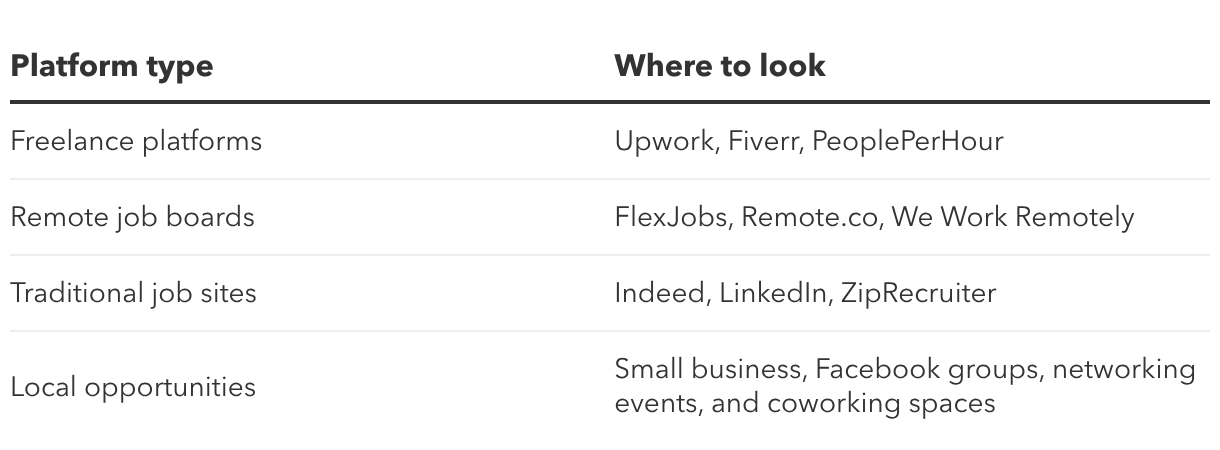
There are plenty of places to find bookkeeping jobs—whether you’re looking for remote work, freelance gigs, or something more traditional. Here’s a quick breakdown:

Use keywords like remote bookkeeper, virtual bookkeeping, or freelance bookkeeping when you search. You can also set up job alerts so you get notified when new roles pop up.

Step 4: Start small and build trust

If you're new to bookkeeping, consider starting with a part-time or project-based job to gain experience. Once you’ve completed a few successful projects, you’ll have reviews, references, and more confidence to go after bigger roles—or raise your rates.

Don’t underestimate the power of word of mouth, either. If you do great work for one client, chances are they'll recommend you to others.

Step 5: Keep learning as you go

Bookkeeping software and best practices are always evolving. You can stay sharp by:

  • Taking online training and certification courses
  • Watching tutorials for updates on tools like QuickBooks
  • Following bookkeeping blogs and professional communities

Continued learning helps you stay competitive and opens the door to higher-paying roles or specialized services, like payroll or tax preparation.

Find success with bookkeeping

Bookkeeping is a valuable skill, and it’s one you can learn and grow over time. Whether you’re aiming for a full-time career or a flexible side gig, there’s a path for you. And with the right tools, a bit of training, and some real-world experience, you’ll be ready to support clients and make a difference.

Need help getting started? Explore Quickbooks ProAdvisor Academy and start learning today.


Recommended for you

Mail icon
Get the latest to your inbox
No Thanks

Get the latest to your inbox

Relevant resources to help start, run, and grow your business.

By clicking “Submit,” you agree to permit Intuit to contact you regarding QuickBooks and have read and acknowledge our Privacy Statement.

Thanks for subscribing.

Fresh business resources are headed your way!

Looking for something else?

QuickBooks

From big jobs to small tasks, we've got your business covered.

Firm of the Future

Topical articles and news from top pros and Intuit product experts.

QuickBooks Support

Get help with QuickBooks. Find articles, video tutorials, and more.